NASA Rover Finds Complex Carbon in Ancient Mars Riverbed
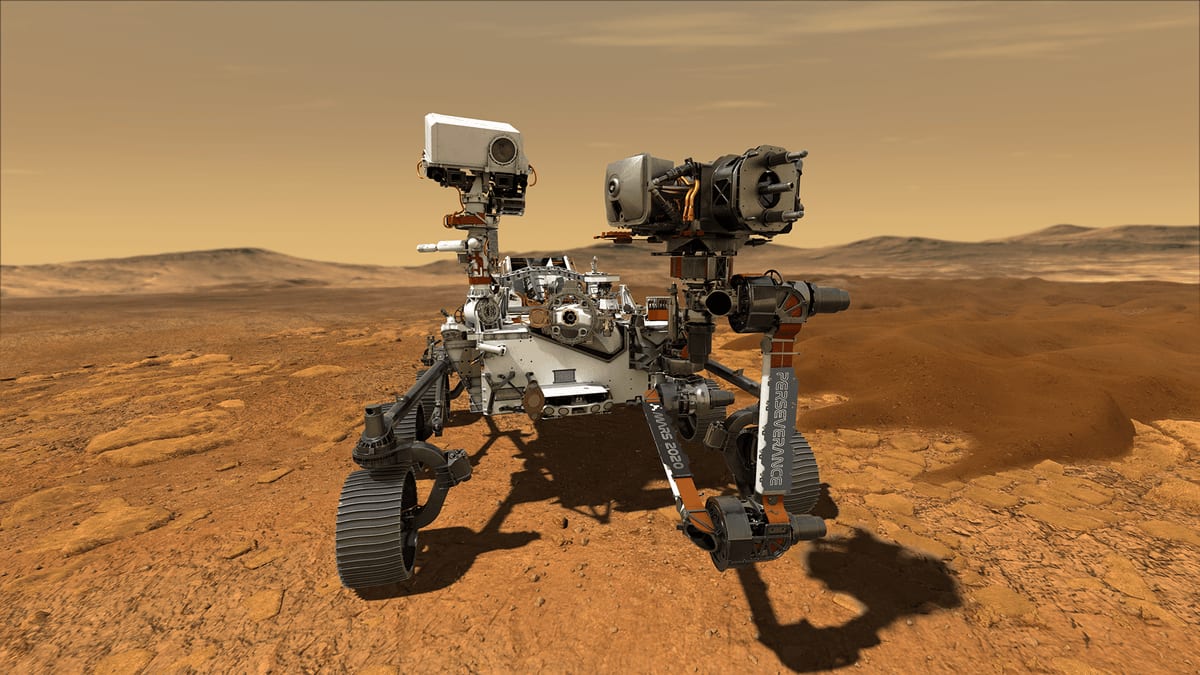
NASA's Perseverance rover has discovered extensive organic carbon in ancient river rocks on Mars, the most significant detection of life's building blocks on the Red Planet to date. While the molecules could have biological or non-biological origins, the find strengthens the case for bringing Martian samples back to Earth for deeper study.
Scientists just confirmed the most extensive detection of complex organic carbon on Mars, tucked inside mudstones from an ancient riverbed that dried up billions of years ago. The discovery brings us one step closer to answering humanity's biggest question: are we alone?
NASA's Perseverance rover found the carbon molecules in rocks from the Bright Angel formation, part of Neretva Vallis, a channel that once fed water into a lake inside Jezero Crater. Using an ultraviolet laser instrument called SHERLOC, researchers detected hundreds of instances of macromolecular carbon, which are large, tangled networks of carbon atoms similar to what life uses on Earth.
The carbon appears in both the original sedimentary minerals and in minerals formed later by groundwater. This means the molecules were incorporated into the rocks at least twice during Mars's history, first when sediment settled in the ancient river, then later when water flowed through underground.
Here's where it gets really interesting. The rover found this complex carbon in the same location where it spotted distinctive "leopard spots" on rocks in 2024. On Earth, these millimeter-sized spots can form through chemical reactions associated with microbial activity, though they can also form without life.
Organic molecules are the fundamental building blocks of all life as we know it. However, they can also arrive through completely non-biological processes like hydrothermal reactions deep underground or hitchhiking on meteorites that crash into the planet's surface.
That's why scientists are careful not to declare victory yet. The rover's instruments can detect the presence of these molecules but can't determine their exact chemical structures or origins. Only laboratory analysis back on Earth can reveal whether these molecules came from ancient microbial life, prebiotic chemistry that never quite sparked into life, or purely geological processes.
Perseverance has already sealed more than two dozen rock samples in tubes for a future Mars sample return mission. The new findings add urgency to bringing those precious cargo containers home, where scientists can study them with equipment far more sophisticated than anything we can send to Mars.
Why This Inspires
This discovery represents decades of human ingenuity paying off. We built a rover capable of analyzing rocks on another planet with laser precision, found the exact spot where ancient water once flowed, and detected molecules that could rewrite our understanding of life in the universe. Whether these carbon molecules came from life or not, the fact that we can even ask the question shows how far our reach has extended beyond Earth. Every piece of data Perseverance sends back brings us closer to knowing if life once flourished on Mars, and if it did, what that means for life throughout the cosmos.
The search continues, and with it, our hope that we might finally find our cosmic neighbors.
More Images


Based on reporting by Google: NASA discovery
This story was written by BrightWire based on verified news reports.
Spread the positivity!
Share this good news with someone who needs it