Scientists Find Way to Disarm Lung Cancer's Shield
Researchers discovered why some lung cancer cells resist treatment and found a natural compound that could help. The breakthrough reveals a "bodyguard system" that protects cancer cells and a way to shut it down.
Scientists in Singapore have cracked a mystery that's stumped cancer researchers for years: why certain lung cancer cells become nearly impossible to kill with current treatments.
A team at A*STAR Institute of Molecular and Cell Biology discovered that cancer cells use a clever defense system to protect faulty proteins from being destroyed. The cells flood their surroundings with ATP, a molecule normally used for energy, which activates two protective proteins that form a shield around the mutant cancer proteins.
The finding matters because lung cancer remains the world's deadliest cancer. In Southeast Asia, up to 60% of common lung cancers carry mutations in a gene called EGFR, which makes cells grow out of control. While targeted drugs initially work, nearly all patients eventually stop responding to treatment.
Dr. Gandhi Boopathy, who co-led the study, explains it simply: cancer cells deploy molecular bodyguards to shield mutant proteins from the cell's normal recycling process. Instead of being broken down as they should be, these protected proteins stay active and keep driving cancer growth.
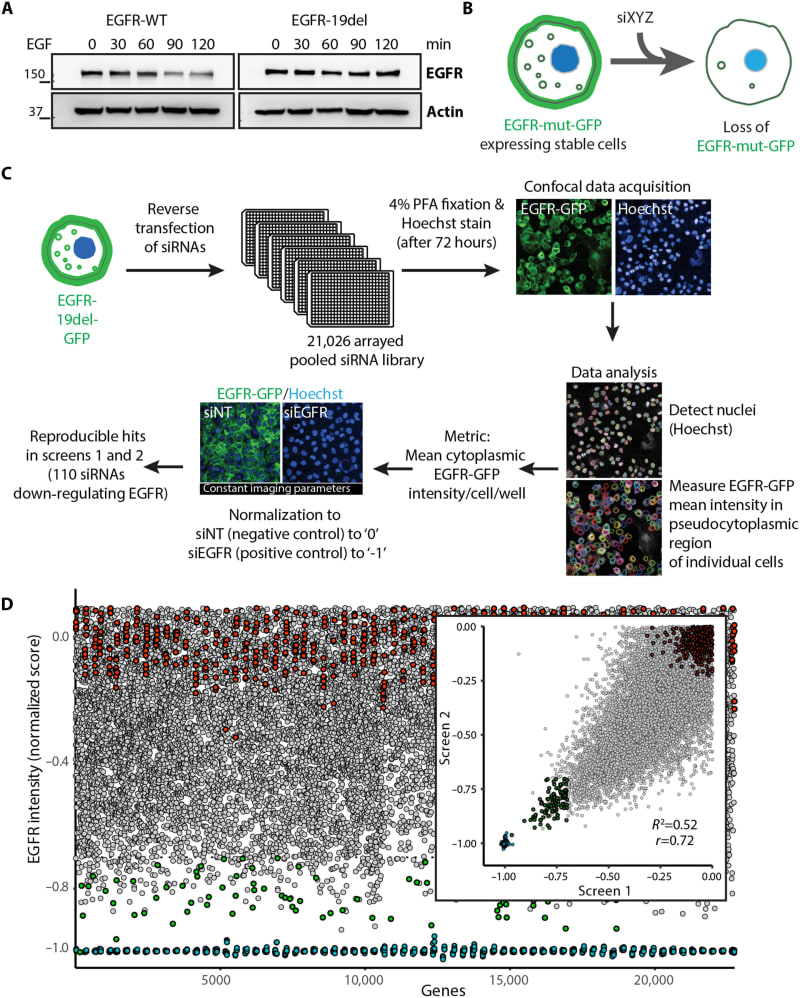
The team screened over 21,000 genes to identify this protective mechanism. They confirmed their findings by examining tissue from 29 lung cancer patients, where the bodyguard proteins appeared at much higher levels in tumors than in healthy tissue.
The Bright Side
The location of these bodyguard proteins makes them surprisingly easy targets. They sit on the cell surface rather than hidden deep inside, where drugs struggle to reach.
When researchers removed the protective system in drug-resistant cancer cells, the mutant proteins nearly disappeared. Even better, they tested kaempferol, a natural compound found in kale and broccoli, which significantly shrank drug-resistant tumors in laboratory models over 24 days.
The treatment targeted only cancer cells with EGFR mutations while leaving cells with normal EGFR completely untouched. This selectivity means fewer side effects for patients.
Professor Wanjin Hong, who co-led the research, notes they're not just attacking the mutation itself but the scaffolding that keeps it stable. This approach could work alongside existing drugs to prevent or overcome resistance when current treatments fail.
The study, published in Science Advances, brings together researchers from Singapore, Taiwan, and France. Clinical trials in humans will be the next step to determine whether this approach can help the millions of people diagnosed with lung cancer each year.
More Images
Based on reporting by Google News - Scientists Discover
This story was written by BrightWire based on verified news reports.
Spread the positivity!
Share this good news with someone who needs it