Scientists Find Where Brain Stores 'Aha Moment' Insights
NYU researchers discovered the exact brain region responsible for sudden flashes of recognition that help us instantly identify blurry objects. The breakthrough could lead to better treatments for hallucinations and smarter AI that learns like humans do.
Scientists just solved a mystery that's puzzled researchers for decades: where in the brain do those lightning-quick "aha moments" happen when we suddenly recognize something we couldn't see clearly before?
A team at NYU Langone Health pinpointed the high-level visual cortex as the place where our brains store past images and use them to make sense of fuzzy new ones. Think of it like having a photo album in your mind that your brain flips through at lightning speed to help identify that blurry shape in the distance.
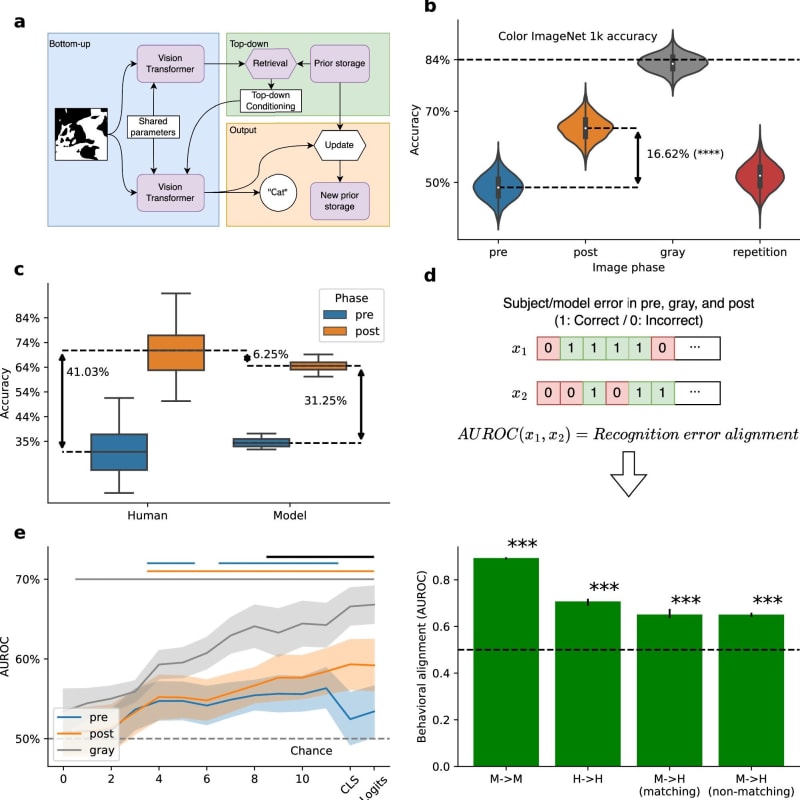
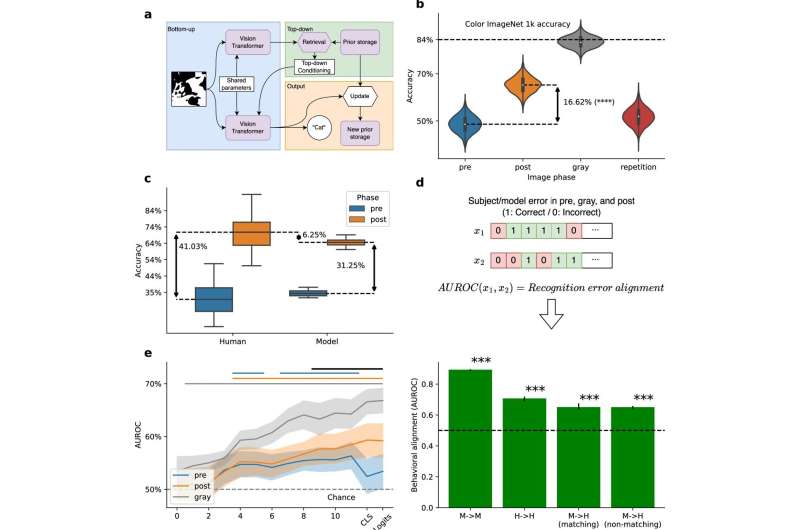
The researchers tested people using Mooney images, which are faded pictures of animals and objects. After showing participants a clear version just once, people became twice as good at recognizing the blurry versions. That's called one-shot learning, and it's the same survival skill that helped our ancestors spot threats quickly.
Dr. Biyu He and her team used brain imaging, AI models, and recordings from inside the brain to map exactly how this works. They discovered that the high-level visual cortex acts like a reference library, pulling up stored images to fill in the blanks of what we're currently seeing.
The team even built an AI model that mimics this process. It achieved human-like one-shot learning, something previous AI tools struggled to match. The model stores image data in one module and uses it to recognize new images in another, just like our brains do.
Why This Inspires
This discovery isn't just fascinating science. It offers real hope for people with schizophrenia and Parkinson's disease, who experience abnormal one-shot learning where stored memories can overwhelm what's actually in front of them, causing hallucinations.
Dr. He's team is already investigating how these brain mechanisms go wrong in patients with neurological disorders. Understanding the precise location and timing of prior storage could lead to targeted treatments that help people distinguish between stored memories and present reality.
The research also hints at connections between visual recognition and those satisfying moments when we suddenly grasp a new concept. Our brains might use similar mechanisms whether we're recognizing a face in shadows or understanding a complex idea for the first time.
For AI development, this breakthrough means future tools could learn new tasks from just one example, the way humans naturally do. Instead of needing thousands of training images, AI could become more efficient and humanlike in how it processes visual information.
The findings bring us closer to understanding one of the most remarkable features of human intelligence: our ability to learn instantly from a single experience.
More Images

Based on reporting by Medical Xpress
This story was written by BrightWire based on verified news reports.
Spread the positivity!
Share this good news with someone who needs it