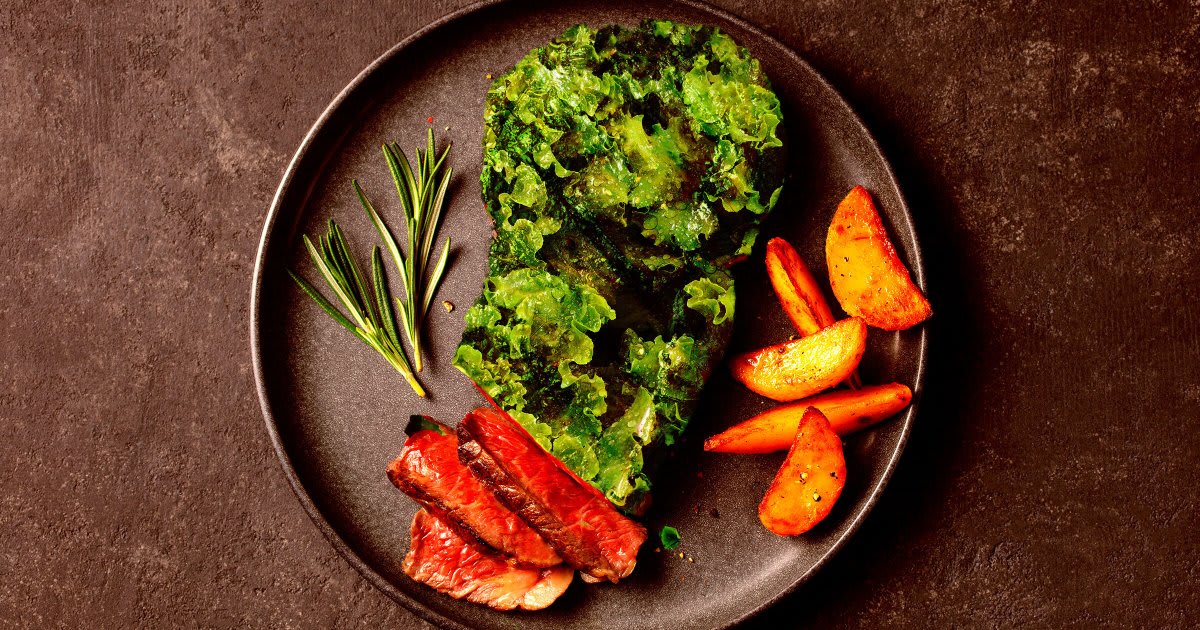
Scientists Grow Protein-Rich Lettuce Using Pig DNA
Researchers used a "gene gun" to create lettuce that produces meat protein, opening the door to more sustainable food sources. The breakthrough could help reduce our reliance on environmentally harmful livestock farming.
Scientists just figured out how to grow lettuce packed with the same protein found in meat, and it could change how we feed the planet.
An international research team at Imperial College London successfully inserted pig genes into lettuce and tobacco plants using a device called a gene gun. The result? Plants that produce myoglobin, the key protein that gives meat many of its desirable properties.
The gene gun works exactly like it sounds. It fires microscopic metal particles coated with genes directly into plant cells, specifically targeting the chloroplasts where photosynthesis happens.
The researchers chose chloroplasts because they're exceptional at producing large amounts of protein. Their bacterial ancestry and high number of copies per cell make them far more efficient than a cell's nucleus at protein production.
The genetic modification worked beyond expectations. The plants didn't just accept the pig DNA; they passed it on to their offspring through seeds, creating a stable lineage of protein-enhanced plants.
The harvested lettuce and tobacco produced about 800 milligrams of myoglobin protein per kilogram of dry weight. While that's ten times less than beef, the environmental math still works in favor of plants.
The Ripple Effect
Growing plants requires far fewer resources than raising livestock. The same amount of land, water, and energy produces exponentially more plant matter than animal meat, meaning these protein-enhanced crops could eventually match or exceed the protein yields of traditional animal agriculture.
The environmental benefits extend beyond efficiency. Plant cultivation generates substantially lower greenhouse gas emissions than livestock farming, addressing one of agriculture's biggest climate challenges.
The enhanced plants could be dried and processed into protein powder to boost plant-based meat alternatives. This would give vegetarian products a more authentic meat profile without requiring animals.
Other scientists are calling the breakthrough important but emphasize the need for safety testing. Rodrigo Ledesma-Amaro, director of Imperial College London's Bezos Center for Sustainable Protein, sees promise in using plants as scalable, low-input production platforms alongside existing methods like microbial fermentation.
Lead researcher Alexia Groff emphasized the timing couldn't be better. The demand for sustainable food production platforms has never been greater as the world searches for ways to feed a growing population without destroying the environment.
The technology could diversify where and how we produce protein ingredients in the future. Instead of concentrating production in industrial facilities, communities could potentially grow their own protein-enhanced crops locally.
This breakthrough shows we don't have to choose between nutrition and sustainability anymore.
More Images
Based on reporting by Futurism
This story was written by BrightWire based on verified news reports.
Spread the positivity!
Share this good news with someone who needs it