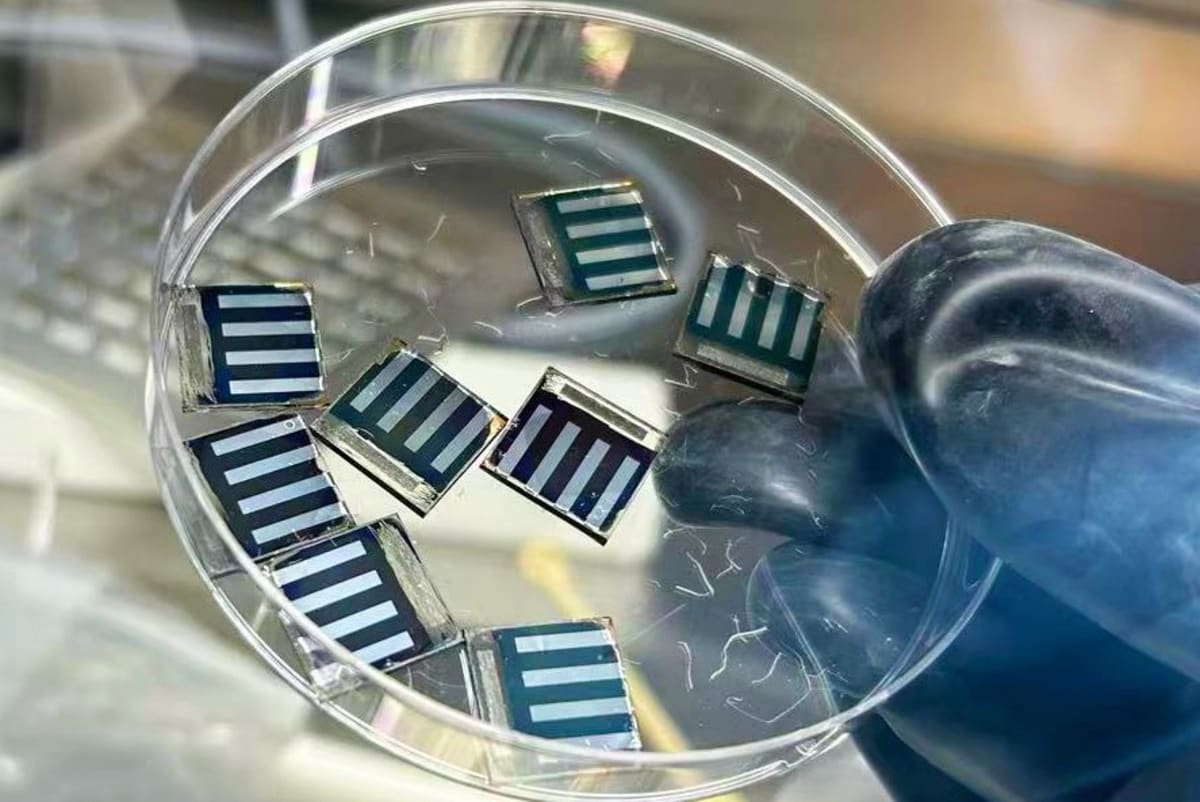
Scientists Hit 26% Efficiency Record in Solar Cell Breakthrough
A research team just cracked a major solar energy challenge by mixing molecules in a smarter way, pushing solar cell efficiency past 26%. The simple trick could make clean energy cheaper and more reliable for millions.
Scientists just made solar panels work better than ever by breaking one of chemistry's favorite rules.
An international team led by Tom Wu discovered that mixing symmetric and asymmetric molecules together creates a more effective solar cell than using complex molecules alone. Their new approach pushed solar panel efficiency to a record 26.32%, a huge leap in renewable energy technology.
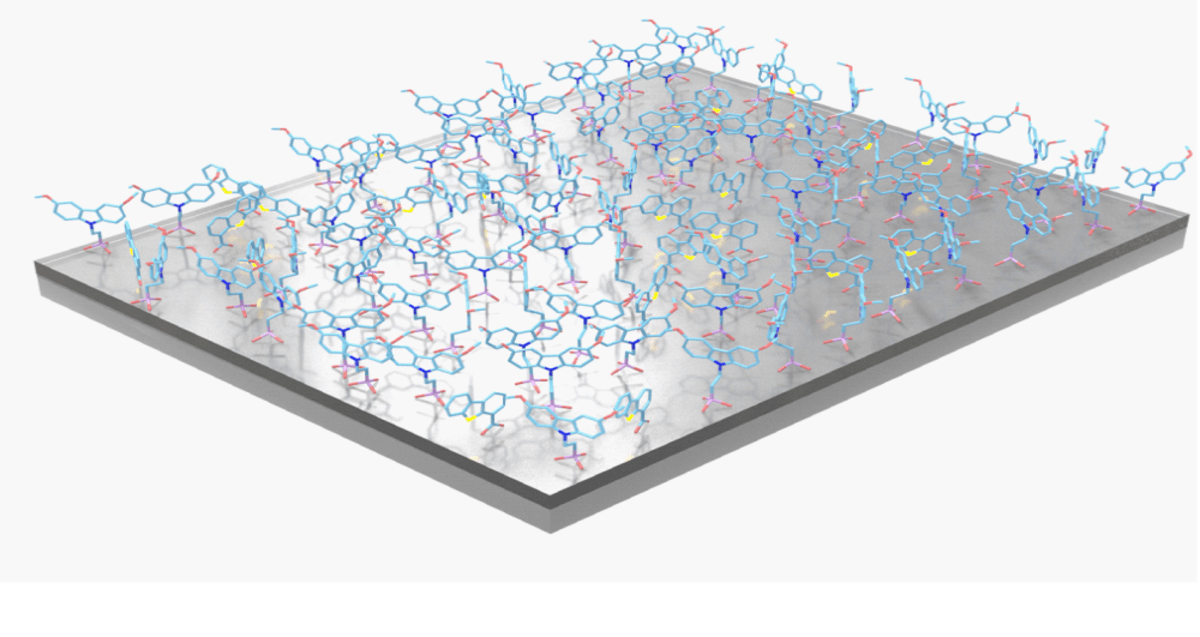
The breakthrough centers on self-assembled monolayers, or SAMs, which are ultra-thin molecular layers that help solar cells capture sunlight. Think of them like a perfectly organized microscopic carpet that channels energy where it needs to go.
Instead of creating expensive custom molecules from scratch, Wu's team combined a widely used symmetric molecule called MeO-2PACz with a simple asymmetric partner called DTCA. The mix stopped molecules from clumping together and increased surface coverage by more than 30%.
"We were amazed to find that strategically breaking molecular symmetry could unlock so many benefits for solar cells," Wu explained. The team even developed a new measurement technique using atomic force microscopy to prove their coverage improvements at the nanoscale.
The real test came when they built actual solar panels using their method. The cells not only achieved record efficiency but also proved remarkably durable. After running for 1,150 hours at maximum power, the panels still retained 93% of their original efficiency.
The Ripple Effect
This isn't just about laboratory records. Better solar cell efficiency means more electricity from the same amount of sunlight, which translates to cheaper clean energy for homes and businesses everywhere.
The method works with existing industry-standard materials, making it far easier to adopt than approaches requiring entirely new manufacturing processes. Wu's team tested their design on both small research cells and larger one-square-centimeter panels, proving it scales up successfully.
Scientists from nine institutions across six countries collaborated on the research, published in Nature Communications. They're already exploring how to apply symmetry-breaking principles to other molecular combinations and larger solar installations.
The technique could accelerate the global transition to renewable energy by making solar power more affordable and reliable. As manufacturing costs drop and efficiency climbs, solar energy becomes competitive in more markets worldwide.
Wu's team is now working to translate their molecular design breakthrough to full-size solar modules and next-generation tandem solar cells that stack multiple layers for even higher efficiency.
The sun delivers more energy to Earth in one hour than humanity uses in an entire year, and breakthroughs like this help us capture more of it.
More Images


Based on reporting by PV Magazine
This story was written by BrightWire based on verified news reports.
Spread the positivity!
Share this good news with someone who needs it