Scientists Map 1,000 Hidden Reefs Off Northern Australia
Satellite technology just revealed over 1,000 coral reefs hiding in Australia's murky northern waters that nobody knew existed. The discovery rivals the size of the Great Barrier Reef and opens new possibilities for marine conservation.
Scientists just uncovered a secret underwater world off the coast of Australia that's been hiding in plain sight for centuries.
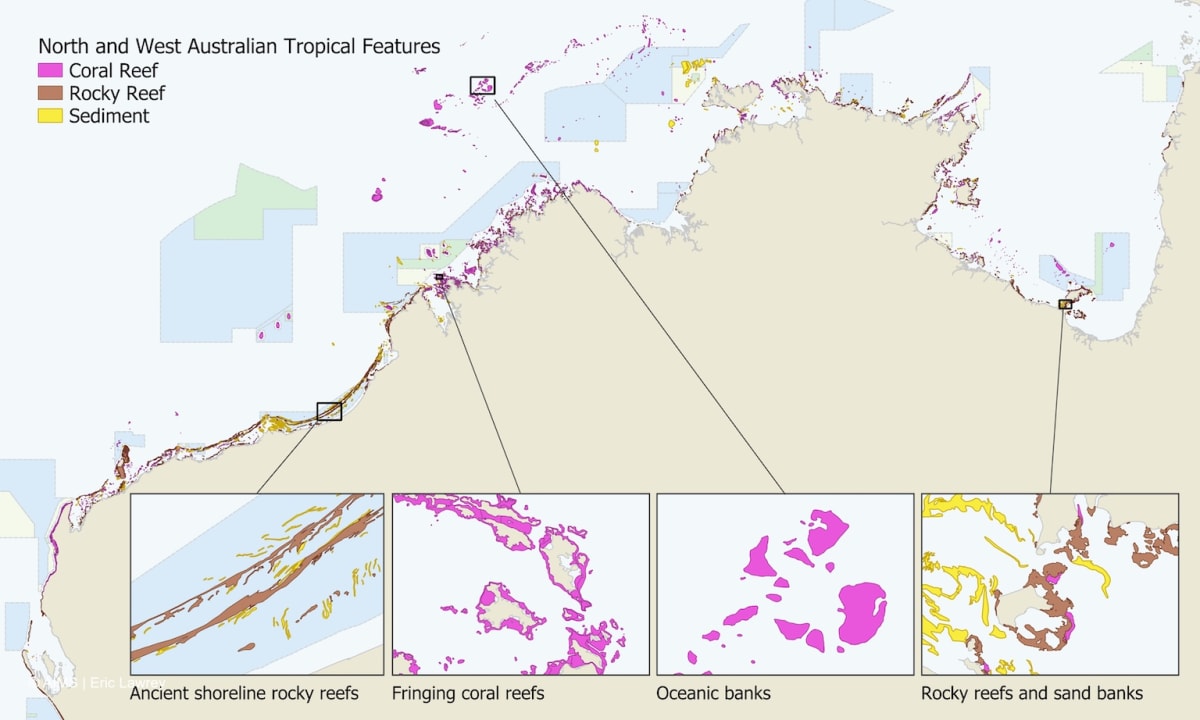
By layering hundreds of satellite images, researchers from the Australian Institute of Marine Science revealed more than 1,000 previously uncharted coral reefs in the turbid waters of northern Australia. The number rivals the Great Barrier Reef, though many individual reefs are smaller.
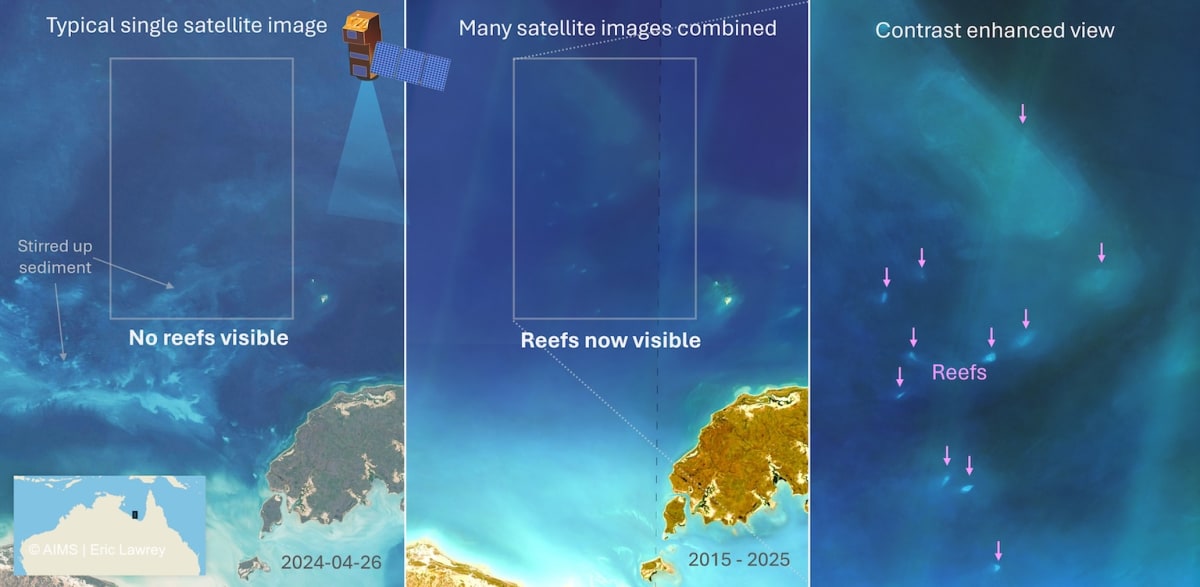
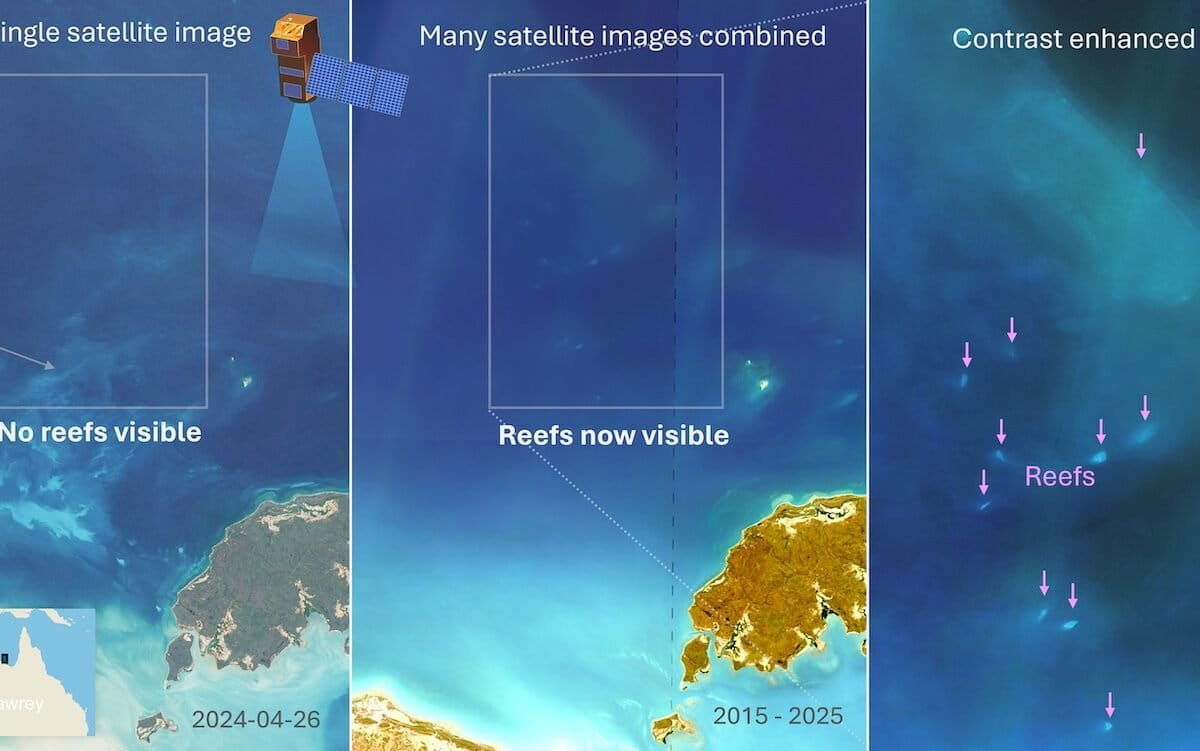
Eric Lawrey, the project leader, stumbled onto the discovery while exploring satellite images of the coastline. He noticed suspicious shapes that looked like reefs, but the deep, sediment-rich waters made them impossible to see in single photos.
"If you look at any one satellite image, the water just looks like turquoise paint and you can't really see reefs," Lawrey explained. So he tried something new: layering 200 satellite images of each area taken at different times.
The technique worked beautifully. In the composite images, swirling water patterns averaged out while the reefs stayed constant and visible.
The team mapped reefs from Houtman Abrolhos in Western Australia all the way to western Cape York in Queensland. The final count revealed more than 3,600 coral reefs and 2,900 rocky reefs, all likely supporting diverse marine life.
While marine charts had mapped the northern coastline to help vessels navigate, those maps never distinguished between rocky and coral reefs. This project provides the first comprehensive view of coral reef boundaries across northern Australia, giving planners, traditional owners, and managers a clearer picture of reef and habitat locations.
The Ripple Effect
The discovery highlights just how much remains unknown about our oceans, even in well-traveled waters. Northern Australia's vastness means scientists have barely scratched the surface of understanding what lives there.
Jody Webster, a marine geoscientist at the University of Sydney not involved in the research, called the find significant. "Identifying more than 1,000 previously uncharted reefs highlights that important gaps in our understanding of reef distribution still exist, particularly in more turbid areas," he said.
The team has already applied the same satellite technique to the Great Barrier Reef in a separate study. That research identified hundreds of additional reefs and removed false ones from existing maps.
Webster noted that mapping represents just the first step. Field observations and sampling will help scientists understand reef ecology, biodiversity, age, and development in these newly discovered ecosystems.
The technology that revealed these hidden reefs could transform how we explore and protect marine environments worldwide, turning cloudy waters crystal clear with nothing but patience and satellite data.
More Images

Based on reporting by Mongabay
This story was written by BrightWire based on verified news reports.
Spread the positivity!
Share this good news with someone who needs it