Scientists Map 127,000 Rivers and Glowing Trees in Space
New satellite technology revealed Earth's rivers in unprecedented detail, while researchers captured trees glowing during thunderstorms for the first time. March's scientific breakthroughs also include microscopic images of algae and parasites, plus AI-designed robots walking outdoors.
Scientists captured stunning images this March that reveal hidden worlds both microscopic and planetary, showing nature in ways never seen before.
A NASA-led mission tracked nearly 127,000 rivers worldwide from space, creating the most detailed view of Earth's waterways ever captured. Between October 2023 and September 2024, researchers analyzed 1.7 million satellite observations to map riverbeds and water changes across the globe.
The findings surprised scientists. Rivers gain and lose about 314 trillion liters of water throughout the year, which is 28% less variation than previous estimates suggested.
Closer to Earth, researchers witnessed another first: trees glowing during thunderstorms. The light is too faint for human eyes to detect, but cameras captured these weak electrical discharges, called coronae, hopping from leaf tip to leaf tip on sweetgum and pine trees in North Carolina.
Each glow lasted up to three seconds. Laboratory experiments recreated the phenomenon on spruce needles, producing an eerie blue light at the tips.
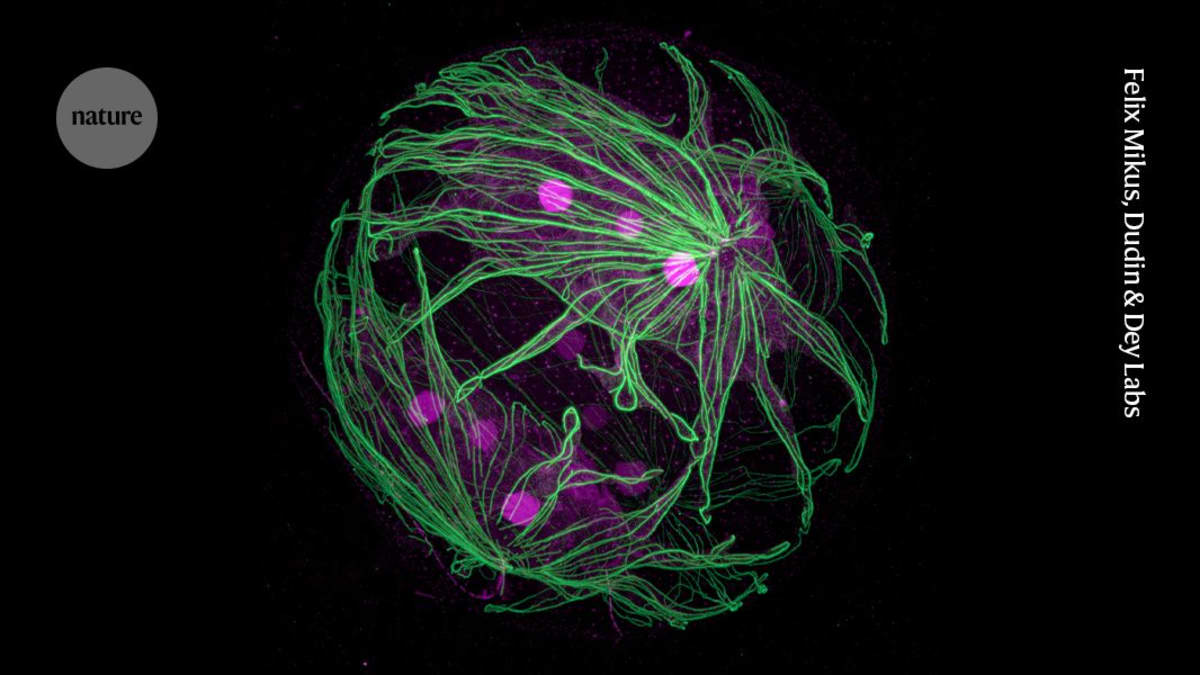
Meanwhile, expansion microscopy revealed the intricate beauty of organisms invisible to the naked eye. The technique embeds biological samples in a polymer gel that swells, allowing scientists to see stunning details of green algae colonies and parasitic organisms.
Why This Inspires
These discoveries remind us that wonder exists at every scale of our world. From rivers glowing like blue threads across continents to trees lighting up during storms, science continues revealing Earth's hidden magic.
The research isn't just beautiful; it's practical too. Satellite data helps protect water resources and predict droughts, while the microscopic atlas aids disease research.
In Ecuador, scientists tagged their first eastern Pacific leatherback turtle with a satellite tracker. Named Lucero, after the morning star that has guided Pacific navigators for centuries, she'll help researchers protect her endangered species by revealing critical habitats and migration patterns.
Even robots got in on the action. An AI-designed three-legged robot successfully navigated outdoor terrain after evolving inside a computer, marking the first time such machines ventured beyond the lab into real-world conditions.
These breakthroughs prove that curiosity and technology together can illuminate mysteries we didn't even know existed.
More Images

Based on reporting by Nature News
This story was written by BrightWire based on verified news reports.
Spread the positivity!
Share this good news with someone who needs it