Scientists Map Brain Wiring With RNA 'Barcodes
Researchers have developed a breakthrough method that maps brain connections faster and more accurately than ever before, revealing hidden links between neurons that could transform how we detect and treat diseases like Alzheimer's. The technique turns brain mapping into a simple sequencing task.
Scientists just made understanding the brain's complex wiring as simple as reading barcodes at a grocery store, and it could change how we fight neurological diseases.
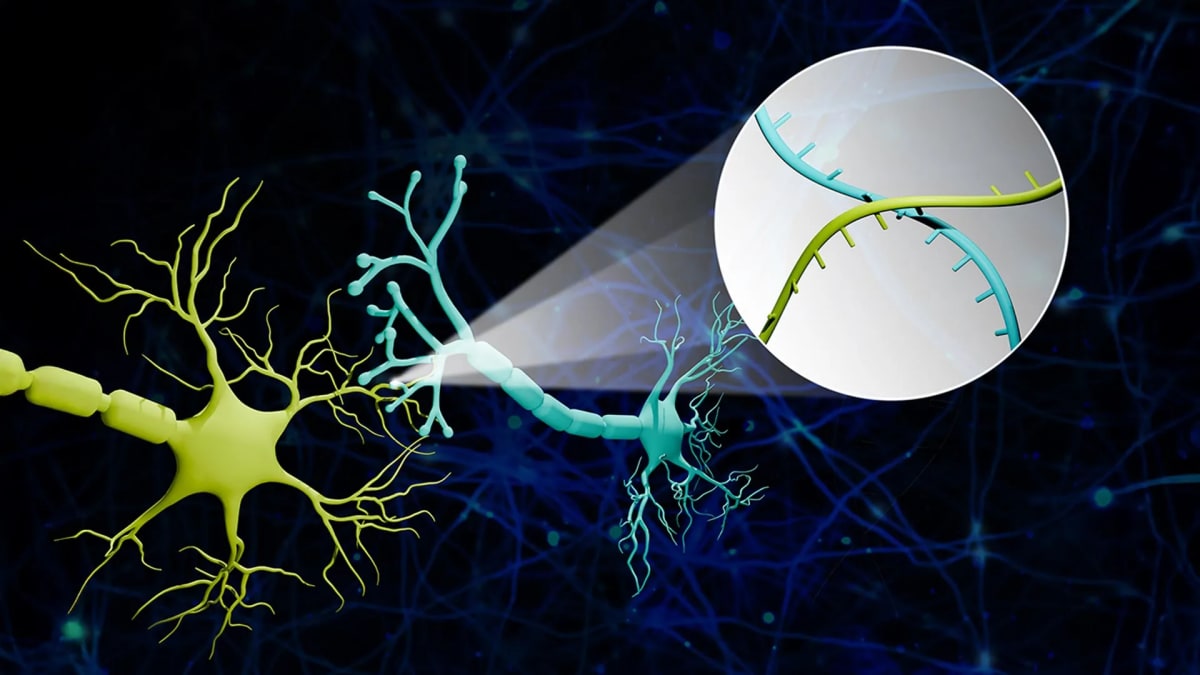
Researchers at the University of Illinois have created a revolutionary technique called Connectome-seq that tags each brain cell with a unique RNA "barcode." When neurons connect at junctions called synapses, their barcodes meet, revealing which cells are talking to each other.
Professor Boxuan Zhao compares it to engineering a computer. "If you don't know how everything is wired together, you can't understand its function, optimize it or fix it when something breaks," he explained.
Traditional brain mapping required slicing tissue into paper-thin sections and painstakingly piecing together pathways under microscopes. This new method skips all that by turning the problem into something scientists already do quickly: DNA sequencing.
The technique works like following balloon strings to find which ones are tied together. Each neuron gets unique barcode stickers that travel down to the connection points. Scientists then snip out those junctions and sequence the barcodes found there, revealing the complete network.
The team mapped over 1,000 neurons in mouse brains and discovered connections that scientists didn't know existed. These were links between cell types that had never been observed connecting in adult brains before.
The Ripple Effect
The real excitement lies in what this means for fighting brain diseases. Because Connectome-seq is fast and affordable, scientists can now compare healthy brains with diseased ones at different stages.
"We could see where connections change, where the most vulnerable parts of the brain are, perhaps before symptoms even appear," Zhao said. Imagine catching the weak link that triggers Alzheimer's before a patient shows any signs, then strengthening those connections to stop the disease in its tracks.
The technology can already map thousands of neural connections with single-synapse precision, something no current method can match. Zhao's team is working on improvements that could eventually map an entire mouse brain.
This breakthrough could accelerate research into Alzheimer's, psychiatric conditions, and other brain disorders by making it possible to study many different brains quickly and affordably. Understanding exactly how our brain's circuits work brings us closer to treatments that target the root causes of neurological diseases rather than just managing symptoms.
The findings were published in Nature Methods and supported by Stanford's Wu Tsai Neurosciences Institute, creating a foundation for the next generation of brain research.
Based on reporting by Science Daily
This story was written by BrightWire based on verified news reports.
Spread the positivity!
Share this good news with someone who needs it