Scientists Map How Bare Rock Transforms Into Forest
In Georgia, researchers discovered how solid granite balds slowly become thriving forests, revealing a remarkable partnership between plants and stone. The findings show nature's patient process of turning barren rock into the green world around us.
Deep in Georgia's forests, hikers sometimes step out of thick tree cover onto vast expanses of bare granite, wondering how life stops so suddenly. Scientists just mapped the incredible journey that transforms these rock balds back into forest over thousands of years.
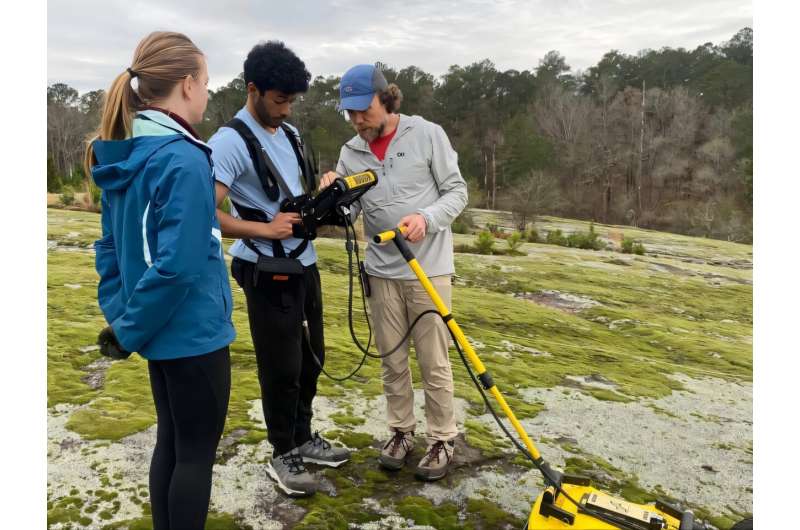
At Panola Mountain State Park, researcher Sean Bemis and his team used radar and seismic imaging to peer beneath the surface of a massive granite outcrop. What they found reveals one of nature's most patient collaborations.
The process starts small. Tiny variations in the bedrock cause some areas to erode slightly faster than others, creating shallow depressions that collect rainwater and wind-blown sediment. These pockets become footholds for the first pioneers: moss and grass.
Once established, these humble plants start changing the rock itself. Their roots reach into microscopic fractures, storing water and building soil. The team's seismic measurements showed dramatic differences: waves traveled fast through solid rock but slowed beneath vegetated patches, revealing fractured and altered stone below.
"As plants become established, they are not just responding to the rock," Bemis explained. "They are putting in the work to gradually change it." It's a feedback loop where early plants make conditions better for larger ones.
Shrubs follow the grasses, then trees. The researchers found that bigger plants correspond with deeper zones of weathered rock beneath them. Tree roots can extend several feet down into fractures, slowly expanding what scientists call the critical zone: Earth's life-supporting layer from bedrock to treetops.
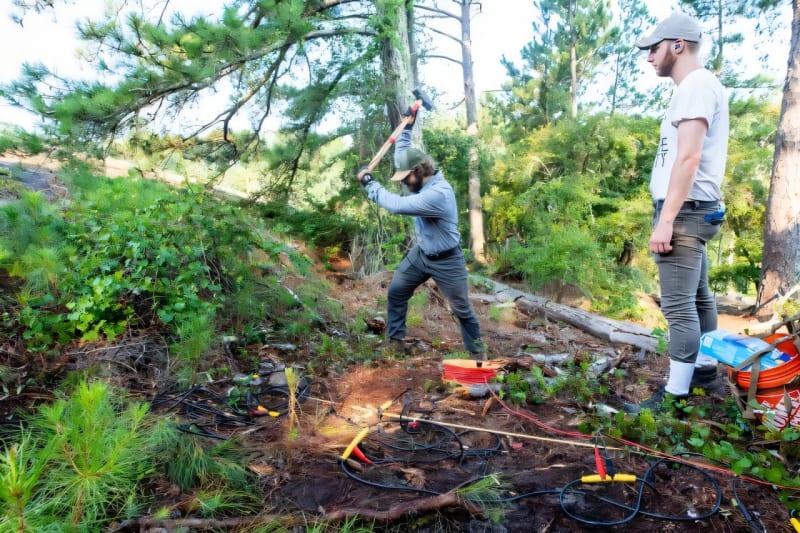
The team collected their data during spring break 2022, stretching survey lines hundreds of meters across the outcrop. Students placed seismic sensors every few meters, then swung 12-pound sledgehammers onto metal plates. The ringing sound traveled through rock, revealing its hidden structure.
They also flew drones to create detailed maps showing every plant patch and erosion pattern. The images revealed linear troughs carved by water where vegetation clusters grew thickest.
The Bright Side
This research shows that even the harshest environments harbor potential for transformation. What looks like permanent barren rock is actually future forest, waiting for the right conditions and enough time.
The findings help scientists understand how landscapes recover after disturbances and how ecosystems build themselves from scratch. The work involved researchers from seven institutions studying similar sites across the United States.
In forests nicknamed "The Green Tunnel," these granite balds remind us that nature plays the long game, turning stone to soil one patient year at a time.
More Images

Based on reporting by Phys.org - Earth
This story was written by BrightWire based on verified news reports.
Spread the positivity!
Share this good news with someone who needs it