Scientists Photograph the Glow of Life Itself in Mice
Canadian researchers captured stunning images showing living mice emit a faint glow that vanishes the moment they die. The breakthrough could help doctors detect disease by measuring the light our cells naturally produce.
Scientists at the University of Calgary just photographed something extraordinary: the literal light of life glowing from within living creatures.
When quantum physicist Daniel Oblak and his team placed mice inside a dark chamber with an ultra-sensitive camera, they captured a ghostly glow emanating from the animals' skin. The light was too faint for human eyes to see, but the camera revealed streams of photons flowing from the living mice.
Then came the stunning moment. When the researchers photographed the same mice after death, the glow had vanished, dissolving into background darkness.
"It was as if we had photographed life itself," says Oblak. The images went viral worldwide, sparking wonder about whether science had finally captured something mystical about being alive.
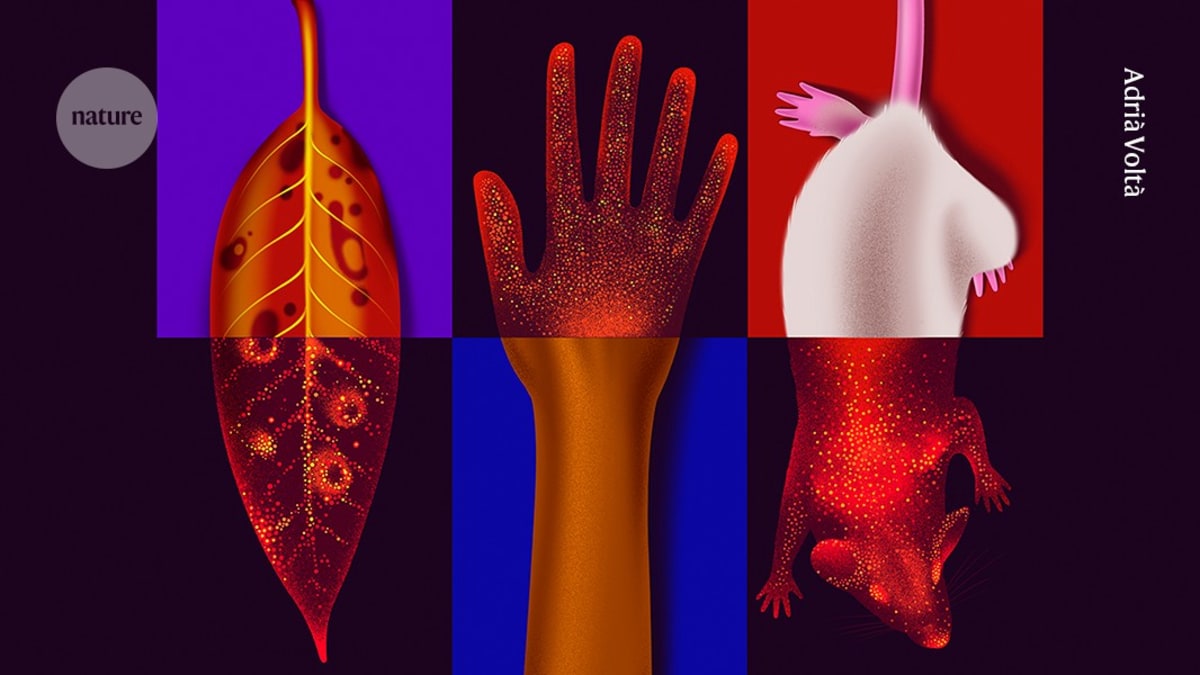
The truth is even more fascinating. Every living thing, from bacteria to plants to humans, emits these "biophotons" as a natural byproduct of metabolism. The light comes from our mitochondria, the tiny powerhouses inside our cells that convert food into energy.
Scientists first suspected this cellular glow existed back in the 1920s, but the phenomenon was so hard to measure that many dismissed it as pseudoscience. Modern technology has finally caught up with the mystery.
Why This Inspires
Oblak and his colleagues aren't chasing mystical auras. They're developing practical tools that could revolutionize healthcare. Because biophotons change based on cellular health, doctors might one day use special cameras to spot disease before traditional symptoms appear.
The research has already shown promise. Stressed cells emit different light patterns than healthy ones. Inflamed tissue glows differently than normal tissue. Even brain activity might be detectable through these subtle light signals.
Michal Cifra, a bioelectrodynamics researcher in Prague, says proving that cells communicate through light "would be fantastic." It would reshape our entire understanding of how bodies work at the most fundamental level.
The field still faces skeptics, partly because of past associations with alternative medicine claims. "It's on the edge of respectability," admits Nick Lane, a mitochondrial biochemist at University College London. "That doesn't mean it's wrong."
What makes this moment different is the technology. Today's cameras can count individual photons, and rigorous scientific methods are separating real phenomena from wishful thinking.
The Calgary team's breakthrough wasn't just about better equipment. It was about visualization. Seeing the light appear and disappear with life itself made the abstract suddenly concrete and deeply moving.
Now researchers worldwide are racing to decode what our cellular glow can tell us about health, healing, and the spark that separates living from lifeless matter.
More Images


Based on reporting by Nature News
This story was written by BrightWire based on verified news reports.
Spread the positivity!
Share this good news with someone who needs it