Scientists Prove Pianist's Touch Really Does Change Sound
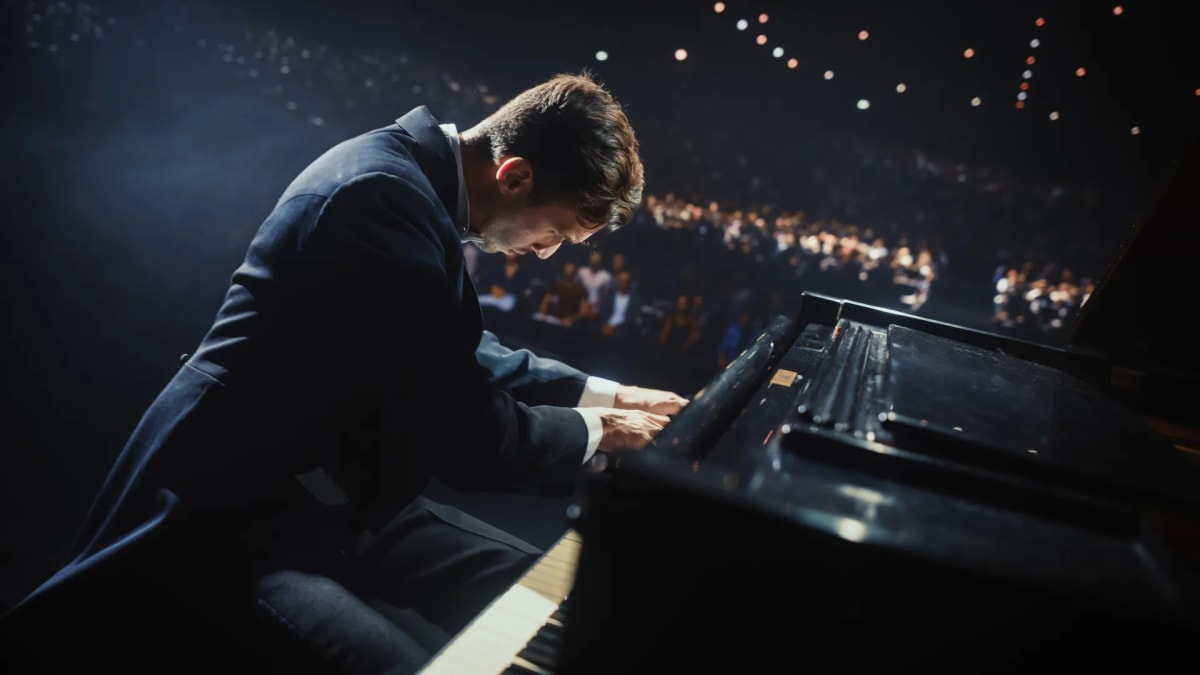
After 100 years of debate, researchers have finally proven what musicians always knew: a pianist's touch can actually reshape the sound of each note. Even listeners with no musical training can hear the difference.
For more than a century, pianists insisted their touch could change a piano's tone, while skeptics dismissed it as wishful thinking. Now scientists have proven the musicians were right all along.
Researchers at the NeuroPiano Institute used cutting-edge sensors to track piano keys at 1,000 frames per second, capturing movements invisible to the naked eye. Twenty world-class pianists played notes while intentionally creating contrasting sounds like bright versus dark or light versus heavy.
The results were stunning. Listeners consistently recognized the intended tones, even if they'd never touched a piano in their lives. Professional pianists were especially attuned to the subtle differences.
The secret lies in microscopic variations in how fingers move. Tiny changes in acceleration, timing, and hand synchronization all combine to alter what listeners hear. These aren't random movements but precise skills developed through years of advanced training.
The team discovered that changing just one movement feature could reliably shift how people described the sound. This proved that touch itself causes the change, not just volume or tempo adjustments.
Why This Inspires
This breakthrough validates what artists have felt but couldn't prove for generations. It shows that human skill and sensitivity can achieve effects so subtle they seemed impossible to measure.
The discovery could transform how piano is taught. Instead of vague instructions like "play warmer," future students might see exactly which physical movements create specific sounds. Technology could visualize the invisible artistry behind every note.
The implications reach beyond music into rehabilitation, robotics, and neuroscience. Understanding how precise movements shape perception could help people recovering from injuries regain dexterity through musical training. It might even lead to more expressive digital instruments that capture human nuance.
Dr. Shinichi Furuya and his team have brought artistic intuition into the realm of science. Their work proves that creativity isn't just subjective feeling but measurable physical reality.
The study, published in the Proceedings of the National Academy of Sciences, opens doors to understanding how the brain integrates movement and sensory experience. It's part of a growing field called dynaformics, the science of musical performance.
For every pianist who was told their perception of tone was imaginary, this research offers scientific validation of their craft.
Based on reporting by Science Daily
This story was written by BrightWire based on verified news reports.
Spread the positivity!
Share this good news with someone who needs it