Scientists Recharge Edison's 1900 Battery in Seconds
Researchers at UCLA revived Thomas Edison's forgotten nickel-iron battery design, creating a prototype that recharges in seconds and could power solar farms for decades. The breakthrough uses proteins and materials just one atom thick to solve a problem that stumped inventors for over a century.
In 1900, electric cars actually outnumbered gas-powered vehicles on American roads, but Thomas Edison faced a battery problem that would change transportation history. His lead-acid batteries cost too much and lasted only 30 miles, so he dreamed up a nickel-iron design promising 100-mile range and seven-hour charging.
That dream never materialized, and gas-powered engines won the century. Now, scientists at UCLA have brought Edison's vision roaring back to life with a twist he never could have imagined.
The research team created a battery prototype that recharges in seconds instead of hours. It survived over 12,000 charge cycles, the equivalent of more than 30 years of daily use without breaking down.
The secret? Taking inspiration from nature itself. The researchers studied how animals grow bones and shellfish form their shells, where proteins act like tiny scaffolds collecting calcium compounds in just the right spots.
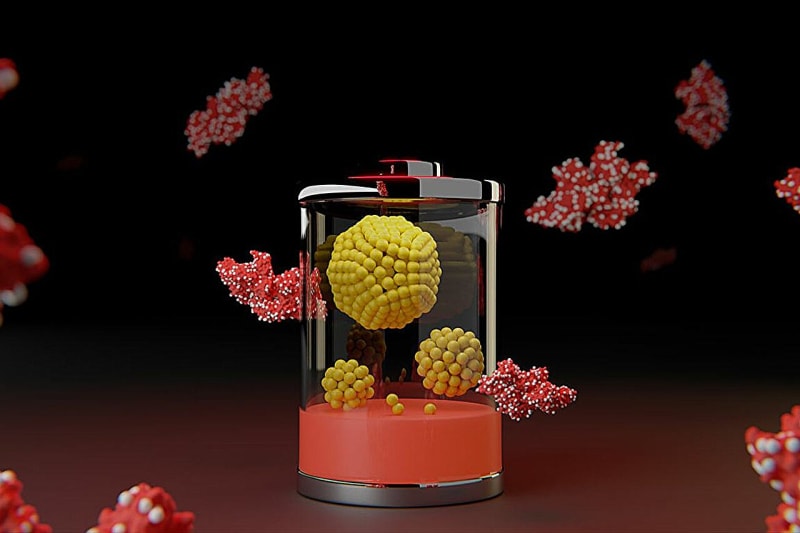
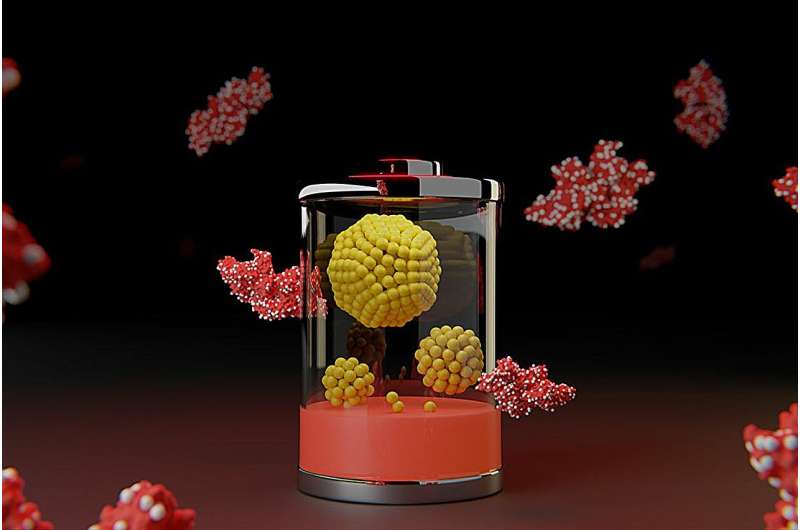
They applied this biological trick using proteins from beef production byproducts as templates for growing microscopic clusters of nickel and iron. These clusters are so small that 10,000 to 20,000 of them could fit across a single human hair.
The team combined these protein-metal clusters with graphene oxide, a material made of sheets just one atom thick. After superheating the mixture in water and baking it at high temperature, the proteins transformed into carbon and created an aerogel that's 99% air by volume.
This structure gives the battery its superpower: massive surface area. As particles shrink to this tiny scale, their exposed outer surface grows dramatically compared to their volume, meaning almost every single atom can participate in the battery's chemical reactions.
"People often think of modern nanotechnology tools as complicated and high-tech, but our approach is surprisingly simple," said study co-author Maher El-Kady, an assistant researcher at UCLA. The team mixed common ingredients, applied gentle heating, and used widely available raw materials.
Why This Inspires
This breakthrough shows how looking backward can push us forward. Edison's century-old idea wasn't wrong, it just needed modern science to unlock its potential.
While this version can't yet match lithium-ion batteries for storage capacity, it shines in different ways. The fast charging, high power output, and incredible durability make it perfect for storing excess electricity from solar farms during the day to power homes at night.
The technology proves that sustainable solutions don't always require exotic materials or complex processes. Sometimes innovation means recognizing good ideas from the past and giving them the tools to succeed.
Edison would likely smile knowing his nickel-iron battery might finally light up the future, just a century later than he hoped.
More Images


Based on reporting by Phys.org - Technology
This story was written by BrightWire based on verified news reports.
Spread the positivity!
Share this good news with someone who needs it