Scientists Reconstruct Videos From Mouse Brain Activity
Scientists at University College London successfully reconstructed 10-second videos by reading mouse brain activity alone, opening new windows into how brains process what we see. The breakthrough could help us understand how different species perceive the world around them.
Imagine watching a movie inside someone's mind just by reading their brain signals. Scientists at University College London just made that science fiction real, at least for mice.
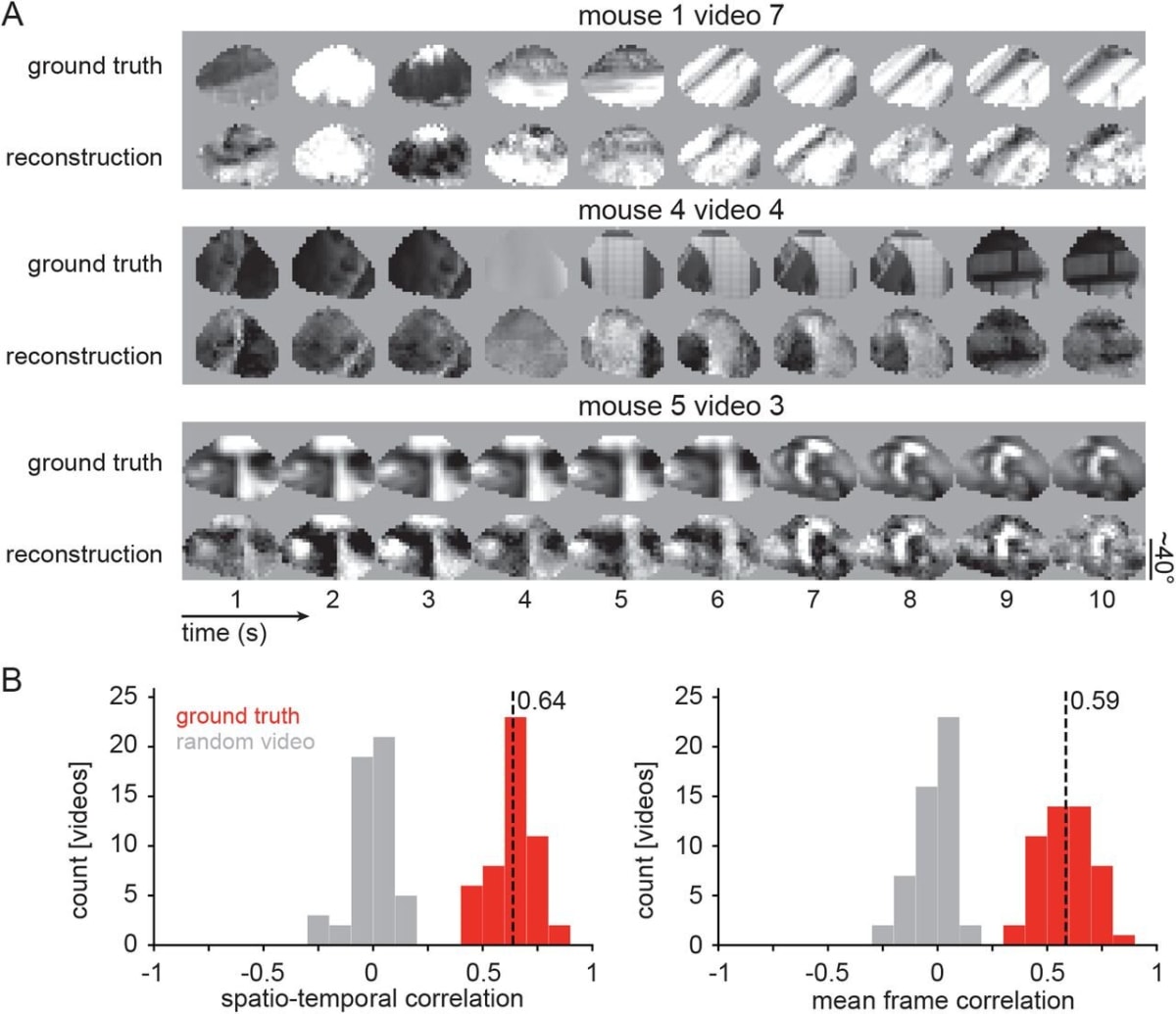
Researchers successfully reconstructed videos by decoding neural activity in the visual cortex of mice as they watched short clips. The team didn't just capture blurry impressions. They created high-quality 10-second video reconstructions that closely matched what the mice actually saw.
Dr. Joel Bauer, the study's lead author at the Sainsbury Wellcome Centre, wanted to move beyond traditional brain scanning methods. Previous research used fMRI machines to decode visual information from human brains, but those studies couldn't capture the precise activity of individual brain cells.
The team took a different approach by recording activity from single neurons in mice. They used a dynamic neural encoding model that predicted how individual brain cells would respond to specific videos, while also accounting for each mouse's movements and pupil size.
The breakthrough came when researchers compared predicted neuron activity from a blank screen against actual activity recorded through specialized imaging. This technique detects when individual brain cells fire based on calcium level changes. They then used an algorithm to gradually adjust pixels until the reconstructed video matched the mouse's neural patterns.
The reconstructions improved dramatically when the team included data from more neurons. The timing between original and reconstructed videos showed minimal differences, though the researchers plan to improve resolution and expand coverage of visual scenes.
The Bright Side
This discovery goes beyond technical achievement. The research reveals something profound about how brains interpret reality. Our minds don't create perfect copies of what we see. Instead, our brains modify and interpret visual information in ways that might seem like errors but actually help us make sense of the world.
Dr. Bauer plans to use this technique to explore how brain representations deviate from reality. These deviations aren't mistakes. They're features that show how our minds augment sensory information to create our unique perception of the world.
The implications stretch across neuroscience. Researchers could eventually compare how different species perceive the same scenes, unlocking mysteries about consciousness and perception that have puzzled scientists for generations.
The findings, published in eLife, demonstrate that we're getting closer to understanding the intricate visual processing pipeline that transforms light into meaning.
More Images


Based on reporting by Medical Xpress
This story was written by BrightWire based on verified news reports.
Spread the positivity!
Share this good news with someone who needs it