Scientists Recreate Universe's First Moments at CERN
All four major experiments at the Large Hadron Collider have detected signs of the primordial matter that filled the universe microseconds after the Big Bang. Using surprisingly light particles, physicists are unlocking secrets about how our universe began.
Scientists at CERN have successfully recreated matter from the first moments after the Big Bang, and they did it in a way nobody expected.
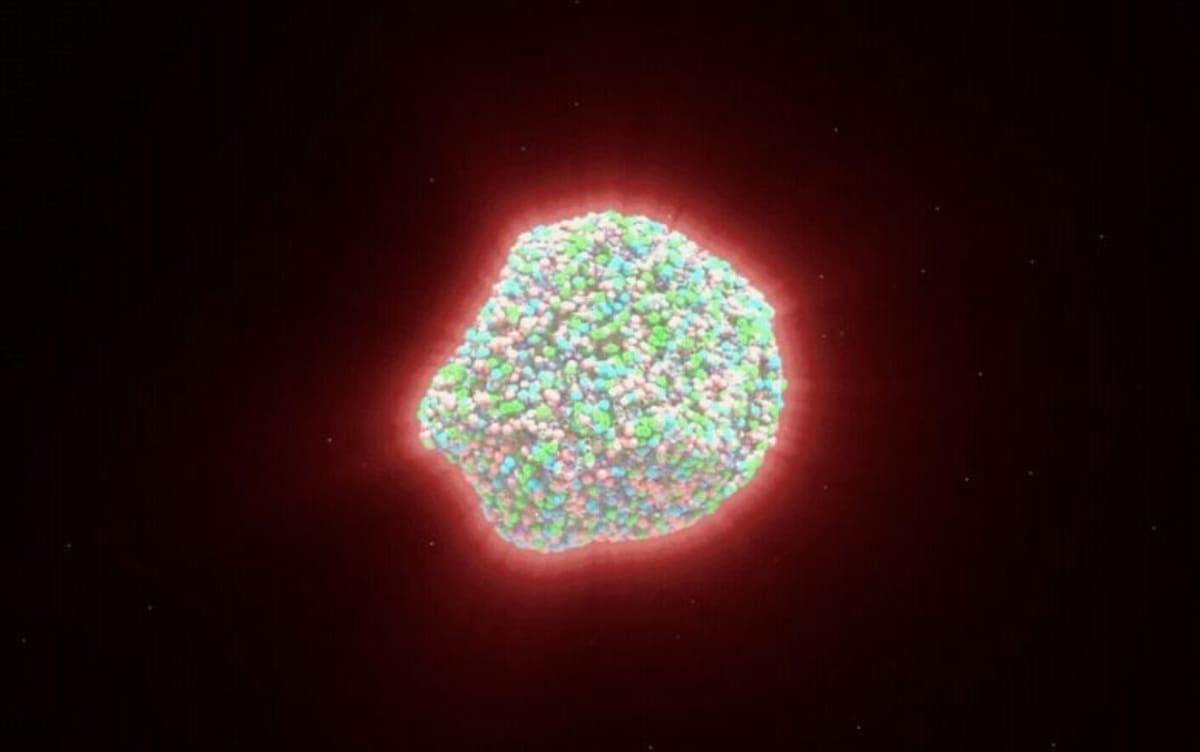
Inside the Large Hadron Collider, researchers smashed together oxygen and neon nuclei and produced quark-gluon plasma, the exotic state of matter that existed when the universe was less than a millionth of a second old. All four major LHC experiments (ALICE, ATLAS, CMS, and LHCb) independently confirmed the discovery.
This finding overturns what physicists believed for decades. Scientists thought only collisions between very heavy particles like lead (more than 200 times heavier than protons) could generate the extreme conditions needed to create this primordial soup.
Quark-gluon plasma forms at temperatures over 100,000 times hotter than the center of the Sun. At these incredible temperatures, the building blocks of matter break apart into their fundamental components: quarks and the gluons that normally glue them together.
The experiments detected several telltale signs of the plasma's presence. One key clue came from watching fast-moving particles lose energy as they traveled through the dense, hot medium, like trying to run through honey instead of air.
ATLAS observed an imbalance in particle jets during head-on collisions, where the larger volume of plasma would drain more energy. CMS found fewer high-energy particles than expected, another signature of parton energy loss.
LHCb discovered that heavier neon collisions suppressed particles more strongly than lighter oxygen collisions, exactly what you'd expect if a larger volume of quark-gluon plasma was forming. ALICE confirmed the effect by comparing oxygen-oxygen collisions with proton-oxygen collisions and found clear evidence of the energy loss.
The Bright Side
This breakthrough does more than help us understand the Big Bang. It's opening entirely new ways to study the fundamental forces that hold matter together.
By creating this primordial state with lighter particles, physicists now have a more flexible tool for experiments. The upcoming High-Luminosity LHC upgrade will let them examine this extreme state of matter in even finer detail.
Each collision is like a time machine, taking us back 14 billion years to witness how the universe transformed from a hot quark soup into the structured matter we see today. Understanding that transition helps explain everything from why atoms exist to how galaxies formed.
The fact that all four independent experiments confirmed the same results makes this discovery especially solid. When different teams using different methods reach the same conclusion, scientists can be confident they're seeing something real.
These findings prove that nature still has surprises in store, even when we think we understand the rules.
More Images
Based on reporting by Google News - Science
This story was written by BrightWire based on verified news reports.
Spread the positivity!
Share this good news with someone who needs it