Scientists Rescue Coffee from Climate Threat with New Species
As rising temperatures threaten the world's coffee supply, researchers are discovering resilient coffee species that taste just as good as your morning cup. Ethiopian scientists and global teams are preserving thousands of coffee varieties and finding climate-proof alternatives that could save the beloved brew.
Your morning coffee is facing a climate crisis, but scientists around the world are brewing up solutions that could save it.
Nearly all of the 10 million tonnes of coffee beans consumed each year come from just two species: arabica and robusta. The problem is that arabica dies when temperatures rise just a few degrees, while robusta needs massive amounts of water and struggles in droughts.
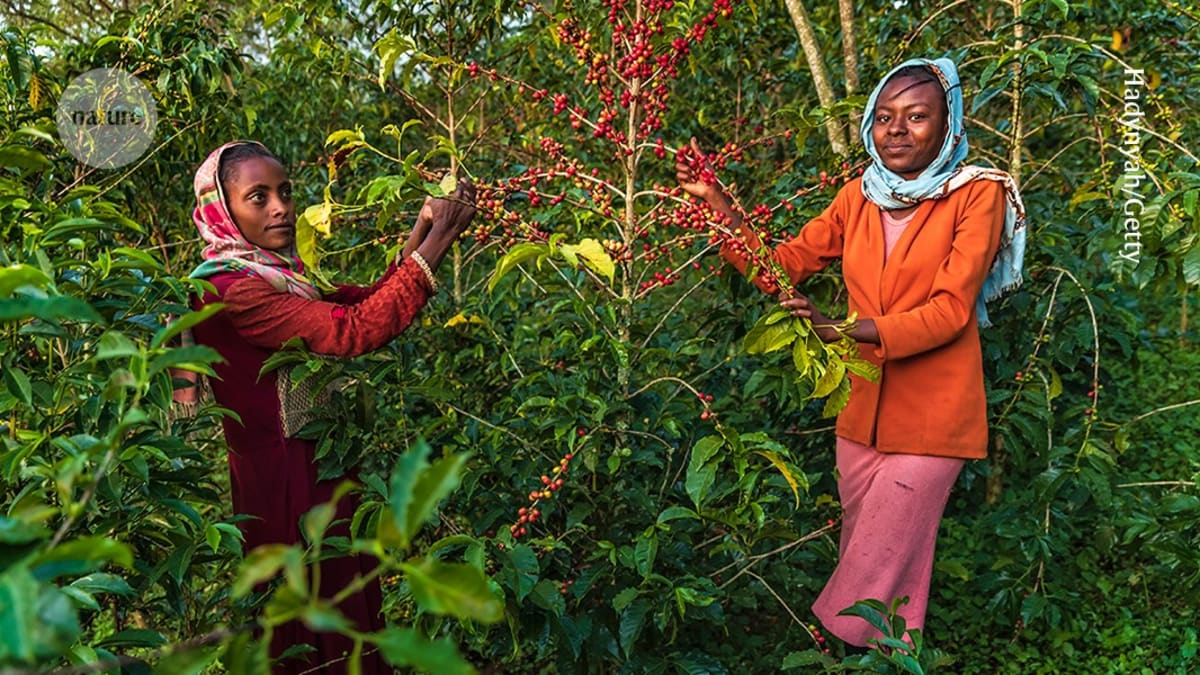
Enter a team of dedicated researchers racing to protect both coffee drinkers and the millions of lower-income farmers who depend on the crop. Plant geneticist Kassahun Tesfaye at Addis Ababa University is leading efforts in Ethiopia, the birthplace of arabica coffee, to preserve the plant's natural diversity.
The Ethiopian government has established conservation areas and is growing more than 12,000 arabica plants in living collections. These plants hold the genetic keys to breeding heat and drought resistant varieties.
But preservation isn't the only strategy. Scientist Aaron Davis has spent decades traveling across Africa and Madagascar discovering wild coffee species, personally documenting about one-third of the 134 known varieties.
Some of these forgotten species are proving to be game changers. Davis discovered that Coffea excelsa and a hybrid called libex taste so similar to arabica that even professional tasters often can't tell them apart. The difference? These plants can handle higher temperatures and need less water.
The Bright Side
When Davis brewed Coffea liberica from Malaysia at his office, it released intense aromas of jackfruit and mango. Another variety, Coffea racemosa, offered rich chocolate notes. These aren't just scientific curiosities but real alternatives that farmers are already successfully growing in regions where traditional coffee can no longer survive.
The success stories Davis has witnessed all share one common thread: farmers who switched to climate-resilient species are thriving while others struggle. In wet regions, some are switching to robusta, while others are discovering that Coffea liberica tolerates heat without sacrificing flavor.
Ethiopia's vast genetic collection offers another reason for hope. With arabica plants carrying four full sets of chromosomes instead of the usual two, they have extra genetic diversity to work with. As Tesfaye puts it: "I believe we have enough gene pool to fight climate change."
These discoveries mean coffee lovers can keep enjoying their daily ritual while farmers adapt to our changing climate, proving that science and tradition can work together to solve even the toughest challenges.
More Images


Based on reporting by Nature News
This story was written by BrightWire based on verified news reports.
Spread the positivity!
Share this good news with someone who needs it