
Scientists Restore Endangered Bird's Lost Song With Tutors
Australian researchers have successfully taught critically endangered regent honeyeaters their forgotten song using wild-born "tutors." The restored melody could save the species from extinction by helping zoo-bred birds find mates in the wild.
When you're one of only 250 birds left in the world, every note matters.
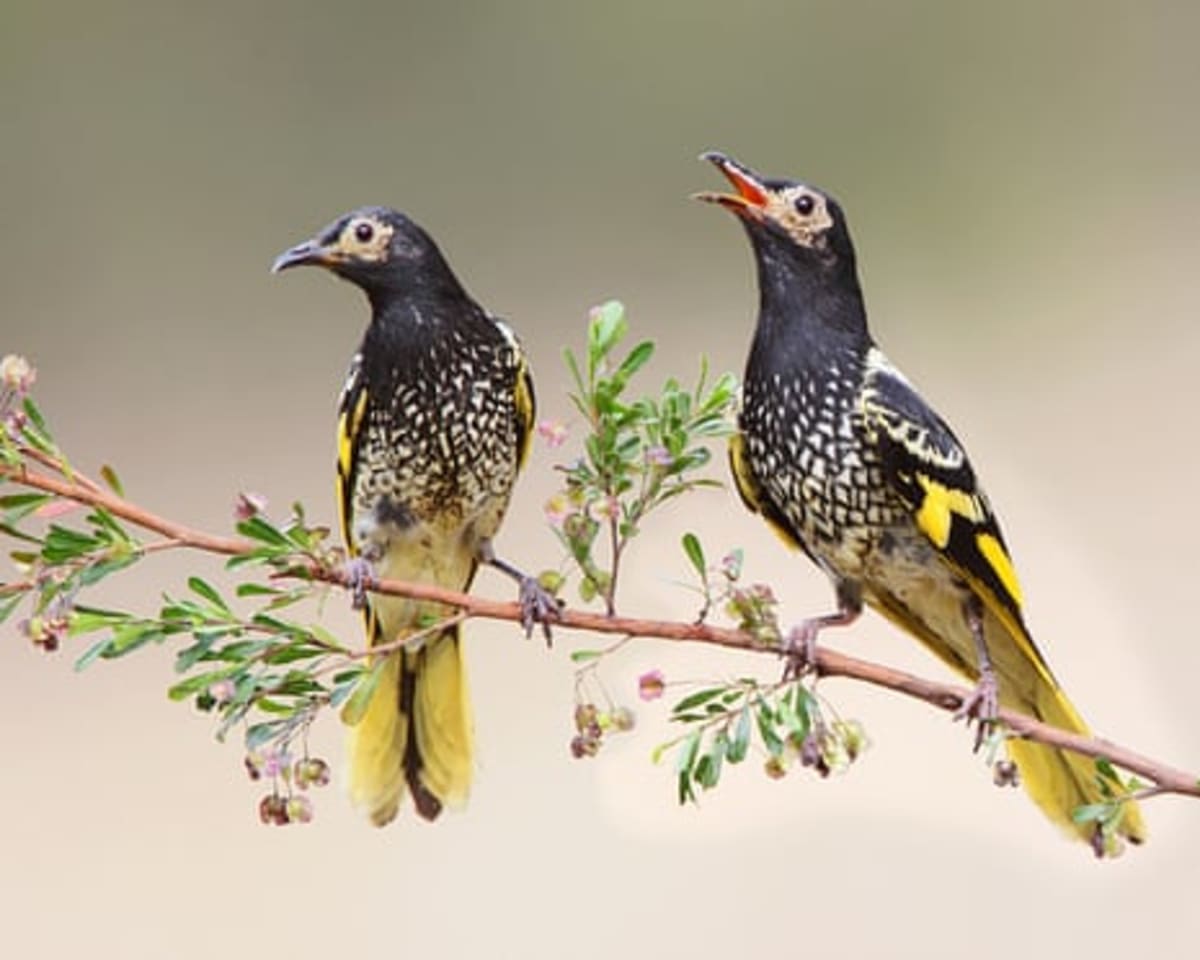
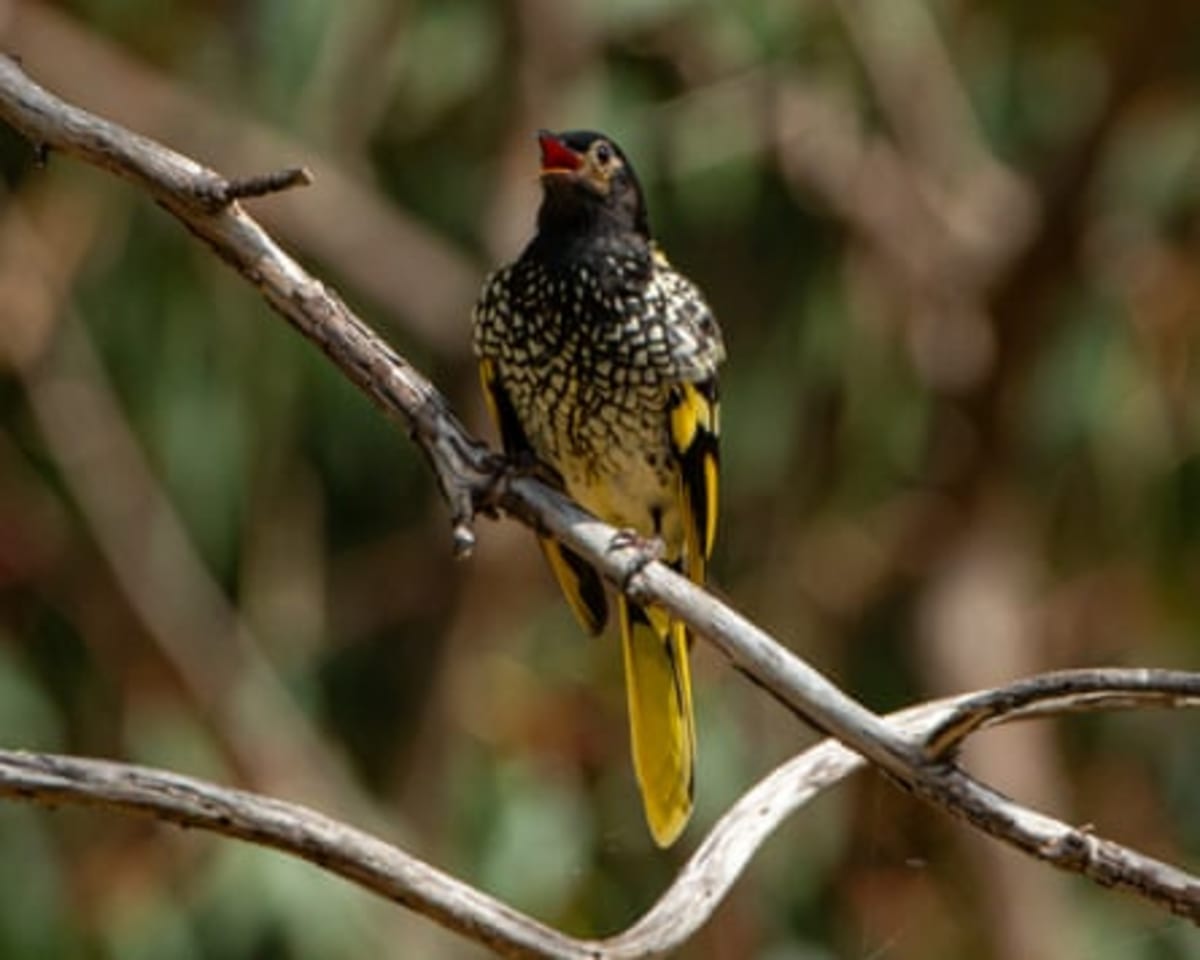
Scientists in Australia have achieved something remarkable: they've rescued the disappearing song of the regent honeyeater, one of the country's rarest birds. As the species declined over recent decades, the birds lost the complexity of their original tune, switching to a simpler version with half the syllables.
The problem goes beyond aesthetics. Male regent honeyeaters use their songs to attract mates and establish territory, making the full melody essential for survival.
Dr. Daniel Appleby and his team at Australian National University spent three years teaching young zoo-bred males their ancestral song. Their first attempt using recordings failed completely, but then they tried something different: they recruited two wild-born males as living music teachers.
The researchers grouped young birds with adult tutors, creating small "classrooms" in the breeding program at Taronga Zoo in Sydney. After adjusting class sizes to about six students per teacher, success rates jumped from zero to 42% within three years.
The timing couldn't be more critical. During the study period, the full traditional song completely disappeared from wild populations in the Blue Mountains, where most remaining regent honeyeaters now live. The zoo became the only place on Earth where the original melody survived.
The Ripple Effect
The rescued song is already spreading naturally. Male birds who learned the complete version from tutors are now teaching the next generation themselves, creating a chain of musical knowledge.
Since 2000, Taronga Zoo and its partners have released 556 zoo-bred regent honeyeaters back into New South Wales and Victoria. Recent releases include males carrying the restored song into the wild.
Dr. Joy Tripovich, an ecologist studying the birds at both Taronga and the University of New South Wales, described hearing the zoo-bred birds sing their ancestral song for the first time as "really exciting." Her team is now tracking whether the tutoring program improves breeding success for released birds.
The ultimate goal is remarkable in its simplicity: researchers want to see wild and captive birds choosing each other as mates. "Historically that wasn't something we ever really observed," Appleby said.
Fewer than 250 regent honeyeaters remain in the wild, down from the vast flocks that once filled the skies across southeastern Australia from Queensland to South Australia. The captive breeding program, running since 1995, represents one of the species' best hopes for recovery.
The researchers dream of a future where the population becomes self-sustaining, where human intervention is no longer needed, and where the Blue Mountains once again echo with the complex, multi-syllable songs that nearly vanished forever.
More Images


Based on reporting by Guardian Environment
This story was written by BrightWire based on verified news reports.
Spread the positivity!
Share this good news with someone who needs it


%2Fhttps%3A%2F%2Ftf-cmsv2-smithsonianmag-media.s3.amazonaws.com%2Ffiler_public%2F6c%2F5f%2F6c5f3401-48da-41c5-8eb0-c7f99032b198%2F11_nabarlek_on_augustus_island__ian_bool.jpg)