Scientists Reveal How Cells Fix Broken DNA
Johns Hopkins researchers have captured the first detailed views of how human cells repair the most dangerous type of genetic damage. The breakthrough could lead to better cancer treatments and safer gene editing.
Every day, your cells perform microscopic miracles that keep you alive, and scientists just revealed exactly how one of the most crucial repairs happens.
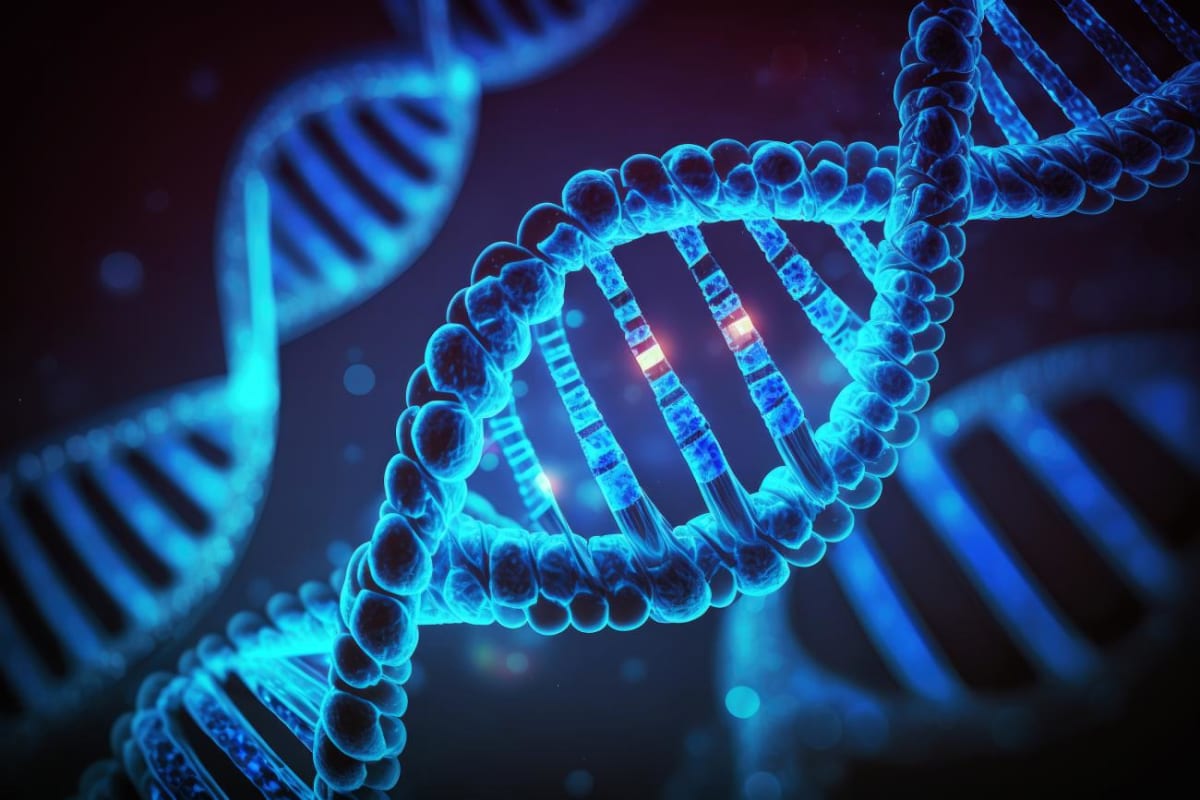
Researchers at Johns Hopkins University have published two groundbreaking studies showing how human cells fix double-strand breaks in DNA. These breaks slice completely through the twisted ladder structure that carries all our biological instructions. Without proper repair, cells die or develop mutations that can lead to cancer.
The team focused on a repair system called non-homologous end joining, which acts like an emergency response team for genetic damage. Using powerful imaging technology, they watched this process unfold in conditions that mirror what actually happens inside our bodies.
Previous research studied DNA repair on exposed genetic material floating freely in labs. The Johns Hopkins team took a more realistic approach by examining DNA still wrapped around proteins called histones, the way it naturally exists in our cells.
What they discovered surprised them. The repair proteins don't need to unwrap the DNA from its protein spools to fix the damage. Instead, the machinery gradually advances along the packaged DNA, working around the obstacles rather than removing them first.
The second study revealed how cells handle messy breaks. DNA rarely snaps cleanly. The ends might be ragged, chemically damaged, or missing pieces entirely. The team watched as a protein called polymerase lambda attaches to the break site and adds missing building blocks, preparing the damaged ends to reconnect properly.
Yuan He, Bloomberg Distinguished Professor at Johns Hopkins and senior author of both papers, emphasized the importance of federal research funding. "Without the continued support from grants from the National Institutes of Health, we would not have achieved such an important advancement in understanding how DNA repair works," he said.
The research team included doctoral student Weifeng Lu and collaborators from Northwestern University, the University of Calgary, the National Institute of Environmental Health Sciences, and the University of New Mexico.
Why This Inspires
This discovery represents years of patient scientific work finally paying off with answers that matter. Understanding exactly how our cells protect our genetic code every single day opens doors to designing better cancer therapies that work with our natural repair systems instead of against them. The research also promises more predictable gene-editing techniques, making these powerful medical tools safer for patients.
These microscopic emergency repairs happen constantly in your body right now, keeping your cells healthy and your DNA intact.
Based on reporting by Google News - Scientists Discover
This story was written by BrightWire based on verified news reports.
Spread the positivity!
Share this good news with someone who needs it