Scientists Reverse Memory Loss in Mice With Brain Cell Reset
Researchers reversed age-related memory loss and Alzheimer's symptoms in mice by rejuvenating specific memory neurons. The breakthrough offers hope that cognitive decline might not be permanent after all.
Scientists at Switzerland's EPFL have done something many thought impossible: they reversed memory loss in aging mice and those with Alzheimer's disease by giving their brain cells a molecular "reset button."
The team discovered they could restore lost memories by targeting specific neurons called engrams, the brain cells that light up when we learn something new and reactivate when we remember it. In aged brains, these memory cells start to malfunction, but the new research shows that decline doesn't have to be permanent.
The technique uses a brief pulse of three genes (called OSK) to rejuvenate only the neurons involved in memory formation. Think of it like a software update for brain cells, rolling them back to a younger, healthier state without changing what they are or erasing their stored memories.
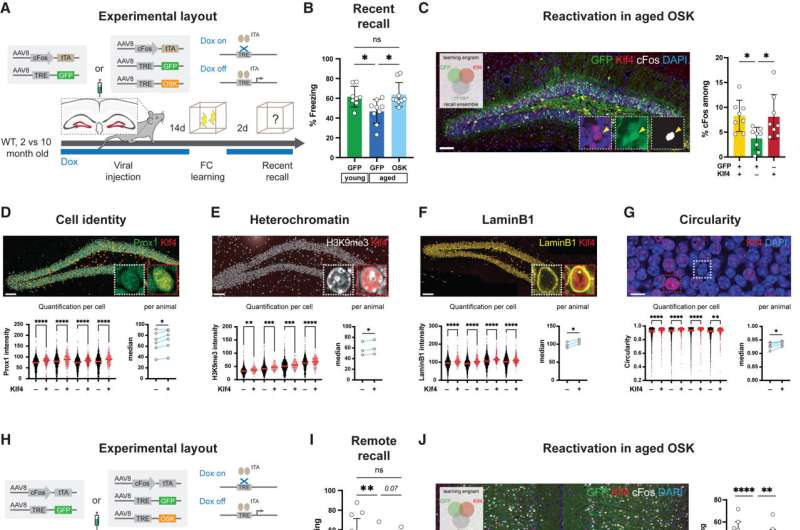
The results were striking. Aged mice that received the treatment performed memory tasks as well as young mice. When researchers applied the same approach to different brain regions, they could restore both recent memories and those formed weeks earlier.
The team then tested mice with Alzheimer's disease. These mice struggled with spatial learning and navigation, showing confused and inefficient movement patterns. After treatment, their learning strategies improved during training, and their long-term memory bounced back.
The reprogrammed neurons showed physical signs of rejuvenation too. Their molecular structure shifted toward a younger state, and the Alzheimer's related damage in gene activity and firing patterns partially reversed.
Why This Inspires
This research flips the script on how we think about memory loss. For decades, age-related cognitive decline and Alzheimer's seemed like one-way streets with no turning back.
By targeting only memory-specific neurons during a short time window, the approach captures healing benefits while minimizing risks. The treatment didn't erase the neurons' identity or function. It simply gave them the biological tools to work properly again.
The study is still in early stages and years away from human trials, but it proves a powerful concept: the brain's memory machinery can be repaired even after damage has occurred.
For the millions watching loved ones struggle with memory loss, this research offers something precious: scientific evidence that cognitive decline might one day be reversible, not just manageable.
More Images



Based on reporting by Medical Xpress
This story was written by BrightWire based on verified news reports.
Reset Your Focus With Today’s Daily Affirmations & Mood Check
Take a 60-second mindful pause with curated daily affirmations and our private positivity mood tracker.
Spread the positivity!
Share this good news with someone who needs it