Scientists Shrink 20-Year "Holy Grail" Laser Onto Tiny Chip
After two decades of trying, scientists have finally squeezed a powerful ultrafast laser onto a chip the size of a match head. The breakthrough could bring advanced medical diagnostics, environmental sensors, and super-accurate atomic clocks out of expensive labs and into everyday life.
The bulky laser systems that power everything from eye surgery to the world's most precise atomic clocks just got small enough to fit on your fingertip.
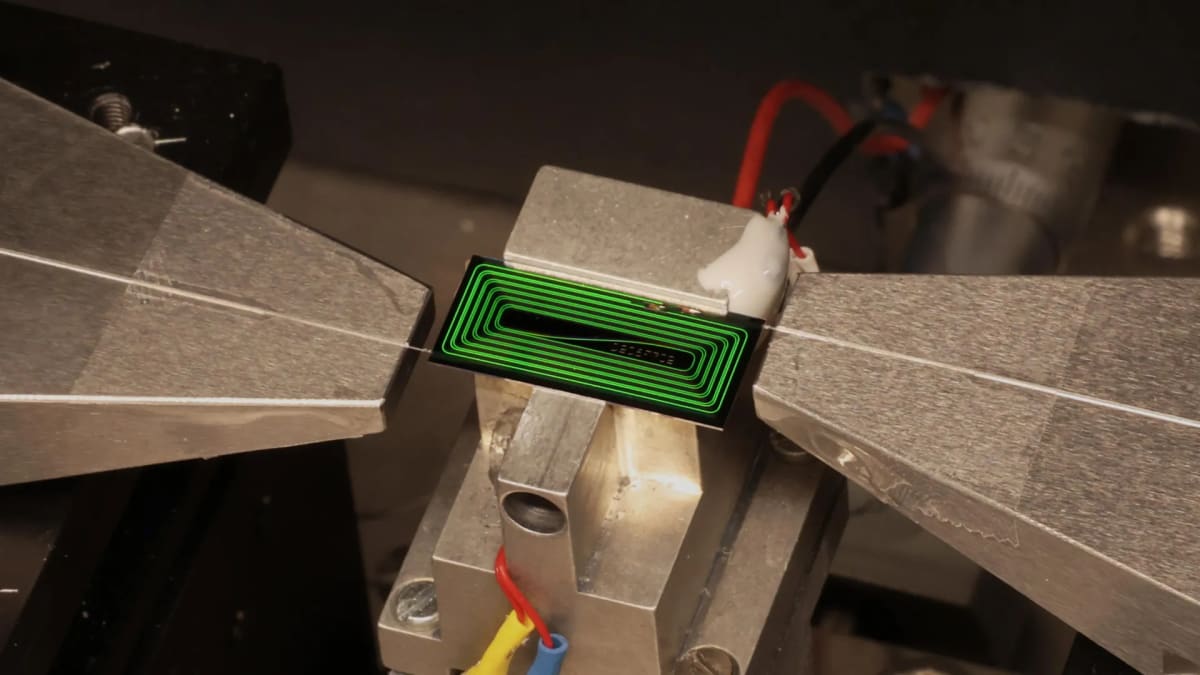
Researchers at Switzerland's EPFL have cracked a problem that stumped scientists for 20 years. They've built an ultrafast laser directly onto a photonic chip, matching the performance of room-sized lab equipment while taking up less space than a match head.
These aren't ordinary lasers. Ultrafast lasers fire pulses that last just 147 femtoseconds, or quadrillionths of a second. That mind-bending speed enables precision manufacturing, medical diagnostics, and optical atomic clocks that keep time more accurately than anything else humans have ever built. Until now, these powerful tools required entire optical tables and price tags that kept them locked inside research facilities.
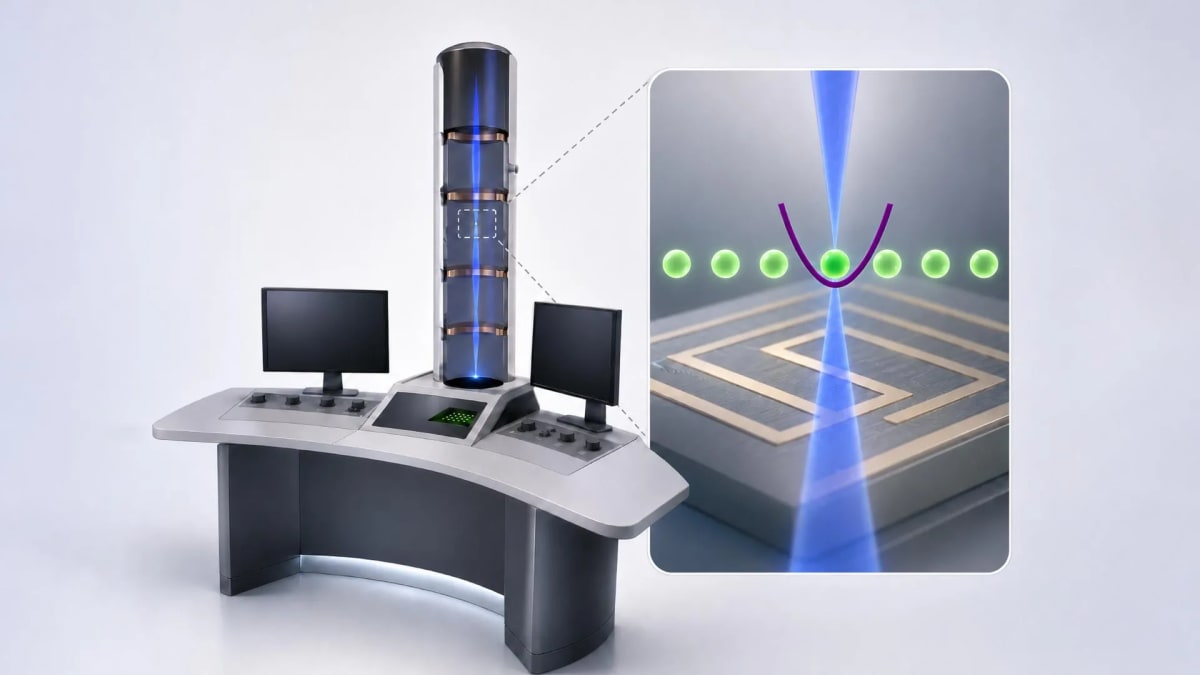
Professor Tobias Kippenberg's team achieved the impossible by using an overlooked design called the Mamyshev oscillator. The system sandwiches a special waveguide between two optical filters that act like bouncers at a club, only letting the right light frequencies through.
When an intense laser pulse travels through the waveguide, it naturally spreads into a rainbow of colors that can pass through both filters. Weaker light doesn't broaden enough, so it gets blocked and filtered out. This elegant design solves a problem that plagued other approaches: when you squeeze light into tiny chip-scale waveguides, it normally becomes unstable and ruins the laser pulses.
The laser cavity stretches 42 centimeters, but it folds neatly onto the chip using techniques similar to computer chip manufacturing. That means factories could potentially produce over 1,000 of these laser systems simultaneously on a single wafer, dramatically slashing costs.
The Ripple Effect
This miniaturization could democratize technologies that have been stuck in expensive labs for decades. Portable devices could soon detect pollutants in drinking water, spot hidden cracks in bridges and buildings, or perform medical tests right in a doctor's office instead of sending samples to specialized facilities.
The chip delivers kilowatt-level peak power, enough to drive the demanding applications that currently depend on lasers costing tens of thousands of dollars. Co-author Zheru Qiu points out that the chip uses erbium-doped silicon nitride, materials that are relatively straightforward to manufacture without exotic components.
Perhaps most exciting is the potential for compact optical atomic clocks. These ultra-precise timepieces could transform GPS accuracy, secure communications networks, and help scientists study everything from gravitational waves to climate change. Right now they fill entire rooms; tomorrow they might fit in your car.
The breakthrough makes cutting-edge science smaller, cheaper, and accessible to everyone who needs it.
Based on reporting by Science Daily
This story was written by BrightWire based on verified news reports.
Spread the positivity!
Share this good news with someone who needs it