Scientists Solve 160-Million-Year Sponge Fossil Mystery
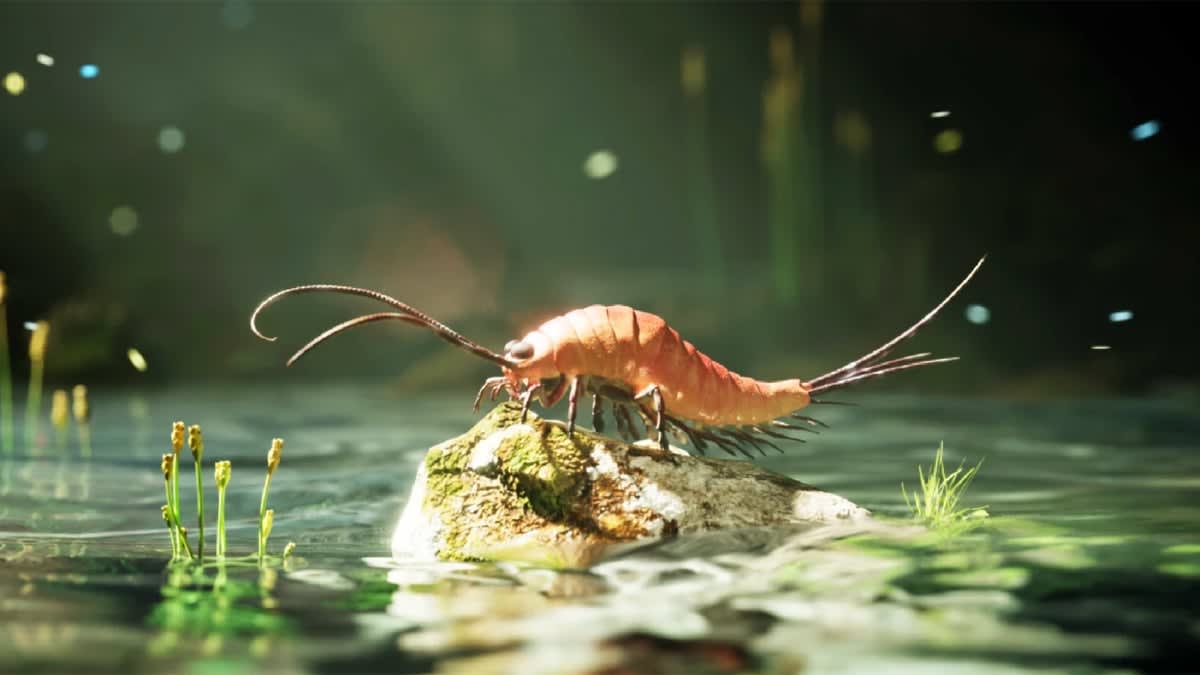
A 550-million-year-old sea sponge fossil just explained why the earliest animals seemed to vanish from history. The discovery reveals that ancient sponges were too soft to fossilize, solving a puzzle that has stumped scientists for decades.
Scientists have finally cracked one of evolution's most puzzling cold cases, and the answer was hiding in plain sight along China's Yangtze River.
For years, researchers knew that sea sponges first appeared around 700 million years ago based on genetic evidence. Yet the oldest clear sponge fossils only dated back to 540 million years ago, leaving a baffling 160-million-year gap in the record.
Virginia Tech geobiologist Shuhai Xiao got his first clue about five years ago when a colleague sent him a photo of an unusual specimen. "I had never seen anything like it before," Xiao said, recalling the moment he realized he was looking at something entirely new.
The fossil turned out to be a 550-million-year-old sea sponge, sitting right in the middle of those missing years. But more importantly, it revealed why earlier fossils were so scarce.
Working with researchers from the University of Cambridge and the Nanjing Institute of Geology and Paleontology, Xiao's team proposed a game-changing explanation. The earliest sponges likely lacked the hard, mineral-based structures that help modern sponges fossilize, making them nearly invisible to the fossil record.
The evidence supported this theory beautifully. When the team examined sponge fossils across time, they noticed that the further back they looked, the less mineralized the structures became.
"If you extrapolate back, then perhaps the first ones were soft-bodied creatures with entirely organic skeletons and no minerals at all," Xiao explained. Without those hard parts, ancient sponges would only fossilize under extremely rare conditions where rapid preservation could outpace decomposition.
The newly discovered fossil offered exactly that rare glimpse. It was preserved in a thin layer of marine carbonate rock known for capturing delicate, soft-bodied organisms.
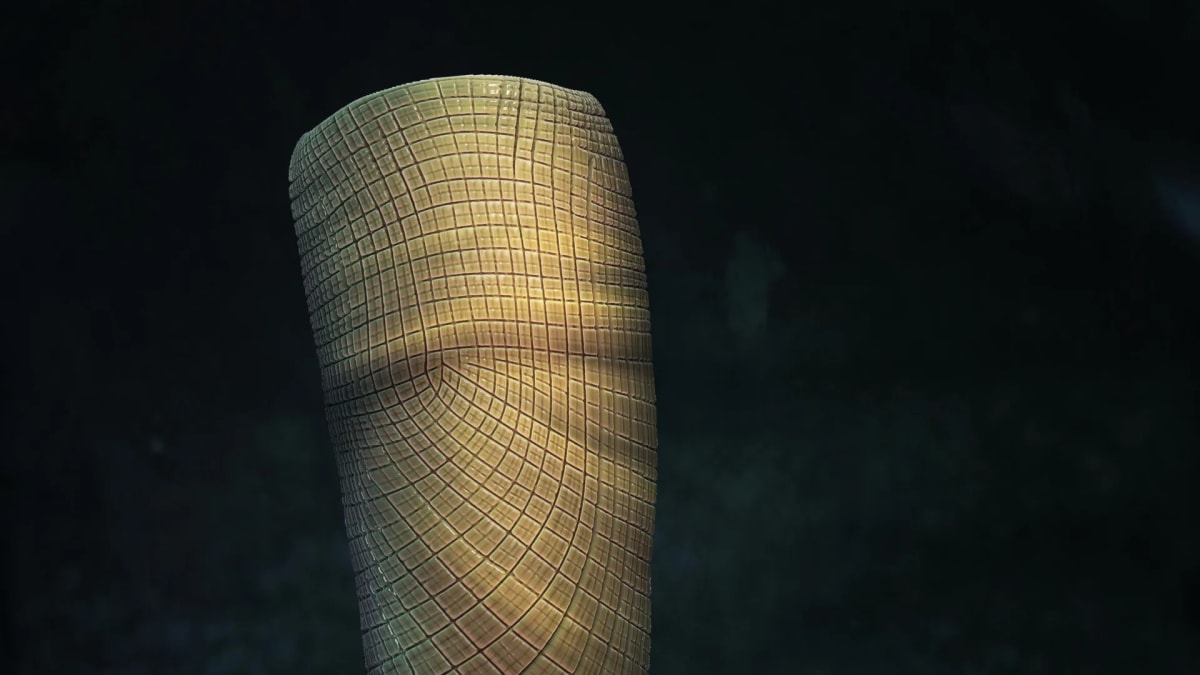
The sponge itself surprised researchers in other ways too. At about 15 inches long with a complex, conical shape, it challenged expectations that early sponges would be tiny and simple.
Its surface showed a distinctive grid pattern of box-like shapes, each subdivided into smaller repeating units. This specific design suggests the ancient creature was most closely related to modern glass sponges.
Why This Inspires
This discovery does more than fill a gap in our understanding of the past. It fundamentally changes how scientists search for the origins of animal life on Earth.
The finding validates what molecular biologists have been saying for years while giving paleontologists new direction. Instead of looking only for hard, mineralized remains, researchers now know to seek out rare geological conditions where soft-bodied creatures could be preserved.
The breakthrough also connects back to questions Charles Darwin himself raised about when and how early animal life emerged. Every new piece of evidence brings us closer to understanding our planet's deepest biological mysteries.
Most importantly, this work shows that persistence pays off. What seemed like an unsolvable puzzle simply required scientists to look in different places and think in new ways.
The earliest animals on Earth were soft, delicate, and nearly impossible to preserve, but they left their mark nonetheless.
Based on reporting by Science Daily
This story was written by BrightWire based on verified news reports.
Spread the positivity!
Share this good news with someone who needs it