Scientists Solve 1,700-Year Mystery of Polynesian Voyages
New climate research reveals why Polynesian navigators suddenly sailed thousands of miles across the Pacific after 1,700 years of staying put. The answer lies in ancient rainfall patterns that pushed communities toward one of history's most daring explorations.
Imagine your ancestors facing a choice between waiting for rain that might never come or sailing into the unknown to save your community. That's exactly what Polynesian voyagers did over a thousand years ago, and scientists just figured out why.
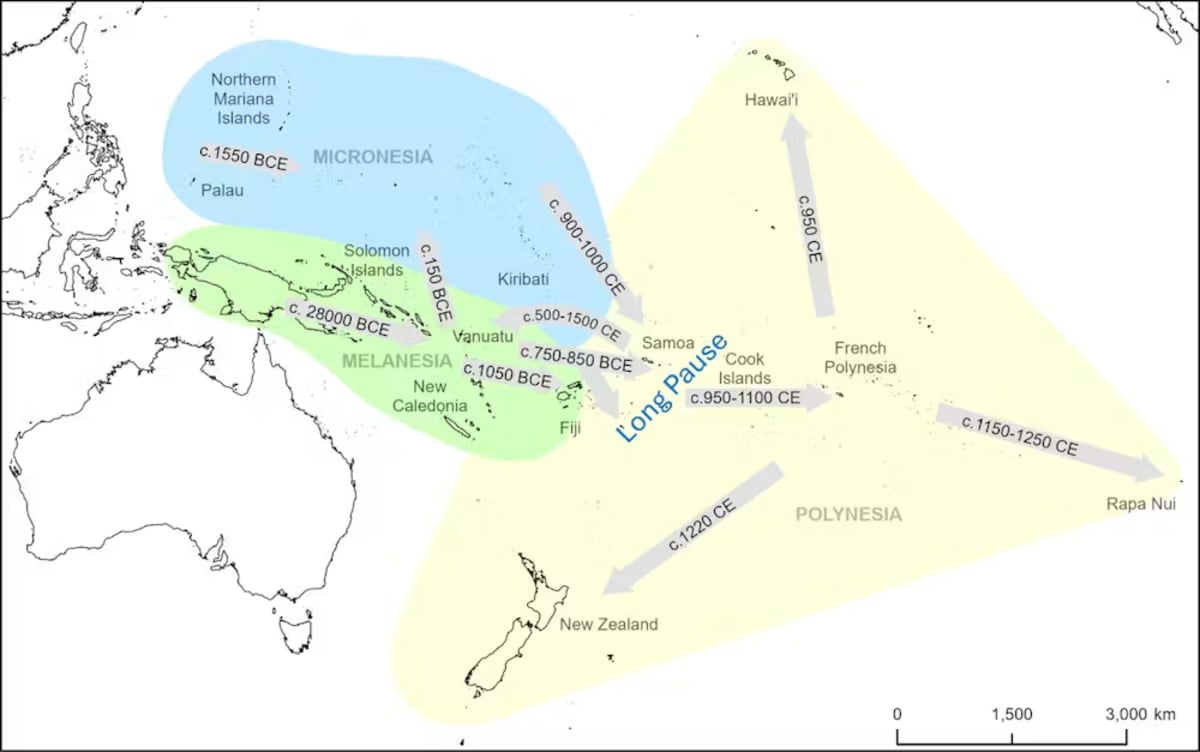
For nearly two millennia, researchers have puzzled over the "long pause." Around 3,000 years ago, the Lapita people sailed east across the Pacific, settling in Samoa and Tonga. Then they stopped for 1,700 years.
Then something changed. Between 900 and 1100 AD, these skilled navigators suddenly launched massive eastward migrations in huge double-hulled canoes. Within a century, they reached Hawaii, New Zealand, and Easter Island, settling even the tiniest atolls along the way.
Scientists from the University of Southampton recently cracked the mystery by analyzing ancient mud from swamps and lakes in Tonga and Samoa. They studied hydrogen isotopes, which act like chemical fingerprints showing how much rain fell thousands of years ago.
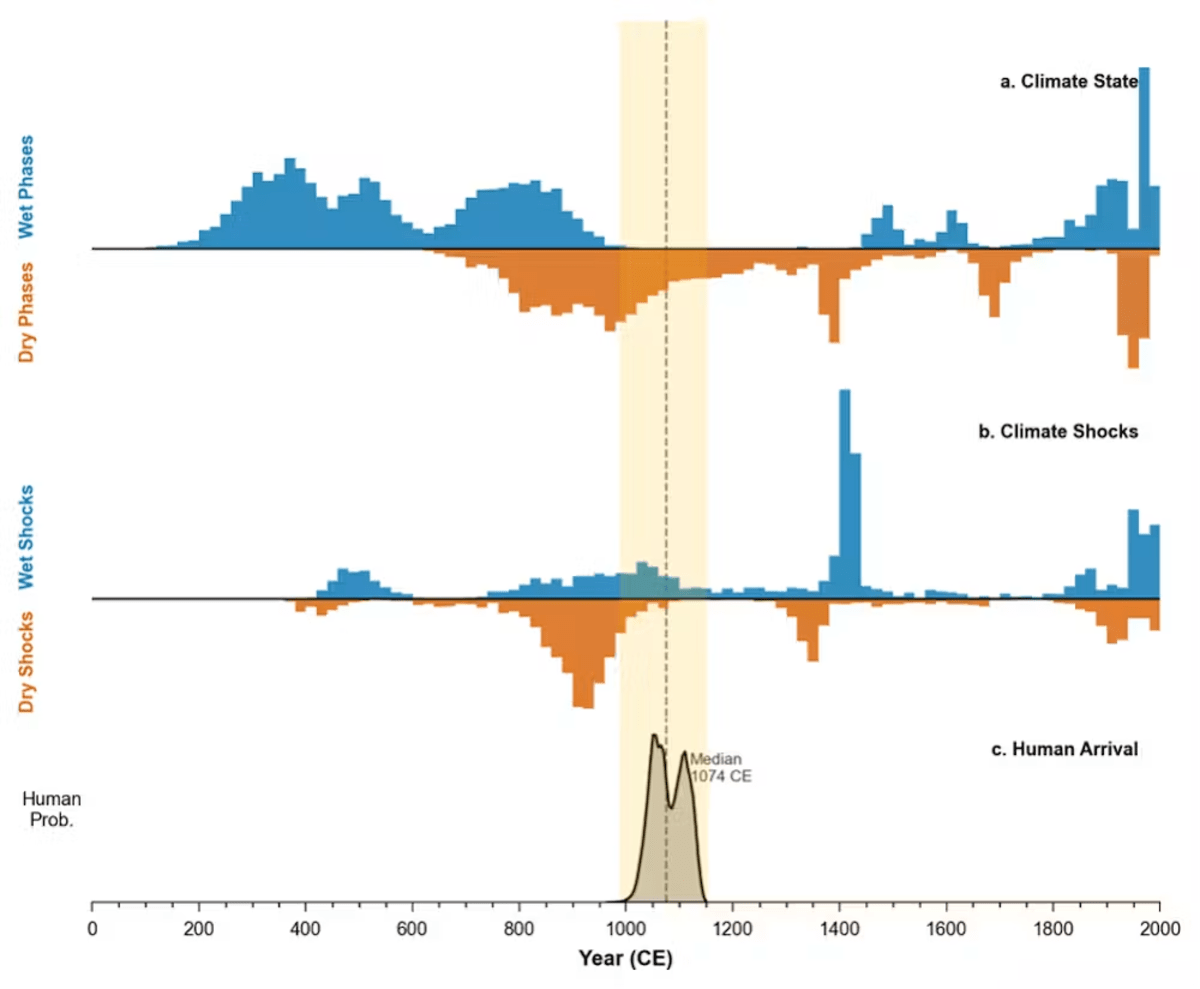
The team discovered that between 850 and 1200 AD, the southwest tropical Pacific experienced its driest period in 2,000 years. This wasn't just any drought; it was a sustained, severe dry spell that coincided with growing island populations.
The timing was critical. As populations expanded, communities needed more fresh water and food. When a major rain belt called the South Pacific Convergence Zone shifted away from these western islands, resources became scarce.
Why This Inspires
This story shows how human ingenuity transforms crisis into opportunity. Rather than waiting helplessly, Polynesian communities chose exploration. They combined better canoe technology with courage and navigational brilliance to venture into uncharted waters.
Genetic data supports this climate-driven migration theory. Samoa's population surged around 1000 AD, likely from people arriving from drought-stricken islands. Multiple factors aligned at once: environmental stress, population growth, and improved sailing technology.
The research, published in the Journal of Pacific Archaeology, helps us understand not just what happened, but how these remarkable navigators responded to challenges. When European sailors arrived centuries later, they were stunned to find culturally and linguistically connected communities across thousands of miles of ocean.
Today's scientists continue uncovering the environmental challenges these voyagers faced, revealing a story of resilience that spans generations and an ocean.
More Images


Based on reporting by Ars Technica Science
This story was written by BrightWire based on verified news reports.
Spread the positivity!
Share this good news with someone who needs it