Indonesia Now Leads Research on Human Origins
After decades of foreign scientists extracting fossils and knowledge from their land, Indonesia has flipped the script. The nation now funds and leads major archaeological digs, inviting international experts to join their quest to uncover humanity's earliest chapters.
For the first time in history, Indonesian scientists are leading the search for humanity's oldest ancestors on their own soil, reversing more than a century of foreign-led excavations.
Last September, Dutch researcher Eduard Pop traveled to Bumiayu in central Java, but this time something felt different. Indonesia's National Research and Innovation Agency paid for his trip, provided his accommodation, and gave him a stipend to work on their excavation project. "This time, it's the other way around," Pop says, noting that Dutch scientists used to arrive with foreign grants, hire local helpers, make discoveries, and leave.
The shift marks a dramatic change from what researchers call "parachute research." For generations, international teams would swoop into Indonesia, extract fossils and data, publish papers, and depart without building local capacity or sharing credit.
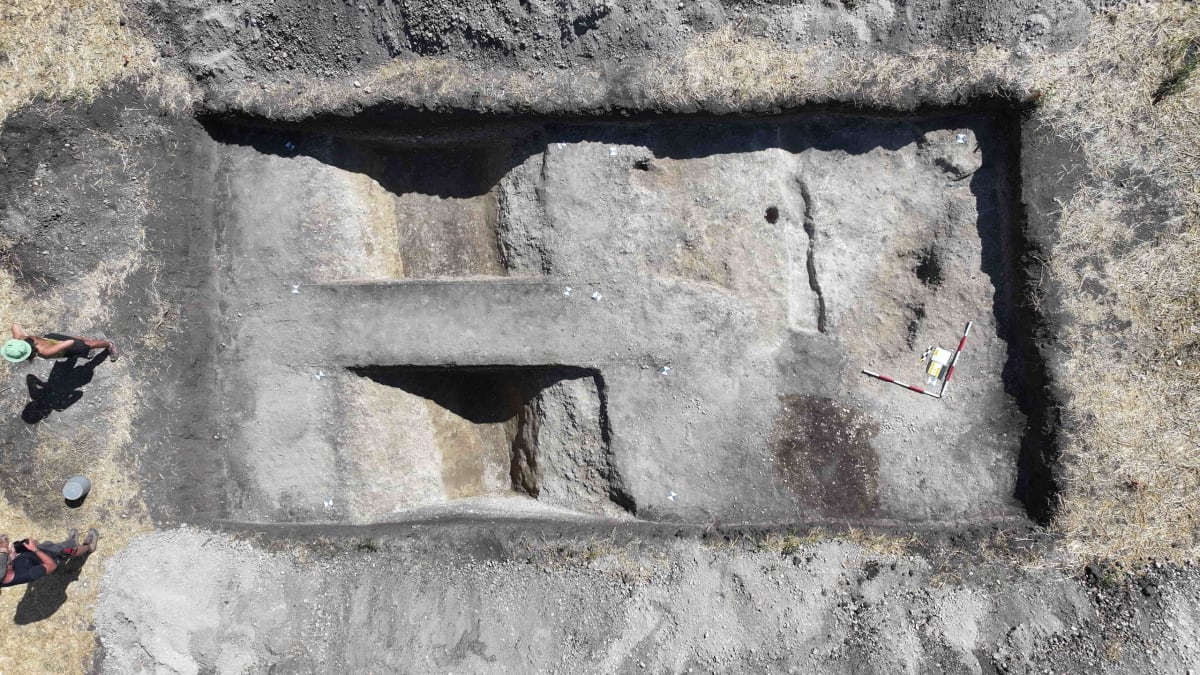
Now Indonesia has launched a 67-square-kilometer excavation at Bumiayu, complete with modern field stations, cutting-edge laboratory equipment, and air-conditioned accommodation. The government has committed $180,000 annually for up to ten years of work at the site alone.
The stakes are enormous. Java played a crucial role in human history as part of Sundaland, one of the farthest points Homo erectus reached from Africa during the Pleistocene epoch. The Java Man, discovered in 1895, provided the first fossil evidence of Homo erectus and confirmed Darwin's theory of evolution.
Lead palaeontologist Sofwan Noerwidi hopes Bumiayu will yield another breakthrough: a hominin fossil as old as the roughly two-million-year-old specimens found only in Africa so far. His team already discovered 1.8-million-year-old fossilized thigh-bone pieces in 2020, and deeper soil layers might contain even older samples.
The transformation wouldn't have been possible without the 2021 creation of BRIN, Indonesia's new national research superagency that merged 39 institutions. While its formation was controversial and involved workforce reductions, researchers say they're seeing results in the form of better collaboration and locally-led projects.
Several countries including the United Kingdom, Japan, and the United States have become research partners. But the Netherlands, Indonesia's former colonial ruler until the 1940s, will be the main collaborator in palaeoanthropology over the coming years.
The Ripple Effect
The change extends beyond one excavation site. Indonesia is reshaping how developing nations approach scientific research that touches their heritage. By controlling funding and leadership, they're ensuring local scientists gain expertise, students receive training, and discoveries benefit Indonesian institutions first.
The model challenges the long-standing dynamic where wealthy nations extracted knowledge from former colonies just as they once extracted natural resources. Other countries with rich archaeological sites are watching closely.
For Pop, working under Indonesian leadership feels right. "Indonesia is now taking the lead in palaeoanthropology research," he says. After more than a century, the scientists whose ancestors may have walked these volcanic slopes are finally writing their own story.
More Images



Based on reporting by Nature News
This story was written by BrightWire based on verified news reports.
Spread the positivity!
Share this good news with someone who needs it