Scientists Solve 20-Year Particle Mystery at CERN
Physicists at CERN have discovered a heavy cousin of the proton, ending two decades of scientific debate. The breakthrough confirms what scientists predicted and opens doors for even more discoveries.
After 20 years of searching, scientists at CERN's Large Hadron Collider have finally found a particle that theorists predicted but couldn't prove existed. The discovery settles a mystery that has puzzled the physics community since the early 2000s.
The particle, called Ξcc⁺ (pronounced "zee-cc-plus"), is like a heavier version of the proton. While a regular proton contains two up quarks and one down quark, this newly discovered particle swaps those up quarks for heavier charm quarks.
The University of Manchester played a starring role in the breakthrough. Scientists there designed and built crucial parts of the upgraded detector that spotted the particle, assembling some components right in the university's Schuster Building.
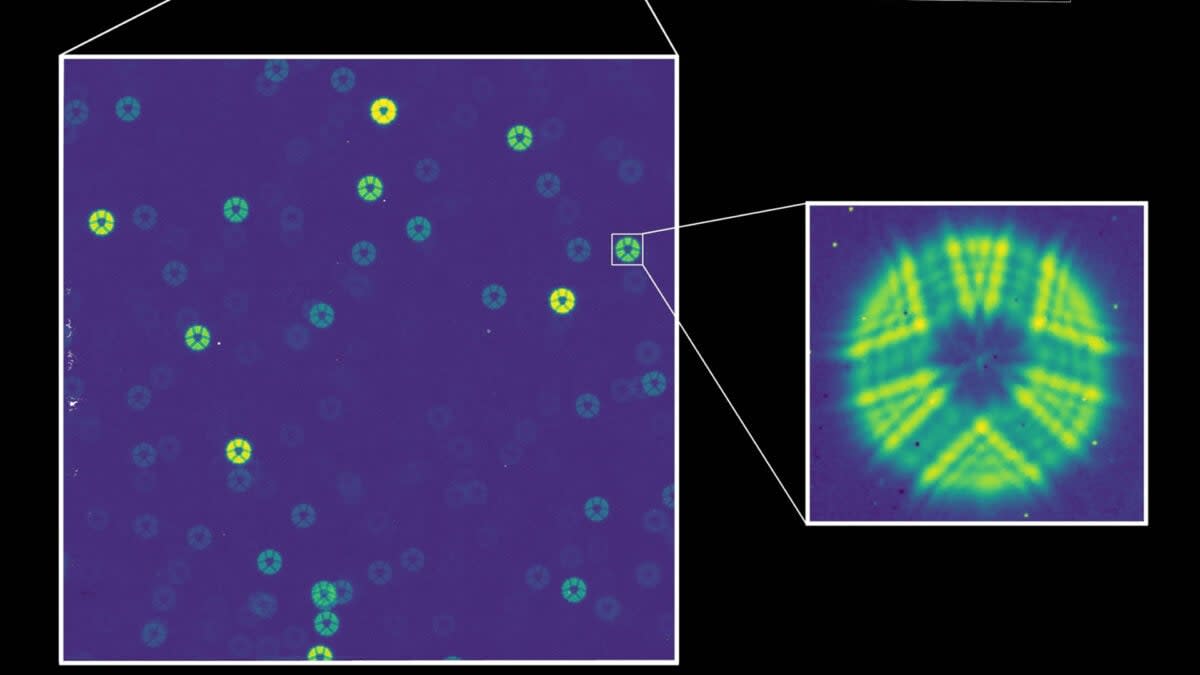
The detector works like an incredibly fast camera, snapping photos of particle collisions 40 million times per second. In 2024, it captured about 915 events showing the Ξcc⁺ decaying into lighter particles, providing clear proof the particle exists.
Professor Chris Parkes, who led the international collaboration, connected the discovery to Manchester's rich scientific heritage. The same university where Ernest Rutherford first identified the proton between 1917 and 1919 has now discovered its heavy cousin using cutting-edge technology at the world's most powerful particle collider.
The finding is especially sweet because previous claims of spotting this particle were never confirmed. The new measurement shows the particle at a different mass than earlier reports suggested, but it perfectly matches what scientists expected based on related particles they'd already found.
More than 1,000 researchers across 20 countries contributed to the project, with the UK leading the charge. The silicon chips developed for the detector even have practical applications beyond physics, with variants now being used in medical imaging.
The Ripple Effect
This discovery proves that the upgraded LHCb detector works beautifully, opening the door for finding other rare particles scientists have only theorized about. The University of Manchester is already gearing up for the next phase, which will use an even more powerful accelerator to gather more data and explore the building blocks of matter in unprecedented detail.
The technology developed for this research has already jumped from the physics lab to hospitals, where similar silicon chips help doctors see inside the human body. That's the beauty of curiosity-driven research: you never know where it will lead.
From a basement in Manchester where Rutherford discovered the proton to the massive underground facility at CERN, scientists continue pushing the boundaries of what we know about the universe.
This breakthrough reminds us that patience and persistence in science pay off, even when answers take decades to arrive.
Based on reporting by Science Daily
This story was written by BrightWire based on verified news reports.
Spread the positivity!
Share this good news with someone who needs it

%3Amax_bytes(150000)%3Astrip_icc()%3Afocal(599x0%3A601x2)%2Fdana-price-with-trap-091626-152b86c5a0aa4313a091e8c042946009.jpg)