Scientists Solve 70-Million-Year-Old Dinosaur Mystery
Researchers built a life-size dinosaur nest to crack how oviraptors hatched their eggs, discovering they used both body heat and sunlight in a method unlike any modern bird. A Taiwanese high schooler co-led the groundbreaking study.
A team of scientists in Taiwan just solved a puzzle that's been stumping paleontologists for decades: how did oviraptors keep their eggs warm enough to hatch?
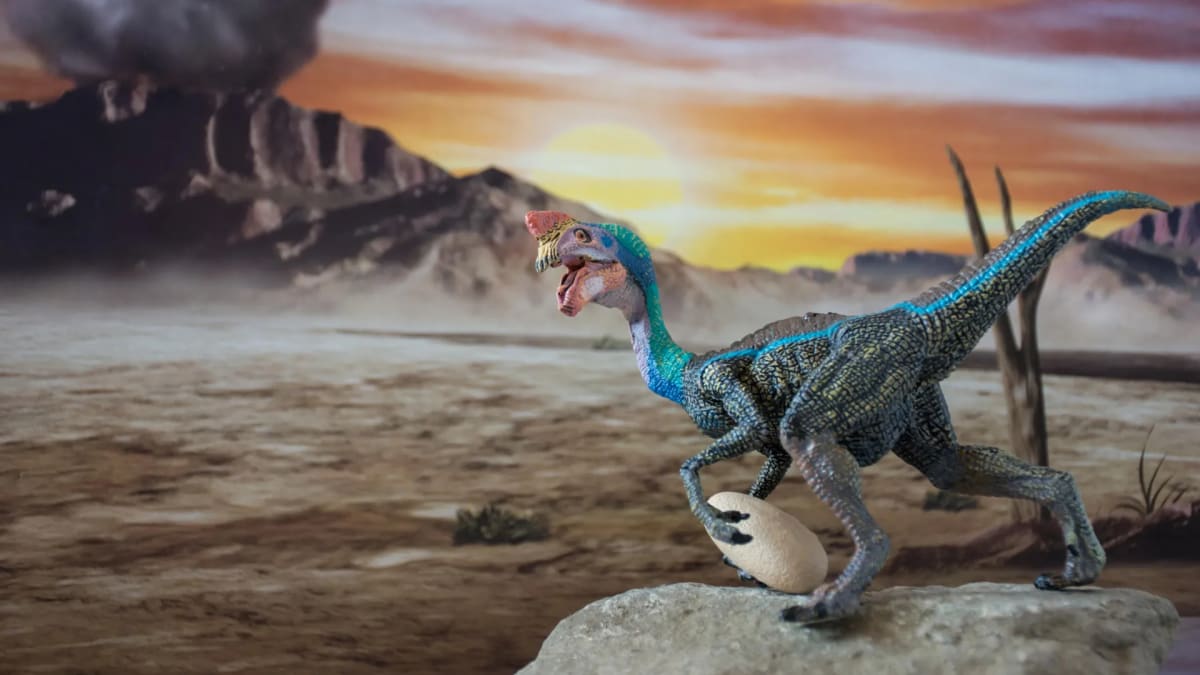
The answer came from an unusual experiment. Researchers built a full-size model of an oviraptor, complete with a realistic nest and custom-made resin eggs, then tested how heat moved through the clutch.
Dr. Tzu-Ruei Yang from Taiwan's National Museum of Natural Science led the study alongside first author Chun-Yu Su, who was a high school student at the time. Their hands-on approach revealed something surprising about these bird-like dinosaurs that lived 70 million years ago.
Unlike modern birds that sit directly on their eggs and provide all the warmth, oviraptors couldn't reach every egg at once. They arranged their eggs in multiple rings, meaning the parent's body heat only warmed some of them directly.
The experiments showed temperature differences of up to 6°C between eggs in the same nest during cooler conditions. This uneven heating would cause eggs to hatch at different times, with some chicks emerging days before their siblings.
Sunlight appears to have been the missing piece. In warmer environments with more sun exposure, temperature variations dropped to just 0.6°C, suggesting these dinosaurs were "co-incubators" that relied on both their bodies and the environment.
The discovery explains why oviraptor nests were semi-open rather than buried. These dinosaurs needed access to sunlight to help warm their clutches, a strategy very different from the direct incubation modern birds use.
Why This Inspires
This research shows how creative thinking can unlock ancient secrets. Building a physical dinosaur model might sound unusual for serious science, but it gave researchers insights computer simulations alone couldn't provide.
The study also proves that groundbreaking discoveries can happen anywhere. Taiwan has no dinosaur fossils of its own, yet researchers there are advancing our understanding of these prehistoric creatures.
Perhaps most inspiring is that a high school student made major contributions to paleontology. Su's involvement demonstrates that age doesn't limit scientific achievement when curiosity and determination meet opportunity.
The findings remind us that evolution doesn't move in a straight line toward "better" solutions. Oviraptors weren't worse parents than modern birds; they simply adapted differently to their environment, and their method worked perfectly for millions of years.
Young scientists everywhere now have proof that asking big questions and testing creative solutions can lead to answers that have eluded experts for generations.
Based on reporting by Science Daily
This story was written by BrightWire based on verified news reports.
Spread the positivity!
Share this good news with someone who needs it