Scientists Solve Mystery of How Sperm Whales Sleep Upright
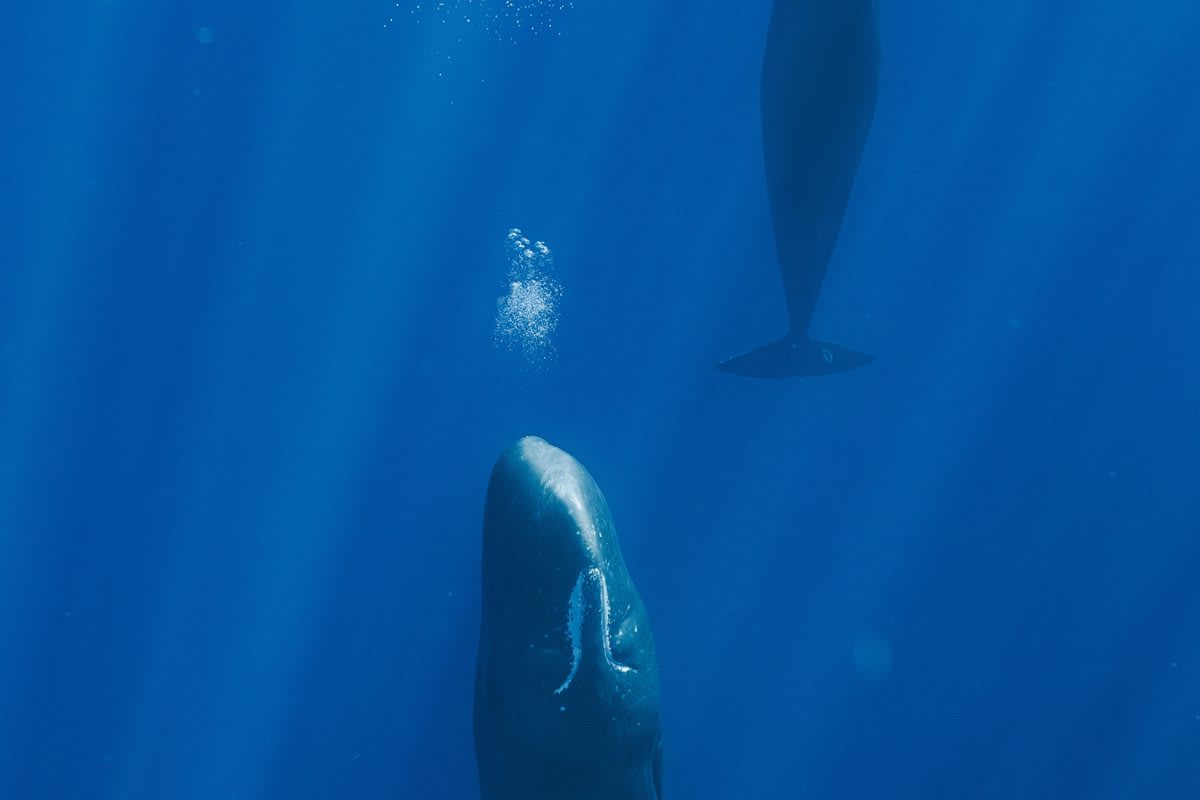
Researchers tagged 42 sperm whales in the Arctic and discovered they blow bubbles to stay suspended while napping vertically underwater. The sleeping giants use this clever trick to avoid floating to the surface during their 10 to 15 minute rest periods.
Scientists just cracked the code on one of the ocean's most mysterious behaviors: how the world's largest toothed whales manage to sleep standing up without bobbing to the surface.
Researchers from Swiss and Scottish universities tagged 42 sperm whales with special recorders that captured depth and sound. What they discovered was both simple and brilliant: the sleeping giants blow bubbles to control their buoyancy.
Sperm whales face a unique challenge when they rest. As mammals that breathe air consciously, they must think about every single breath. They can't sleep like humans do or they'd drown.
Instead, scientists believe they switch off one half of their brain at a time, similar to dolphins. This allows them to rest while staying alert for threats and remembering to breathe.
During these rest periods, which typically last 10 to 15 minutes, the whales hover vertically several meters below the surface. They position themselves close enough to reach air quickly but deep enough to avoid getting tossed around by waves.
The bubble mystery puzzled scientists for years. Noémie Freymond from the Université de Neuchâtel in Switzerland and colleagues from the University of St. Andrews figured out why these releases happen.
As the whales rest and slowly drift upward, the air in their lungs expands. This makes them more buoyant, like a scuba diver ascending. Releasing bubbles counteracts this expansion and keeps them at neutral buoyancy.
The team's data revealed a fascinating pattern. Whales napping closer to the surface blow around 11 bubbles during their rest. Those sleeping after deep dives of 200 meters or more only release three or four bubbles.
In deeper water, the air in their lungs stays more compressed and less buoyant. The whales naturally need less adjustment to maintain their position.
Why This Inspires
This discovery shows that even during sleep, sperm whales maintain precise control over their position in the water. They're aware enough of their surroundings to make tiny adjustments that keep them safe.
The research also highlights how much we still have to learn about these magnificent creatures. Every answer leads to new questions about how they've adapted to life in the deep ocean.
Understanding how sperm whales rest helps scientists protect them better. Knowing they need specific conditions and depths for sleep can inform conservation efforts and shipping lane decisions.
These gentle giants have evolved an elegant solution to a problem most land animals never face: how to rest without sinking or floating away.
More Images

Based on reporting by Google News - Science
This story was written by BrightWire based on verified news reports.
Spread the positivity!
Share this good news with someone who needs it