%2Fhttps%3A%2F%2Ftf-cmsv2-smithsonianmag-media.s3.amazonaws.com%2Ffiler_public%2Fc1%2F61%2Fc1611da3-9181-4540-b061-b52833e09e8c%2Fpia22355.jpg)
Scientists Spot Wandering Black Hole 30,000 Light-Years Away
Astronomers have discovered the first supermassive black hole roaming far from its galaxy's center, offering proof that these cosmic giants can wander through space. The finding could unlock secrets about how galaxies evolve and merge over billions of years.
For the first time ever, scientists have spotted a supermassive black hole wandering thousands of light-years from where it should be, proving that these cosmic giants don't always stay put.
The black hole sits more than 30,000 light-years from the center of its home galaxy, a discovery that confirms what scientists have long theorized but never seen. When galaxies crash into each other, their black holes can get flung out into space like cosmic cannonballs.
Finding this wandering black hole was no easy feat. These objects don't produce light, making them invisible to traditional telescopes.
Researchers led by Robert Stein at the University of Maryland used artificial intelligence to scan data from California's Palomar Observatory. The AI searched for a specific light pattern that appears when a black hole tears apart a star that wanders too close, an event that creates a sudden brightening followed by a gradual fade.
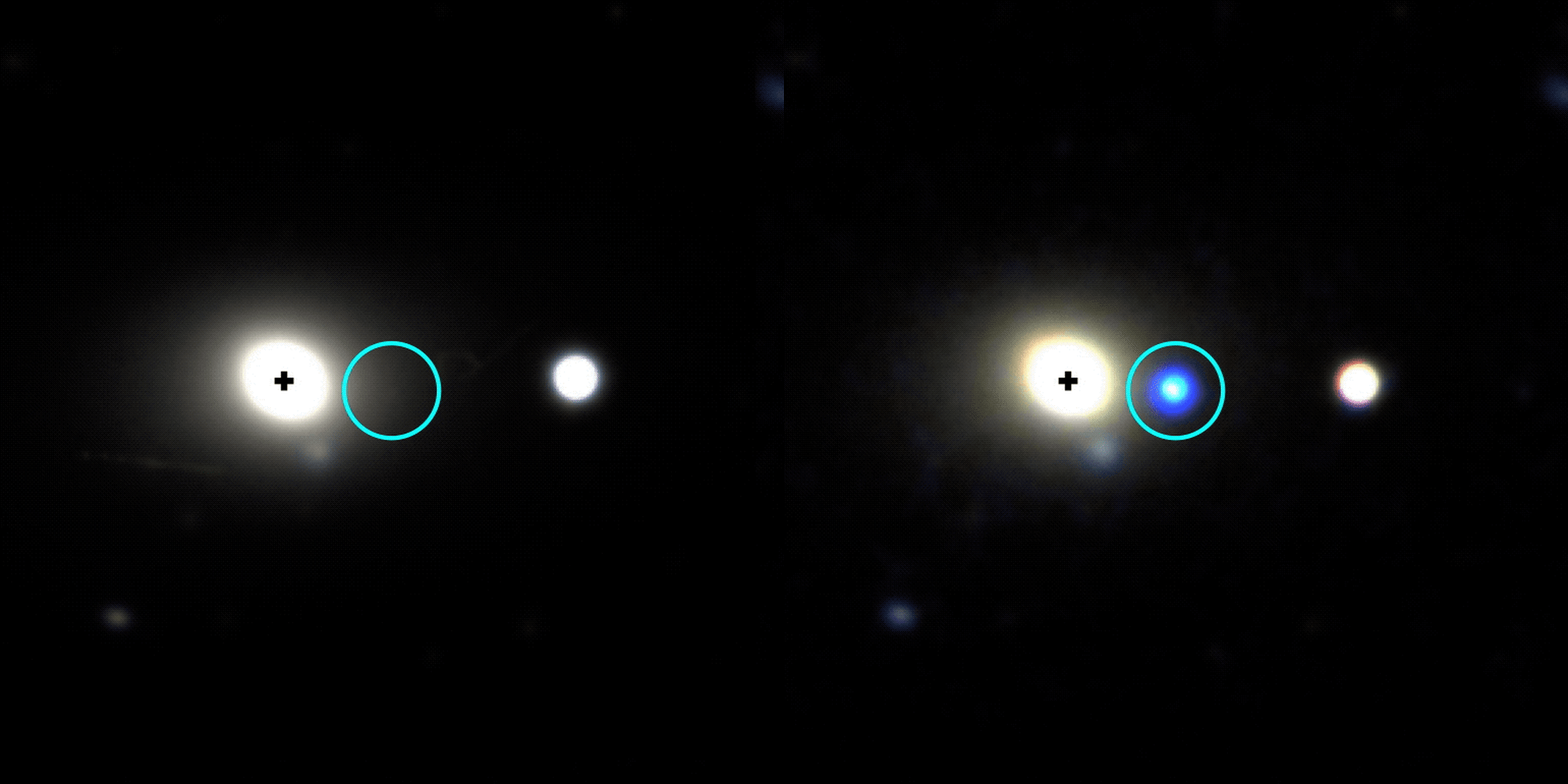
In November 2025, the team spotted exactly that pattern in a galaxy 750 million light-years away. Follow-up observations with space and ground telescopes confirmed it was indeed a tidal disruption event, nicknamed TDE 2025abcr, happening on the galaxy's outskirts.
"We have not seen anything resembling this in literally 10,000 other objects that we've observed," Stein said. Out of roughly 30 such events spotted each year, nearly all occur at galactic centers where scientists traditionally looked for them.
Other research teams immediately jumped at the chance to study this rare find. Kishore Patra from UC Santa Cruz pointed the James Webb Space Telescope and Hawaii's Keck telescopes at the wandering black hole, observing it in wavelengths normally obscured by starlight at galaxy centers.
His team found more infrared emissions than expected, suggesting some stars might be traveling alongside the black hole, possibly remnants from a smaller galaxy that crashed into the larger one.
Why This Inspires
This discovery opens a window into understanding how galaxies grow and change over cosmic time. Every wandering black hole tells the story of ancient galactic collisions that shaped the universe we see today.
"What's exciting about this result is that we think it's the tip of the iceberg," Stein said. Finding more of these wanderers could reveal how many times galaxies have merged throughout history and how they've evolved over billions of years.
The breakthrough shows how new technology like AI is helping scientists find cosmic needles in astronomical haystacks. What was once impossible to detect is now becoming routine, promising more discoveries ahead.
One wandering black hole has been found, and it's lighting the way to countless more cosmic mysteries waiting to be solved.
More Images
%2Fhttps%3A%2F%2Ftf-cmsv2-smithsonianmag-media.s3.amazonaws.com%2Ffiler_public%2Fc1%2F61%2Fc1611da3-9181-4540-b061-b52833e09e8c%2Fpia22355.jpg)
%3Afocal(1908x1072%3A1909x1073)%2Fhttps%3A%2F%2Ftf-cmsv2-smithsonianmag-media.s3.amazonaws.com%2Ffiler_public%2Fc1%2F61%2Fc1611da3-9181-4540-b061-b52833e09e8c%2Fpia22355.jpg)
%2Fhttps%3A%2F%2Ftf-cmsv2-smithsonianmag-media.s3.amazonaws.com%2Faccounts%2Fheadshot%2FMargherita_Bassi.png)
Based on reporting by Smithsonian
This story was written by BrightWire based on verified news reports.
Spread the positivity!
Share this good news with someone who needs it