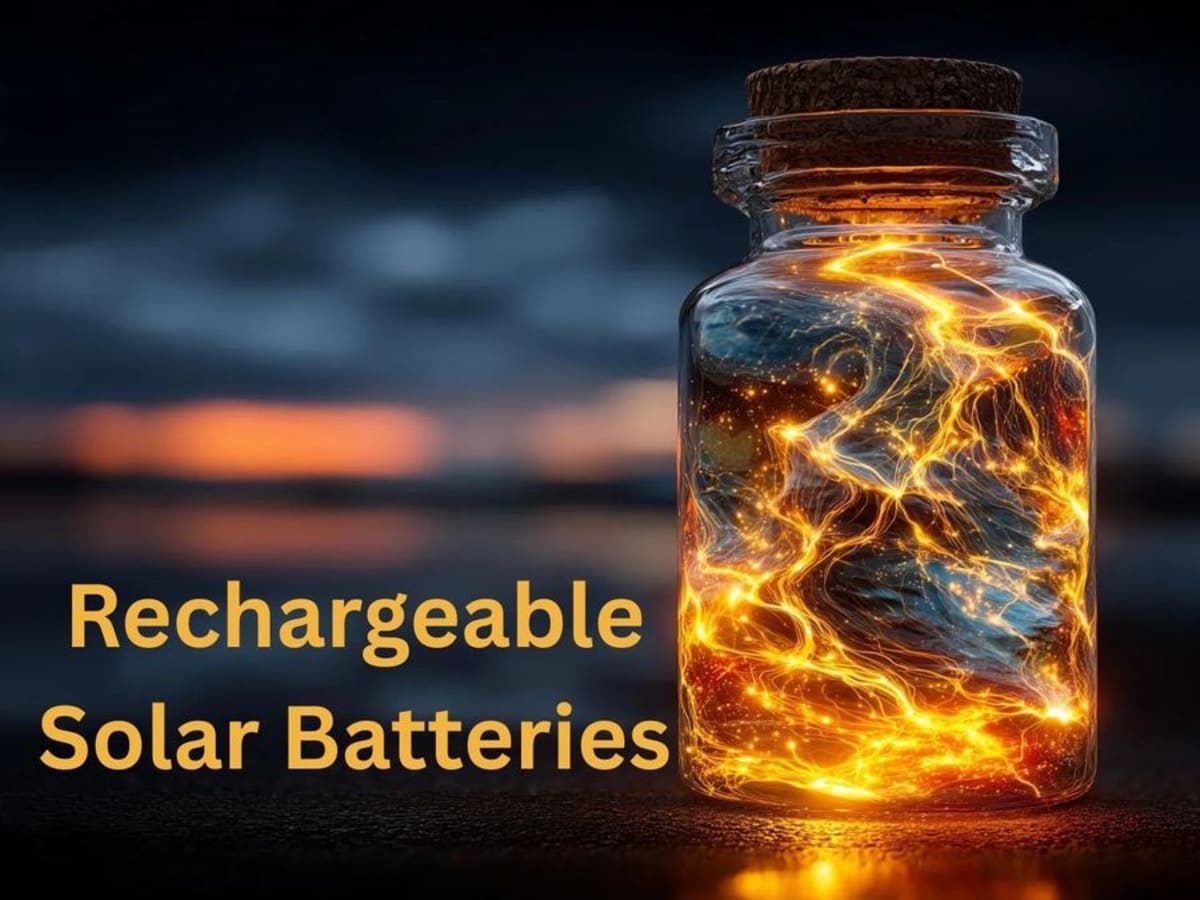
Scientists Store Sunlight in Molecules for Years
Researchers at UC Santa Barbara created molecules that capture sunlight and store it for years, releasing heat on demand without needing traditional batteries. The breakthrough could transform how we heat homes and water using solar energy.
Scientists just solved one of solar power's biggest headaches by teaching molecules to hold onto sunlight like tiny rechargeable batteries.
Researchers at the University of California, Santa Barbara developed molecules that absorb sunlight and lock it away in chemical bonds. When you need the energy, the molecules release it as heat strong enough to boil water.
The secret lies in a modified organic molecule called pyrimidone, inspired by the structure of DNA. When sunlight hits these specially engineered molecules, they transform and trap the energy inside. The stored power can sit there for years without fading away.
The team proved their invention works by boiling water at room temperature using only the stored solar energy. That might sound simple, but boiling water requires serious energy, making this demonstration a major milestone.
Here's what makes this different from your phone battery: the material stores more than 1.6 megajoules of energy per kilogram. Compare that to lithium-ion batteries, which manage only about 0.9 megajoules per kilogram.
The technology doesn't need rare minerals or complex manufacturing like traditional batteries do. These molecules could eventually flow through rooftop collectors during sunny days, then release their stored heat at night when families need it most.
Scientists envision the material powering off-grid heating systems and residential water heaters. Imagine capturing summer sunlight to warm your home in winter, all without electricity bills or mining lithium from the earth.
The breakthrough arrives as researchers worldwide hunt for alternatives to lithium-ion batteries. Concerns about limited resources and environmental impact drive the search for better storage solutions.
The Ripple Effect
This discovery ripples far beyond one laboratory in California. India alone surged from 6.8 gigawatts of energy storage capacity in 2018 to 90.7 gigawatts in 2025, according to recent reports. Countries racing to adopt renewable energy desperately need storage systems that don't depend on scarce materials.
Molecular solar storage could democratize clean energy for communities without access to expensive battery systems. Rural areas, developing nations, and remote locations could harvest and store their own heat without connecting to power grids or shipping in heavy equipment.
The technology also sidesteps the recycling challenges plaguing lithium-ion batteries. When these molecules eventually wear out, they break down into simple organic compounds instead of toxic waste requiring special handling.
Scientists still need to refine the system before it reaches your rooftop, but the fundamentals work. Every sunny day becomes an opportunity to bank energy for cloudy tomorrows, stored in molecules smaller than a grain of sand.
The future of solar power might not look like sleek panels and bulky batteries after all, just clever chemistry capturing sunlight one molecule at a time.
More Images

%2Fsaur-energy%2Fmedia%2Fmedia_files%2F2026%2F05%2F21%2Fscientists-develop-rechargeable-solar-battery-that-stores-sunlight-in-molecules-2026-05-21-13-01-52.jpg)


Based on reporting by Google News - Renewable Energy Breakthrough
This story was written by BrightWire based on verified news reports.
Spread the positivity!
Share this good news with someone who needs it