Scientists Track Rare Arctic Ice Island to Protect Ships
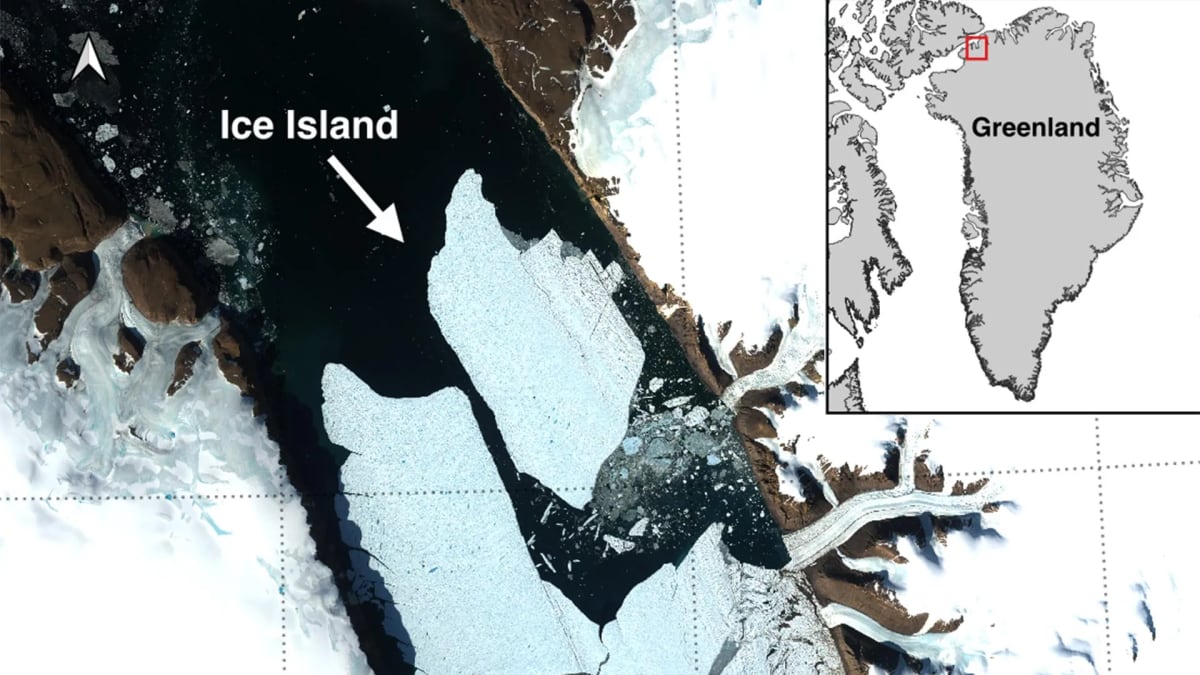
A Manhattan-sized ice island broke from Greenland's Petermann Glacier on August 4, giving researchers a rare chance to study Arctic ice dynamics and improve marine safety. International teams are now tracking the massive 76 square kilometer ice block to protect shipping routes and better understand polar change.
Scientists are celebrating a unique opportunity to study one of the Arctic's rarest natural phenomena after a massive ice island separated from Greenland's Petermann Glacier.
The ice island, roughly the size of Manhattan and up to 150 meters thick, broke away on August 4 following years of careful satellite monitoring. This represents the largest Arctic calving event since 2020, and researchers across five institutions immediately mobilized to track and study it.
Adam Garbo, a PhD student at the University of Ottawa, spotted the separation using satellite imagery from the European Space Agency. His team had been watching cracks spread across the glacier's floating ice tongue since 2019, anticipating this moment for years.
Unlike Antarctica, where giant flat-topped icebergs are common, the Arctic rarely produces ice islands this large. That rarity makes each one incredibly valuable for understanding how glaciers behave, how ocean conditions are changing, and how to keep Arctic waters safe for navigation.
Dr. Anna Crawford from the University of Stirling explains that studying Arctic ice islands provides knowledge that scientists can apply across both polar regions. The international collaboration includes researchers from Canada, the United Kingdom, and multiple universities pooling their expertise.
Why This Inspires
This story shows science working exactly as it should. Years of patient observation and international cooperation paid off when researchers were ready and waiting to capture data the moment the ice broke free.
Environment and Climate Change Canada is already using the research to improve marine safety forecasts. Dr. Abigail Dalton notes these thick ice blocks can drift for years, gradually breaking into smaller pieces that become harder to track but still dangerous to ships and offshore operations.
The monitoring work serves two purposes. Scientists gain unprecedented insights into polar ice behavior while simultaneously protecting vessels, crews, and infrastructure operating in increasingly busy Arctic waters.
The team expects two more large sections to break away soon, potentially creating ice islands measuring 94 and 84 square kilometers. Rather than viewing this as cause for alarm, researchers see it as three more opportunities to gather crucial data.
Each calving event teaches scientists more about the forces shaping our polar regions. That knowledge helps improve prediction models, safety protocols, and our understanding of how Arctic systems function.
The collaboration demonstrates how global scientific partnerships turn natural events into learning opportunities that benefit everyone who depends on accurate Arctic forecasting and safe polar navigation.
Based on reporting by Science Daily
This story was written by BrightWire based on verified news reports.
Spread the positivity!
Share this good news with someone who needs it