Scientists Tune Metal Like a Guitar With 3D Printing
Researchers discovered how to control a metal's strength simply by adjusting laser speed during 3D printing, creating materials that can be tailored for any need. The breakthrough turns manufacturing into a design tool for next-generation technology.
Scientists just figured out how to give manufacturers a superpower: the ability to dial in a metal's exact properties while printing it, like tuning a guitar string to hit the perfect note.
Researchers at Lawrence Livermore National Laboratory discovered they can control how strong or flexible a metal becomes by simply adjusting the laser speed during 3D printing. The finding could transform how we build everything from aircraft to national security equipment.
The team worked with high-entropy alloys, a promising class of metals made from multiple elements mixed together. These materials already show incredible potential, but manufacturing them has been unpredictable until now.
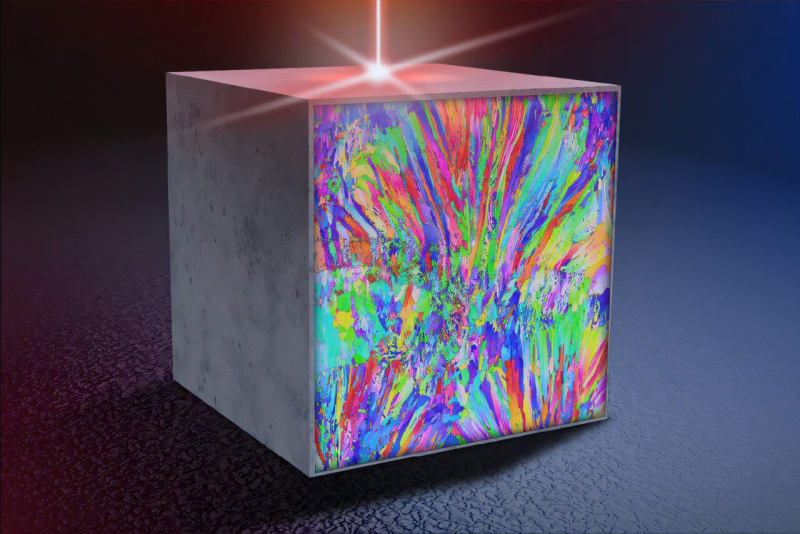
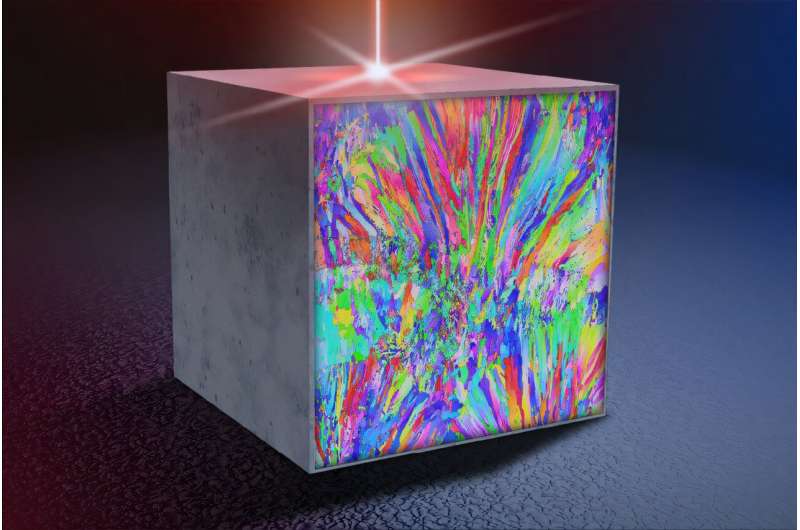
Here's the breakthrough: when the laser moves faster during printing, the metal cools down more quickly. Fast cooling freezes atoms in place before they can arrange themselves neatly, creating a super strong but brittle material. Slow cooling gives atoms time to settle into flexible, balanced structures.
"By increasing the laser speed, the cooling rate increases, and as the material cools down faster, it has less time to rearrange to a low energy configuration," explained Deputy Group Lead Thomas Voisin. This locks the material into different atomic structures with wildly different properties.
Think of it like the difference between a ceramic tile and a paperclip. One resists force but shatters suddenly. The other bends and flexes. Now imagine creating that entire range of properties within a single material just by turning a dial.
The team combined computer modeling and simulations to predict exactly how different cooling rates would affect the final product. Their findings appeared in the journal Advanced Materials.
The Ripple Effect
This discovery means engineers can now program specific properties into metals before printing them. Need a component that's incredibly strong in one area but flexible in another? Just adjust the laser speed as you print different sections.
The breakthrough moves 3D printing beyond just making shapes. It becomes a tool for inventing entirely new materials designed for exact purposes. Instead of spending years testing different metal recipes through trial and error, manufacturers can calculate the properties they need and print them directly.
Aerospace companies could create lighter, stronger aircraft parts. Medical device makers could build implants that match bone strength perfectly. Defense applications could produce equipment tailored to specific mission requirements.
Voisin sees this as a turning point: "We are now at a place where we can effectively design new materials that take full advantage of the additive manufacturing features."
The technology is ready for real-world applications in both commercial and national security industries, opening doors to materials we haven't even imagined yet.
More Images


Based on reporting by Phys.org - Technology
This story was written by BrightWire based on verified news reports.
Spread the positivity!
Share this good news with someone who needs it