Scientists Turn Moon Rocks Into 3D-Printed Building Blocks
Researchers at Ohio State University successfully transformed lunar rock into durable construction material using laser-based 3D printing. This breakthrough could help astronauts build Moon bases using materials already on the lunar surface.
Building a home on the Moon just got a lot more practical, thanks to scientists who figured out how to turn lunar dust into construction material.
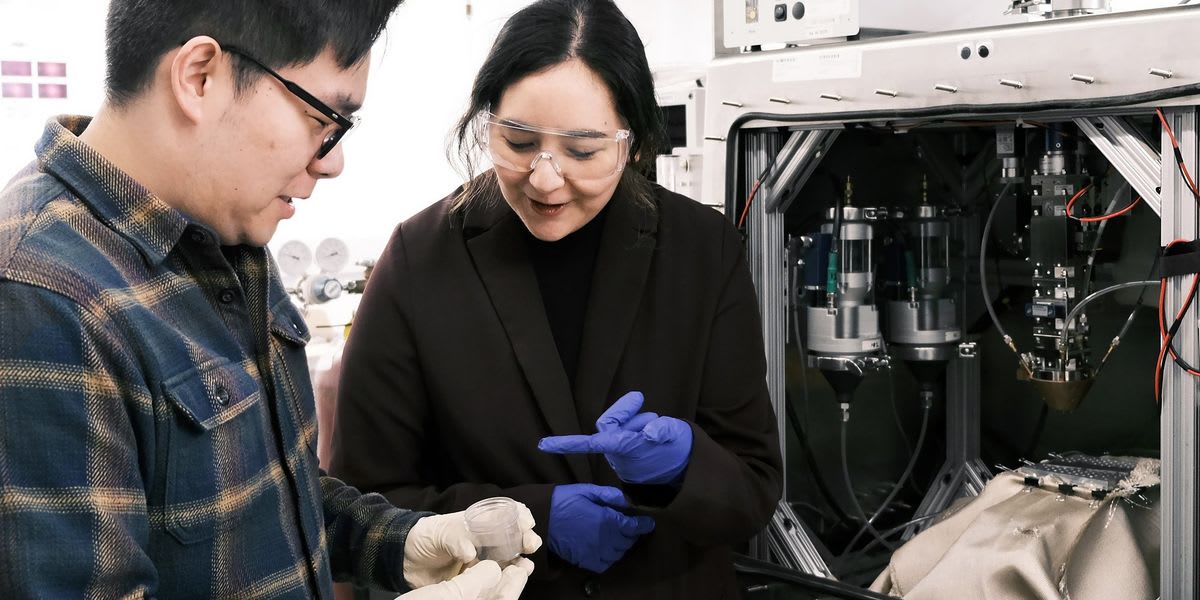
Researchers at Ohio State University developed a laser-based 3D printing method that melts lunar rock and fuses it into hardened building blocks. The team, led by graduate researcher Sizhe Xu, tested their process using lunar highland simulant, the same type of rock collected during the Apollo missions.
The breakthrough solves a major challenge for NASA's Artemis Program, which aims to establish a permanent human presence on the Moon's south polar region. Resupply missions from Earth take days and can't launch regularly, making it essential for lunar bases to use local resources.
The researchers discovered something surprising during their experiments. The melted lunar rock stuck particularly well to certain ceramic surfaces, forming crystals that enhance both heat resistance and mechanical strength. However, the quality of printed materials depended heavily on several factors including atmospheric oxygen levels, laser power, and printing speed.
The team tested their materials under various conditions to see how they'd perform in the Moon's harsh environment. The lunar surface presents extreme challenges including no atmosphere, massive temperature swings, and the constant problem of abrasive Moon dust.
Why This Inspires
This technology represents more than just a way to build Moon bases. Assistant professor Sarah Wolff, a lead author on the study, points out that solving problems for space exploration often leads to solutions for Earth.
"If we can successfully manufacture things in space using very few resources, that means we can also achieve better sustainability on Earth," Wolff explained. The team is now working to make their machines more flexible for different scenarios, whether that's on the Moon or in resource-scarce regions here at home.
Future versions of this system could run on solar or hybrid power rather than electricity, making them even more practical for lunar deployment. China, Russia, and the European Space Agency all have similar plans for Moon bases, making this technology valuable for international space exploration efforts.
The innovation could help astronauts build strong, resilient habitats capable of withstanding radiation and other lunar hazards. Beyond the Moon, the same approach could work on Mars and other destinations where astronauts need shelter but can't rely on regular supply deliveries from Earth.
The breakthrough demonstrates that humanity's next chapter in space exploration doesn't require bringing everything from home—sometimes the best building materials are already waiting where we land.
Based on reporting by IEEE Spectrum
This story was written by BrightWire based on verified news reports.
Spread the positivity!
Share this good news with someone who needs it