Mars Rover Finds Building Blocks for Life in Ancient Crater
NASA's Curiosity rover discovered 20 organic molecules in Mars' ancient lakebed that could be the same chemical ingredients that sparked life on Earth. The find gives scientists fresh hope that Mars once had the right conditions for biology to emerge.
Scientists just found the chemical recipe for life hiding in rocks on Mars, and it looks remarkably similar to what kickstarted biology on our own planet.
NASA's Curiosity rover detected 20 organic molecules in Gale Crater, a massive basin that held a lake 3.5 billion years ago. The discovery doesn't prove life existed on Mars, but it reveals the planet once had the same chemical building blocks that led to life on Earth.
Amy Williams, a professor at the University of Florida and mission scientist for Curiosity, led the groundbreaking research published in Nature Communications. Her team used a powerful chemical called TMAH to break apart complex materials trapped in Martian clay, releasing gases that Curiosity's instruments could analyze.
One molecule stands out among the findings: benzothiophene, a carbon and nitrogen compound that forms in deep space and travels on meteorites. The same chemical exists throughout our solar system and may represent some of the oldest organic molecules ever formed.
The discovery supports a growing theory about how life begins. Scientists increasingly believe Earth's first living organisms emerged from a combination of chemicals made on our planet mixed with organic materials delivered by meteorites.
Mars likely received the same cosmic delivery. When these space rocks crashed into ancient Mars, the planet still had water, a protective magnetic field, and a thick atmosphere. Those conditions vanished when Mars lost its magnetic shield and solar winds stripped away its air and water.
Why This Inspires
This discovery transforms our understanding of life's potential across the universe. The same ingredients that created life on Earth were raining down on Mars when the red planet had lakes and rivers. If the recipe for life is this common in space, we may not be as alone as we thought.
Williams and her team are already analyzing samples from another site in Gale Crater. Similar instruments will fly to Saturn's moon Titan in 2027 and back to Mars aboard a European rover in 2028, expanding the search for life's signature across the solar system.
The research proves that Mars wasn't just wet in its ancient past. It was chemically rich with the exact molecules needed to spark biology, preserving them in clay for billions of years like a cosmic time capsule waiting to be opened.
More Images

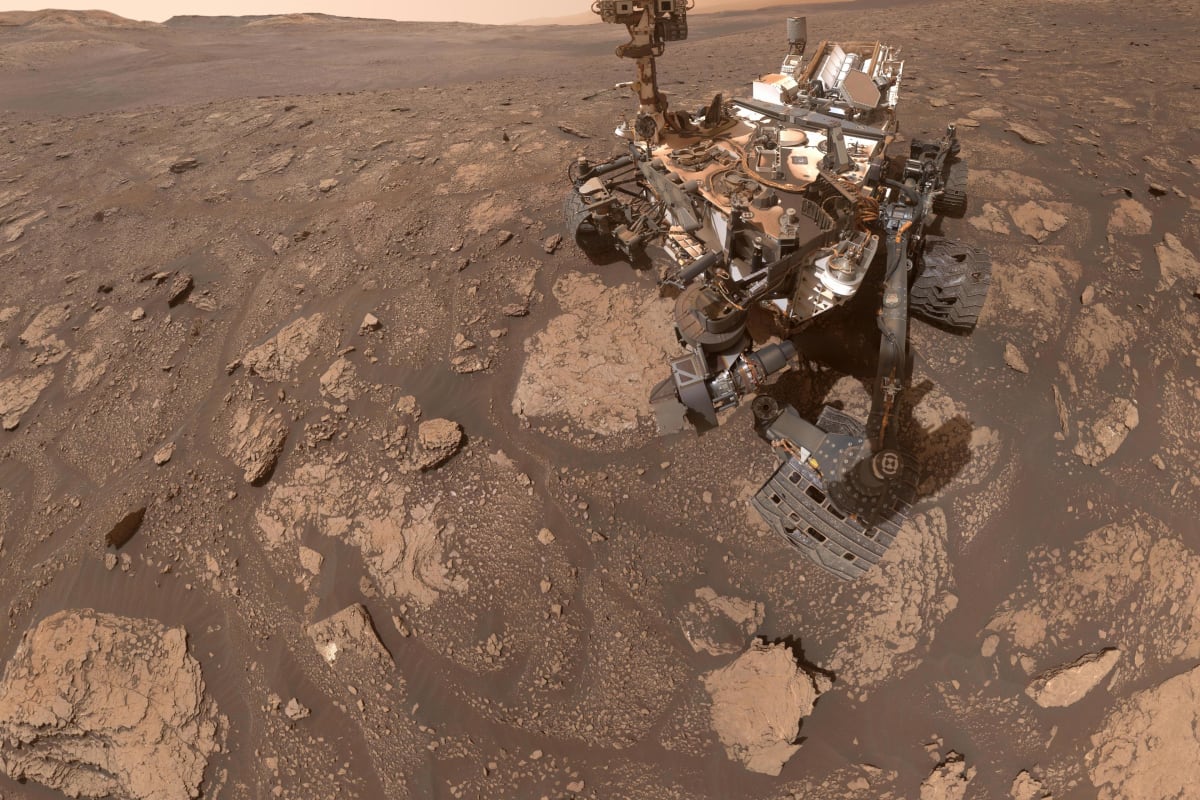
Based on reporting by Google: Mars rover discovery
This story was written by BrightWire based on verified news reports.
Spread the positivity!
Share this good news with someone who needs it