Scientists Turn Rice Into Material That Adapts to Impact
Researchers discovered rice grains have a surprising superpower: they weaken under fast pressure but stay strong when squeezed slowly. Now they've turned this quirky trait into a smart material that could make robots safer and protective gear more responsive.
Rice just got a lot more interesting than your dinner plate.
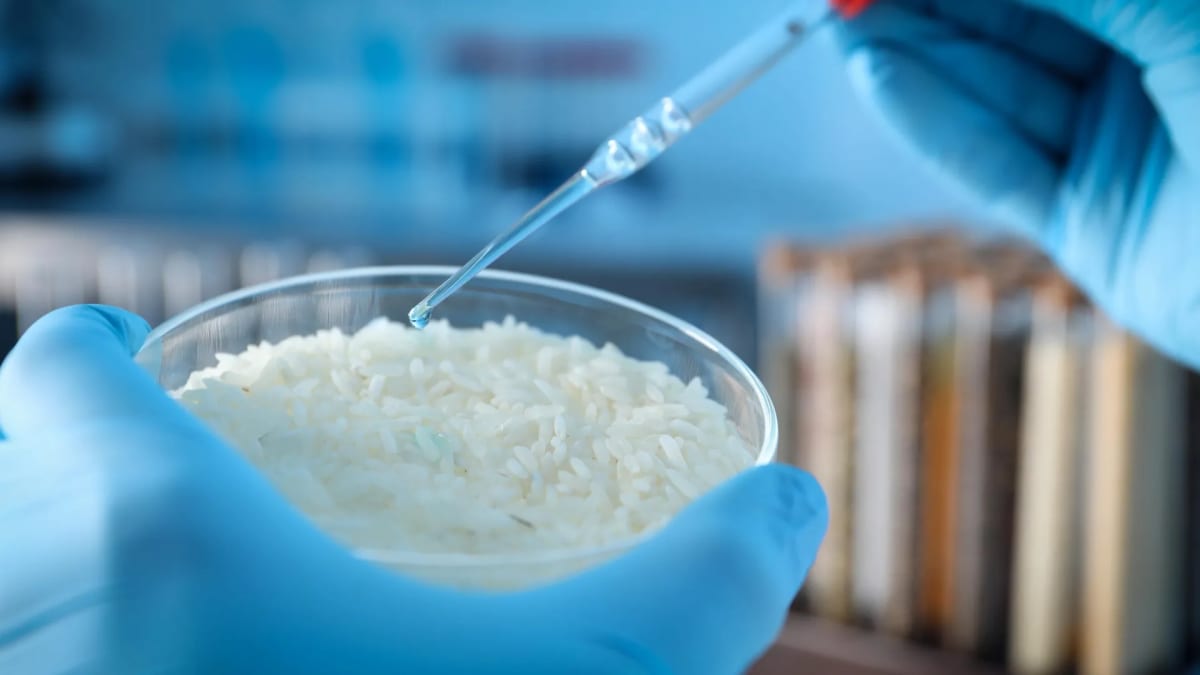
Scientists at the University of Birmingham discovered that tightly packed rice grains behave the opposite of most materials. When squeezed slowly, they stay strong. When compressed quickly, they actually become weaker.
This strange quality happens because friction between rice grains drops sharply when forces hit fast. The internal networks that normally support the load simply can't keep up with rapid pressure.
Dr. Mingchao Liu and his team didn't just marvel at this oddity. They engineered it into something useful.
The researchers combined rice-based units with materials like sand, which get stronger under rapid loading. The result is a metamaterial that automatically responds differently to gentle movements versus sudden impacts.
What makes this breakthrough special is what it doesn't need. No electronics. No sensors. No batteries or control systems. The material adapts on its own based purely on physics.
The Ripple Effect
This discovery could transform how we build robots that work alongside humans. Future soft robots using these materials would be lighter, safer, and naturally responsive without complex programming.
Imagine a robotic surgical assistant that automatically adjusts its stiffness when moving slowly during delicate procedures but instantly softens if it accidentally bumps into something. Or protective equipment that stays flexible during normal wear but hardens automatically during a collision.
The technology could make warehouses safer, where humans and robots often share tight spaces. It could improve prosthetics that need to respond naturally to different walking speeds and terrain.
The team published their findings in the journal Matter, showing how everyday materials can become intelligent systems through clever engineering. By working with nature's quirks instead of against them, they've opened doors to adaptive technologies that respond to the real world without being told what to do.
Sometimes the most advanced solutions come from the simplest sources, and this humble grain just proved it can do much more than feed the world.
Based on reporting by Science Daily
This story was written by BrightWire based on verified news reports.
Spread the positivity!
Share this good news with someone who needs it