Scientists Turn Sunlight Into Hydrogen Peroxide Using Cells
Researchers created a tiny reactor that mimics living cells to produce hydrogen peroxide from sunlight and water. This breakthrough could lead to cleaner chemical manufacturing and help us make useful chemicals without harmful pollution.
Scientists in China have built a microscopic reactor that copies nature's playbook to transform sunlight into a common cleaning chemical.
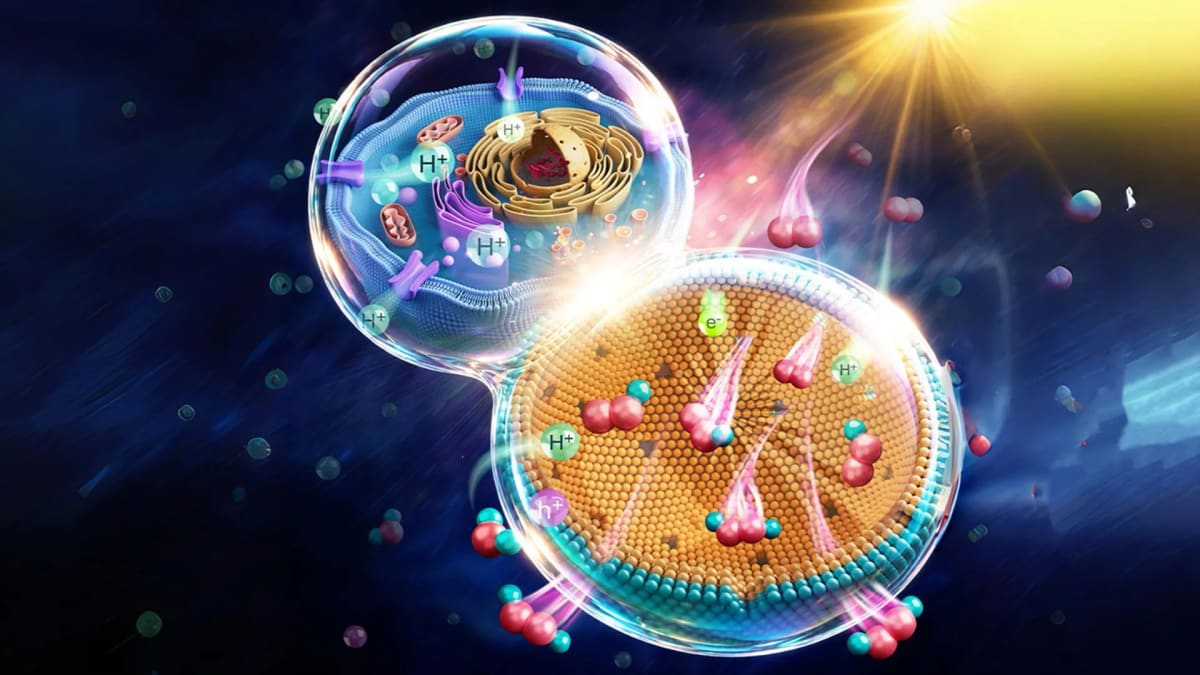
The team at the Dalian Institute of Chemical Physics created tiny hollow spheres that work like miniature versions of living cells. These nanoreactors produce hydrogen peroxide (the same stuff in your medicine cabinet) using only visible light and water.
What makes this breakthrough special is how closely it mirrors what happens inside actual cells. Living cells are incredibly efficient at making chemicals because everything happens in carefully organized spaces with molecules moving exactly where they need to go.
The research team, led by Prof. Li Can, gave their nanoreactors two cell-like superpowers. The outer shell acts like a proton relay station, passing hydrogen atoms back and forth to speed up the chemical reactions. The hollow center creates a tiny workspace where ingredients can gather and light gets trapped, making everything work faster.
When scientists tested the nanoreactors under normal light, they produced hydrogen peroxide at impressive speeds. The system converted 1.2% of solar energy into chemical energy, which might sound small but represents real progress in this field.
The researchers went further by embedding these nanoreactors in a natural gel made from seaweed. This created solid, reusable catalysts that could sit in actual sunlight and keep making hydrogen peroxide day after day without wearing out.
Why This Inspires
This technology points toward a future where we make everyday chemicals without factories or pollution. Hydrogen peroxide is used in everything from cleaning products to paper manufacturing, and most of it today requires energy-intensive industrial processes.
The nanoreactor approach opens doors for producing other useful chemicals the same way plants make food: using nothing but sunlight, water, and clever chemistry. As scientists continue improving these tiny bio-inspired machines, they're getting closer to artificial photosynthesis that could transform how we manufacture chemicals.
Prof. Li sees this as just the beginning for nanoreactors that increasingly replicate what living cells do naturally. Each advance brings us closer to chemical production that works with nature instead of against it.
The future of clean chemistry might be microscopic, but its impact could be enormous.
Based on reporting by Science Daily
This story was written by BrightWire based on verified news reports.
Spread the positivity!
Share this good news with someone who needs it