Scientists Unlock 1.2 Million Years of Climate History
A European research team has drilled 2.8 kilometers deep into Antarctic ice to extract the longest continuous climate record ever recovered. The data could finally solve a million-year-old mystery about why Earth's ice ages suddenly changed pattern.
Scientists just opened a time capsule that stretches back 1.2 million years, and it's revealing secrets about our planet that we've never been able to see before.
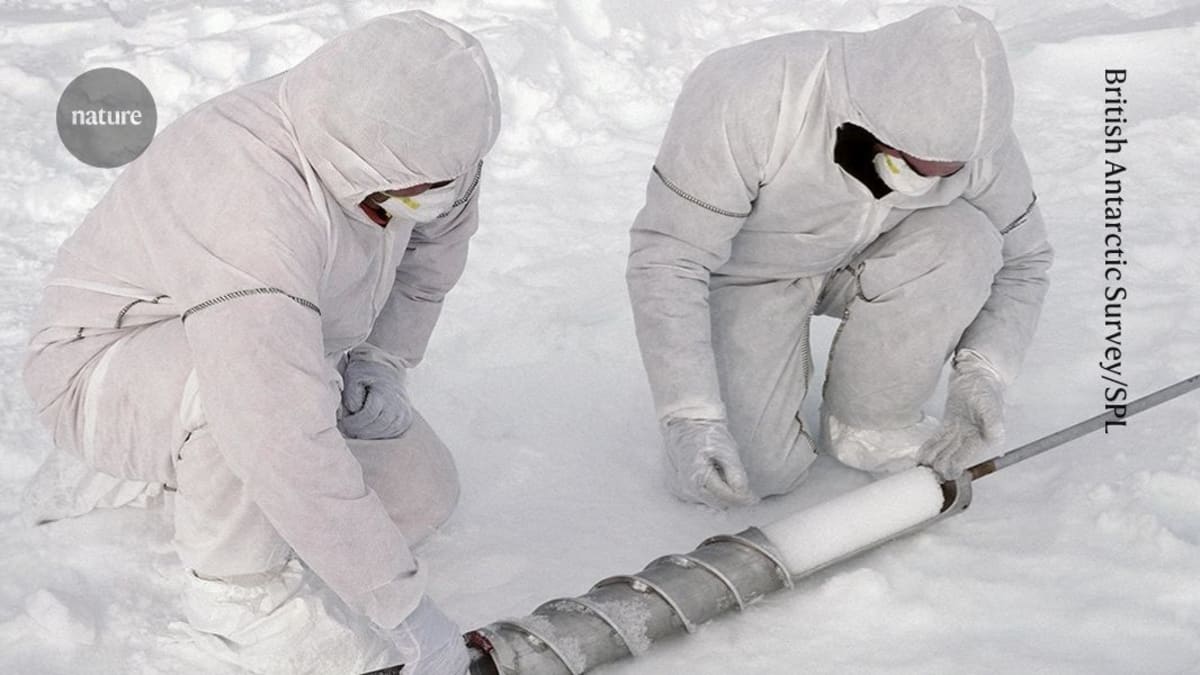
The Beyond EPICA collaboration, a team of researchers from ten European countries, has successfully extracted and analyzed a massive ice core from Antarctica. At 2.8 kilometers deep, it holds trapped air bubbles and atmospheric data spanning more than a million years of Earth's history.
What makes this discovery particularly exciting is its potential to solve a genuine geological puzzle. About a million years ago, something strange happened to our planet's ice age patterns. Before then, ice ages arrived like clockwork every 40,000 years, driven by wobbles in Earth's orbit and rotation. But during what scientists call the Mid-Pleistocene transition, everything changed.
Ice ages suddenly started occurring every 100,000 years instead, and they became more severe. Longer, colder periods gripped the planet, and ice sheets grew thicker than before. Scientists have debated for years what caused this dramatic shift.
One leading theory suggests that atmospheric carbon dioxide levels dropped sharply, triggering the longer, more intense ice ages. But until now, researchers lacked the data to test this hypothesis. They needed a continuous record showing both temperature changes and greenhouse gas concentrations over that critical transition period.
That's exactly what this ice core provides. The ancient air bubbles trapped in Antarctic ice preserve snapshots of the atmosphere as it existed hundreds of thousands of years ago. By analyzing these bubbles alongside temperature data encoded in the ice itself, scientists can now track how CO2 levels and global temperatures moved together through multiple climate cycles.
Edward Brook, a palaeoclimatologist at Oregon State University, calls the findings "pretty amazing." Researchers can now examine each individual climate cycle and see precisely how they differed in carbon dioxide concentration, something that was impossible before.
Why This Inspires
This research represents years of international cooperation and technological achievement. Drilling nearly three kilometers into Antarctic ice requires extraordinary precision and dedication. The teams involved had to develop new techniques to extract and preserve ice from such extreme depths without contaminating the ancient air trapped inside.
Beyond solving an ancient mystery, this work gives us unprecedented perspective on how our climate system responds to changes in greenhouse gases over geological timescales. Understanding these natural patterns helps scientists better predict how current changes might unfold.
The Beyond EPICA team presented their findings at the European Geosciences Union's general assembly in Vienna. While the data hasn't been peer reviewed yet, researchers still have vast amounts of information left to extract from the ice core.
This glimpse into our planet's deep past reminds us that Earth has weathered dramatic climate changes before, and that patient scientific work can unlock secrets hidden for over a million years.
More Images




Based on reporting by Nature News
This story was written by BrightWire based on verified news reports.
Spread the positivity!
Share this good news with someone who needs it