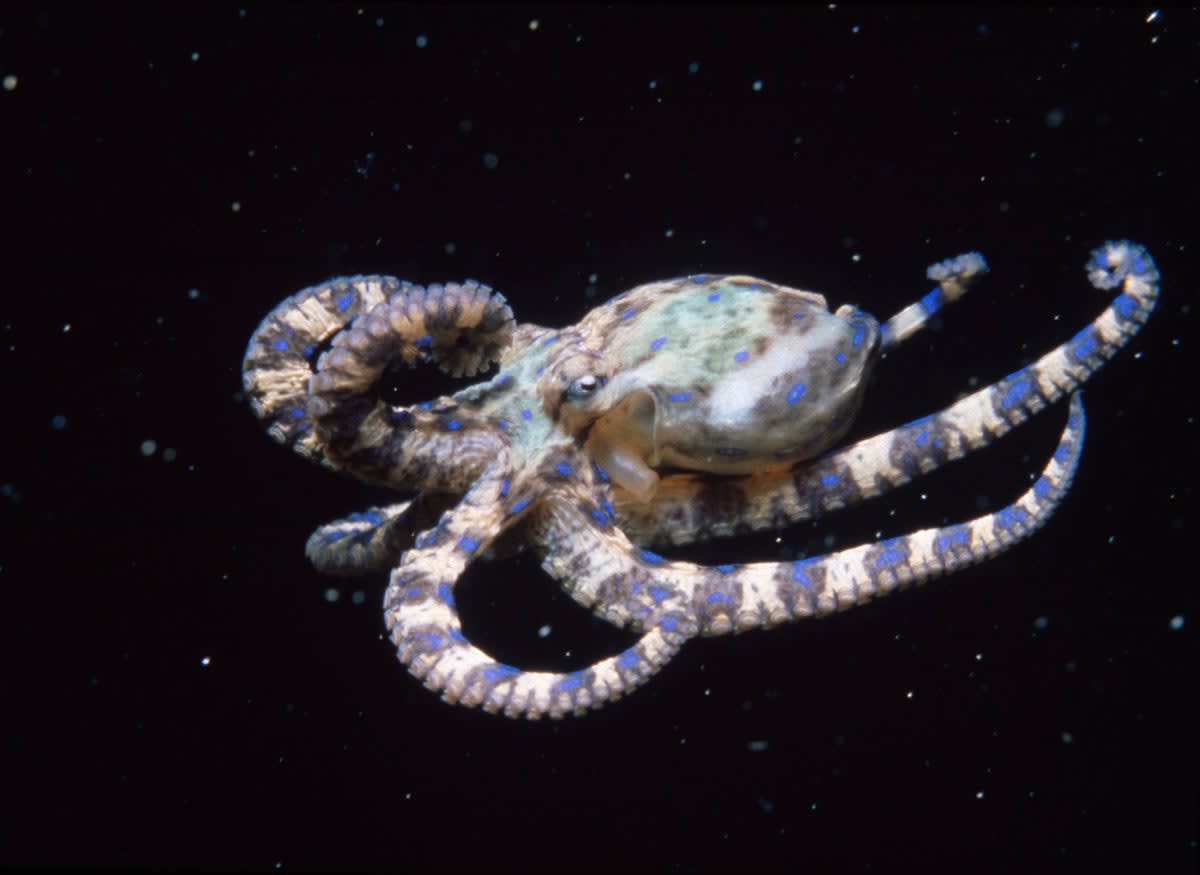
Scientists Watch Entire Fish Brain Think in Real Time
A leading brain research lab is betting big on a tiny, see-through fish that could unlock mysteries of how brains control behavior. The transparent Danionella lets scientists observe every neuron firing at once, something impossible with traditional research animals.
Scientists at one of the world's top brain research centers are making a bold switch from fruit flies to a fish you can see right through.
The Janelia Research Campus, famous for mapping all 54 million connections in a fruit fly's brain, is now focusing on Danionella, a transparent fish discovered just five years ago. The reason? Its see-through body lets researchers watch an entire brain working in real time.
"If you really want to understand how the brain is working as a whole, you really need to see all the neurons firing at once," says Gerry Rubin, the biologist who helped create the research center. Fruit fly brains are covered by opaque shells, but Danionella's glass-like body reveals everything from its brain to its internal organs to its last meal.
The tiny fish is smaller than your fingernail but packs about three times as many neurons as a fruit fly. Scientists have already programmed some Danionella neurons to glow when active, then placed the fish in virtual reality environments like little video games with digital social partners.
What researchers are learning is surprising. These miniature fish form schools, perform courtship rituals, and males even stake out territory by making clicking sounds so loud they're remarkable for such tiny creatures.
The Ripple Effect
This research could help answer one of biology's biggest questions: how does the brain control behavior in a living animal? While Danionella might seem far removed from humans, we share more than you'd think.
"We all evolved from fish. We're all vertebrates, and our brains share many features of the brains of fish," explains Nelson Spruston, Janelia's executive director. The ultimate goal is tracking brain activity in freely swimming fish, which requires solving serious engineering challenges to capture microscopic detail in a moving animal.
The project generates so much data that artificial intelligence is needed to analyze it. Janelia is building 1,920 specialized tanks and creating tools that scientists everywhere can use to study Danionella, which is already challenging the dominance of zebrafish in research labs worldwide.
Matt Lovett-Barron at UC San Diego is already using the fish to study social behavior. By watching entire fish brains manage their busy social lives, researchers hope to understand how individual fish coordinate to move as one school.
Erin O'Shea, president of Howard Hughes Medical Institute, acknowledges the ambitious timeline: "I would be ecstatic if in 10 years we've come to some kind of real understanding just for one complex behavior in the fish." Even understanding one behavior would represent a breakthrough in brain science that could eventually help explain how human brains work.
More Images

Based on reporting by NPR Science
This story was written by BrightWire based on verified news reports.
Spread the positivity!
Share this good news with someone who needs it