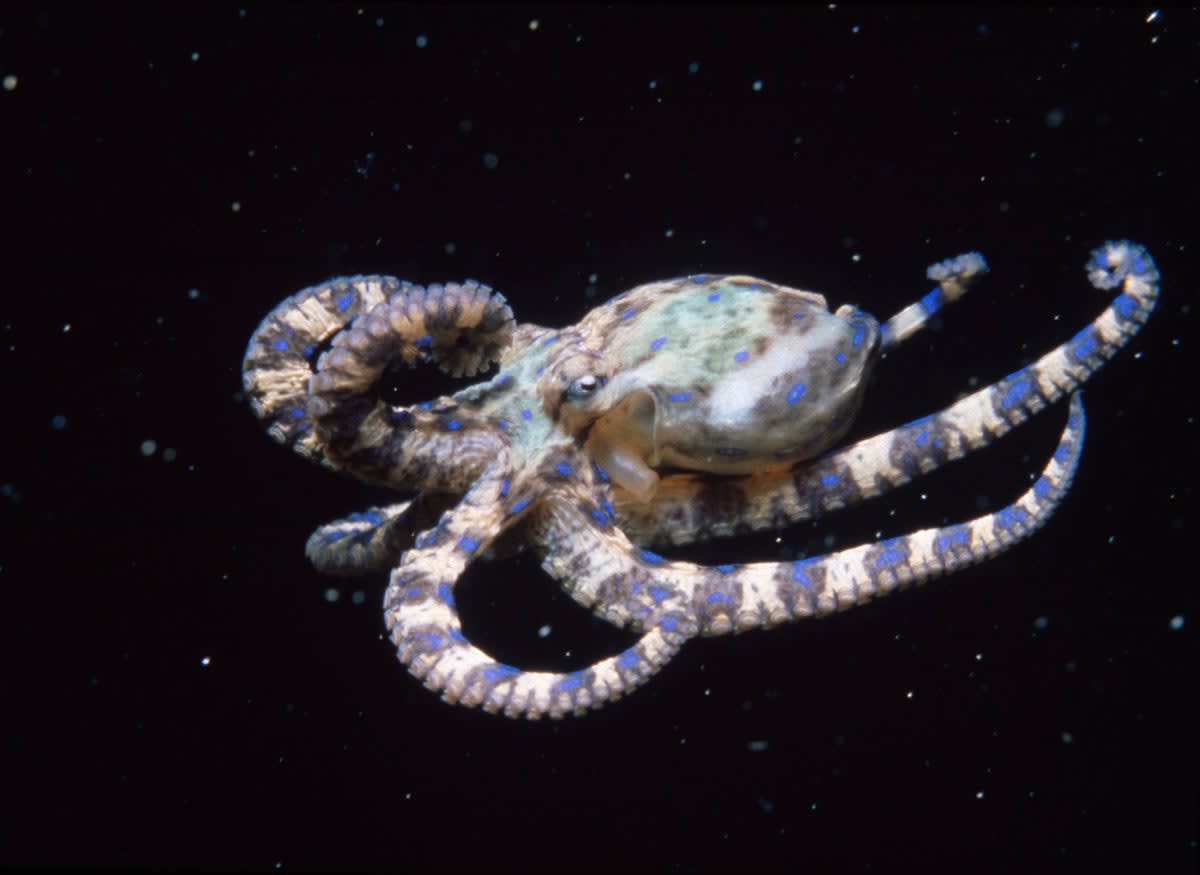
Octopuses Have a Brain Trick No Other Animal Possesses
Scientists discovered that octopuses evolved a unique cellular mutation that makes their brains extraordinarily accurate at building proteins, potentially explaining their remarkable intelligence. This breakthrough could one day help treat Alzheimer's and Parkinson's disease in humans.
Octopuses just became even more fascinating than we thought, and the secret lies in a cellular trick no other animal on Earth possesses.
Researchers at Harvard University discovered that octopuses evolved a never-before-seen mutation in their ribosomal RNA, the tiny machines inside cells that build proteins. This genetic change makes octopuses incredibly accurate at protein production, reducing harmful mistakes that can damage brain cells over time.
The discovery happened by accident when graduate student Richard Han was examining octopus RNA and noticed an unusual break in a genetic sequence that's identical across every other animal ever studied. "Finding a difference here was really unexpected for us," Han said.
When the team tested this mutation in bacteria, they found it reduced protein-building errors and prevented toxic clumps from forming. These clumps are exactly the kind that cause neurological diseases in humans like Alzheimer's and Parkinson's.
The timing of this mutation is striking. It appeared roughly 100 million years ago, right when shallow-water octopuses were evolving their famously complex nervous systems to handle new predators and challenges. These are the same clever creatures that carry coconut shells for mobile homes and short-circuit aquarium lights they don't like.
Nicholas Bellono, a molecular biologist at Harvard, notes that while they can't prove a direct link yet, the timing "maps perfectly" with the emergence of sophisticated behaviors in octopuses. Brain cells live a long time and are especially vulnerable to protein clumps, so this mutation may have protected their rapidly growing nervous systems.
Why This Inspires
What makes this discovery truly exciting isn't just what it tells us about octopus intelligence. Researchers believe this cellular trick could guide new treatments for human neurological diseases.
Amy Lee, a cell biologist at Harvard Medical School, hopes scientists can design drugs that mimic the octopus mutation to reduce harmful protein clumps in human brains. "If we use nature as a guide to understand how that happens naturally," she says, "then we can probably find ways to put it into human cells."
Other geneticists say more research is needed to confirm the link between this mutation and octopus smarts, but the potential is undeniable. To prove it definitively, scientists would need to alter the mutation and test for changes in learning and problem-solving, though such experiments would be challenging.
For now, we can marvel at how evolution gave octopuses a superpower we're only beginning to understand, and one that might someday help protect our own brains.
More Images


Based on reporting by Scientific American
This story was written by BrightWire based on verified news reports.
Spread the positivity!
Share this good news with someone who needs it