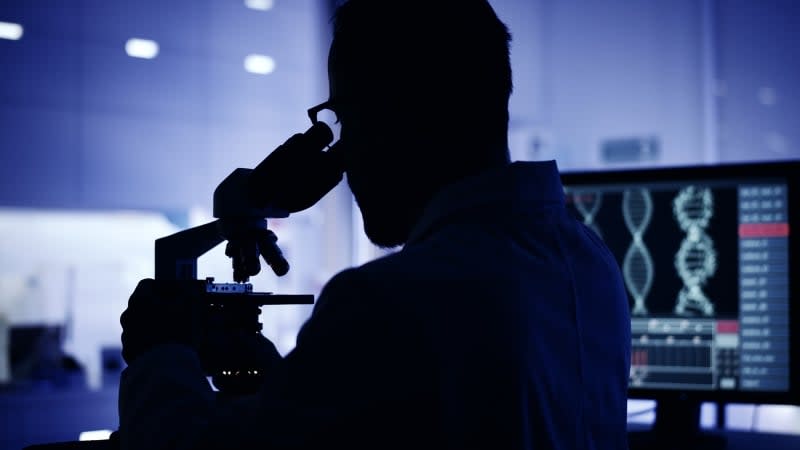
Scientists Win Nobel for AI That Speeds Up Medical Cures
Researchers just won the Nobel Prize in Chemistry for creating AlphaFold, an AI tool that maps protein structures in seconds instead of years. The breakthrough shows how human creativity and artificial intelligence are teaming up to accelerate life-saving drug discoveries.
The 2024 Nobel Prize in Chemistry went to scientists who proved that humans and AI work better together than either could alone.
The winning team developed AlphaFold, an artificial intelligence system that can predict how proteins fold and function inside our cells. What once took researchers years of painstaking lab work now happens in minutes, opening doors to faster drug development and better disease treatments.
But here's the heartwarming part: AlphaFold didn't replace scientists. It amplified their brilliance. The AI needed decades of human knowledge, creativity, and expertise to learn how proteins work in the first place.
Philosopher Alessandra Buccella from the University at Albany explains that AI models like AlphaFold don't discover new knowledge on their own. They're powerful tools that help human researchers analyze existing information more efficiently, freeing scientists to focus on the creative, complex thinking that machines can't replicate.
Think of it like a master chef getting a food processor. The tool speeds up prep work, but the chef's experience, intuition, and artistry create the masterpiece.
The Genesis Mission, a new federal initiative launched in late 2025, aims to build more AI assistants trained on scientific data. These tools will help researchers test hypotheses faster and spot patterns in massive datasets that human eyes might miss.
Why This Inspires
This partnership between human ingenuity and artificial intelligence represents the best of both worlds. Scientists bring curiosity, ethical judgment, and the ability to ask meaningful questions. AI brings speed and pattern recognition.
The protein-folding breakthrough shows how technology can enhance rather than replace human achievement. Scientists remain at the center of discovery, guided by generations of shared knowledge, intellectual honesty, and commitment to advancing human welfare.
As researchers continue developing AI tools, they're not working toward a future where machines do science alone. They're building a future where human creativity gets supercharged by computational power, making breakthroughs happen faster than ever before.
The Nobel Prize winners proved that the most exciting scientific advances happen when human wisdom meets technological possibility.
More Images

Based on reporting by Google: scientific discovery
This story was written by BrightWire based on verified news reports.
Spread the positivity!
Share this good news with someone who needs it

%2Fhttps%3A%2F%2Ftf-cmsv2-smithsonianmag-media.s3.amazonaws.com%2Ffiler_public%2F4e%2F9f%2F4e9f0fe8-aa48-438a-b88f-3a29cd71107e%2Fhttps___wwwfrontiersinorg_files_articles_1758862_xml-images_fmats-13-1758862-g001.jpeg)