Humanoid Robot Runs 100m in 8.84 Seconds in Beijing
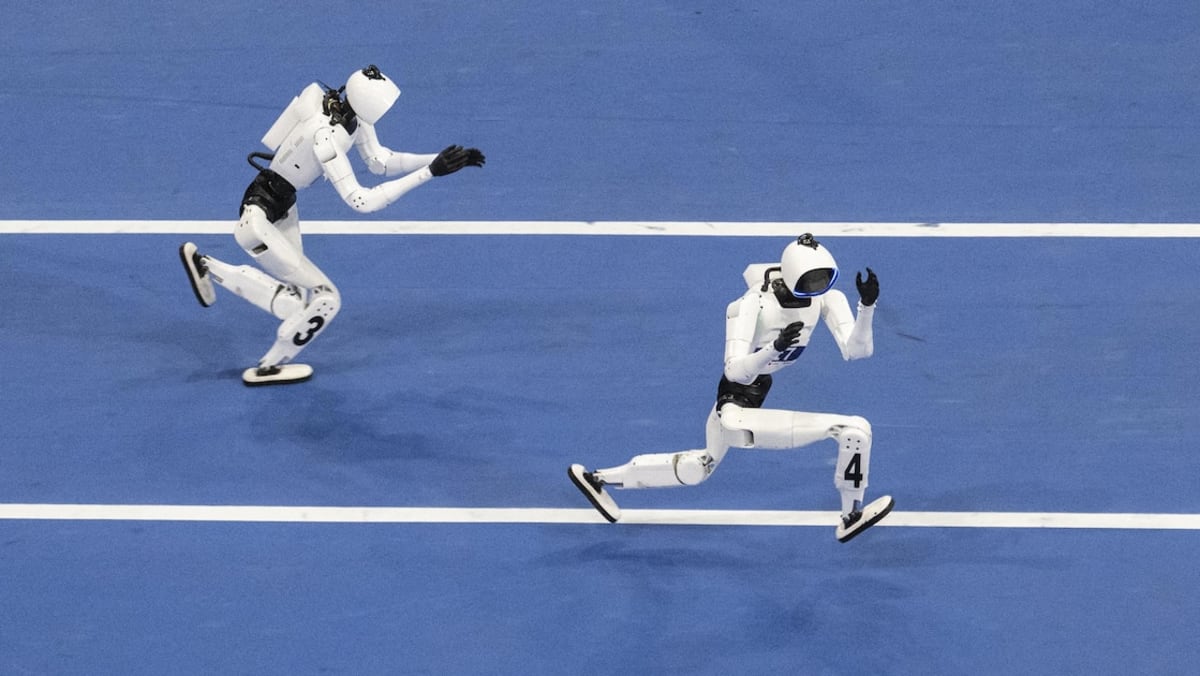
A humanoid robot just shattered Usain Bolt's legendary 100-meter record, clocking 8.84 seconds at the World Humanoid Robot Games in Beijing. The achievement marks a stunning leap forward in robotics technology and athletic engineering.
Three humanoid robots officially topped one of sports' most iconic records this week, running faster than the world's greatest human sprinter.
A robotic athlete developed by the Beijing Innovation Center of Humanoid Robotics completed the 100-meter dash in 8.84 seconds on Wednesday at the 2026 World Humanoid Robot Games. The Tiangong Ultra model beat Usain Bolt's human world record of 9.58 seconds, set in 2009 at the World Athletics Championship in Berlin.
The Wednesday achievement came just one day after two other robots clocked impressive times of 8.86 seconds and 9.39 seconds in the same event. All three machines crossed a threshold many thought was years away.
The Tiangong Ultra isn't new to breaking barriers. This same model won the world's first humanoid half marathon in April 2025, completing the 13-mile course in two hours and 40 minutes.
Technology has accelerated rapidly since then. By April 2026, a robot designed by Chinese smartphone maker Honor ran a half marathon in just 50 minutes and 26 seconds, beating the human world record.
The Ripple Effect
These robotic athletes represent more than just impressive engineering feats. The technology developed for these humanoid sprinters advances fields far beyond sports.
The balance systems, joint mechanics, and movement algorithms created for these robots could transform search and rescue operations. Imagine machines that can navigate disaster zones with human-like agility, reaching survivors in collapsed buildings or dangerous terrain.
The World Humanoid Robot Games showcases this broader potential. Beyond track and field, robots competed in football, table tennis, and even practical tasks like firefighting throughout the week-long event in Beijing.
Each competition pushes engineers to solve complex problems about movement, decision-making, and coordination. Those solutions eventually make their way into medical prosthetics, assistive devices for people with mobility challenges, and industrial safety equipment.
The games prove that pushing boundaries in one area creates ripples of innovation across countless others.
More Images




Based on reporting by Google News - World Record
This story was written by BrightWire based on verified news reports.
Spread the positivity!
Share this good news with someone who needs it