Seattle Firm Creates 15,000 Years of Moon Wind in 4 Hours
A Seattle company just figured out how to simulate 15,000 years of solar wind hitting the Moon in just four hours, solving a major puzzle for lunar mining. This breakthrough could unlock a valuable resource trapped in moon dust and bring it back to Earth.
Scientists at Seattle-based Interlune just compressed 15,000 years of cosmic weather into a single afternoon, and it might change the future of space mining.
The company faced a seemingly impossible challenge. The Moon's surface contains helium-3, a rare isotope that's valuable for medical research, ultra-cold cooling, and potentially fusion energy. But before anyone can mine it, they need to test extraction equipment on lunar soil that's been bombarded by solar wind for millennia.
There's just one problem. NASA's Johnson Space Center holds only about 660 pounds of actual Moon rocks from the Apollo missions, and they're not handing them out to commercial companies for experiments that would destroy the samples.
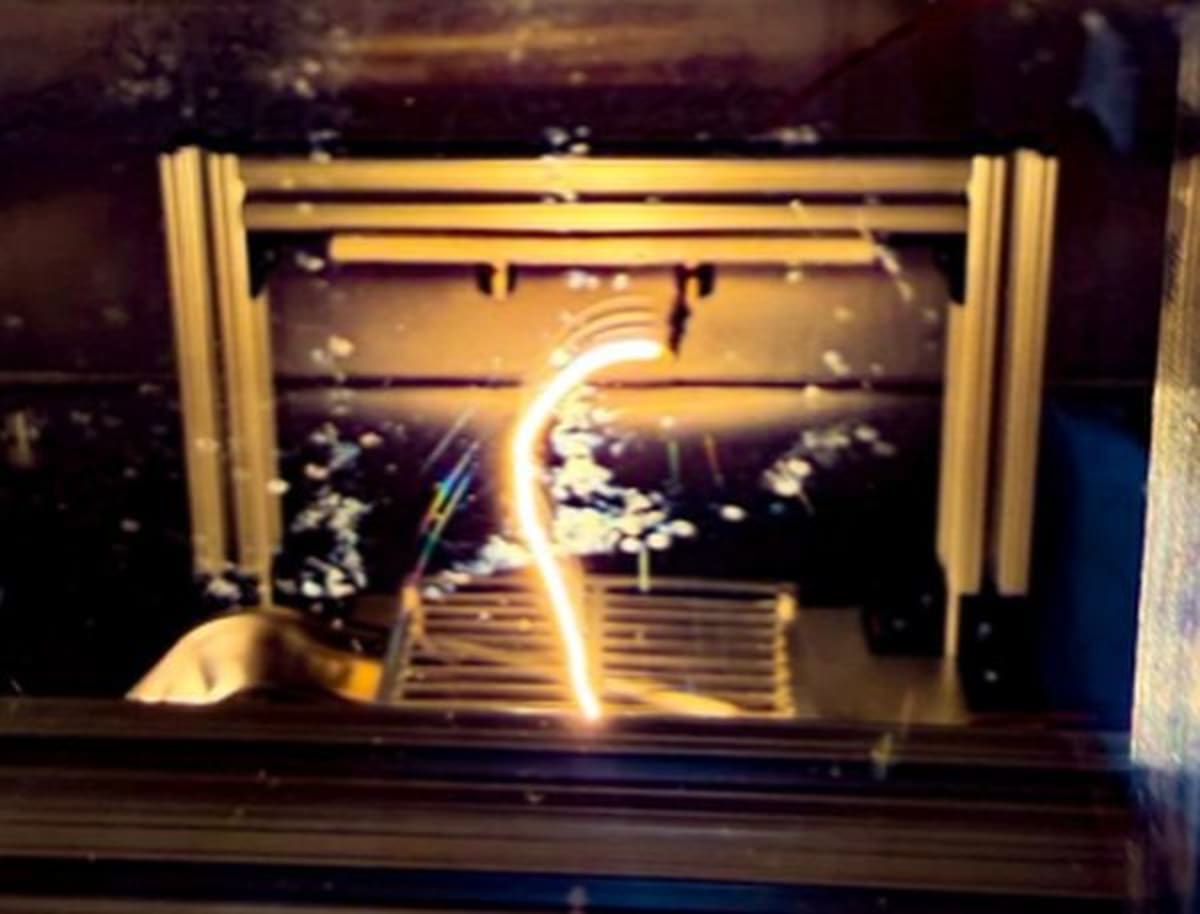
So planetary scientist Elizabeth Frank and her team got creative. Inside a vacuum chamber, they fired ionized helium at lunar soil simulant, recreating the exact process that happens naturally on the Moon. What normally takes thousands of years happened in four hours.
The test worked beautifully. When the team heated their treated soil, the helium released at the same temperatures observed in real Apollo samples. They'd successfully created authentic lunar mining test material right here on Earth.
Why does helium-3 matter? The Moon has far more of it than Earth because we're protected by our magnetic field and atmosphere. The lunar surface has no such shield, so solar wind has been pounding it for billions of years. The helium ions burrow into soil grains, and meteorite impacts mix them deeper underground.
Concentrations reach only 10 to 20 parts per billion in titanium-rich soils that retain the isotope best. But that's enough to make helium-3 one of the only lunar materials worth mining and shipping back to Earth for profit.
Interlune plans to test its extraction hardware using the new simulant and will sell it to other lunar mining companies. The company aims to launch a prototype mission on a lunar lander later this decade.
Why This Inspires
This story shows how innovation happens when you can't wait for the perfect conditions. Rather than lobbying NASA for irreplaceable Moon rocks or waiting decades for more lunar missions, Interlune's scientists built their own path forward.
The breakthrough also represents something bigger. For the first time, commercial space mining is moving from science fiction toward testable reality. Companies can now prepare their technology properly before risking expensive Moon missions.
CEO Rob Meyerson calls it "similitude," the discipline of simulating every possible variable. His team has already tested equipment in parabolic airplane flights to mimic lunar gravity and in vacuum chambers where regolith flows differently than in air. Now they can match the chemistry too.
The Moon suddenly feels a little closer to becoming humanity's first off-world resource hub.
More Images



Based on reporting by Ars Technica
This story was written by BrightWire based on verified news reports.
Spread the positivity!
Share this good news with someone who needs it
%2Ffile%2Fattachments%2Forphans%2FGettyImages-2288690479_128119.jpg)