Secret Volcano Erupts Near Papua New Guinea
Scientists spotted a rare underwater volcano erupting in the Bismarck Sea, revealing secrets about Earth's hidden geological activity. Floating pumice rafts and satellite images are giving researchers an unprecedented look at the planet's mysterious submarine volcanic network. #
While we notice every puff of smoke from land volcanoes, most of Earth's volcanic action happens completely out of sight beneath the ocean.
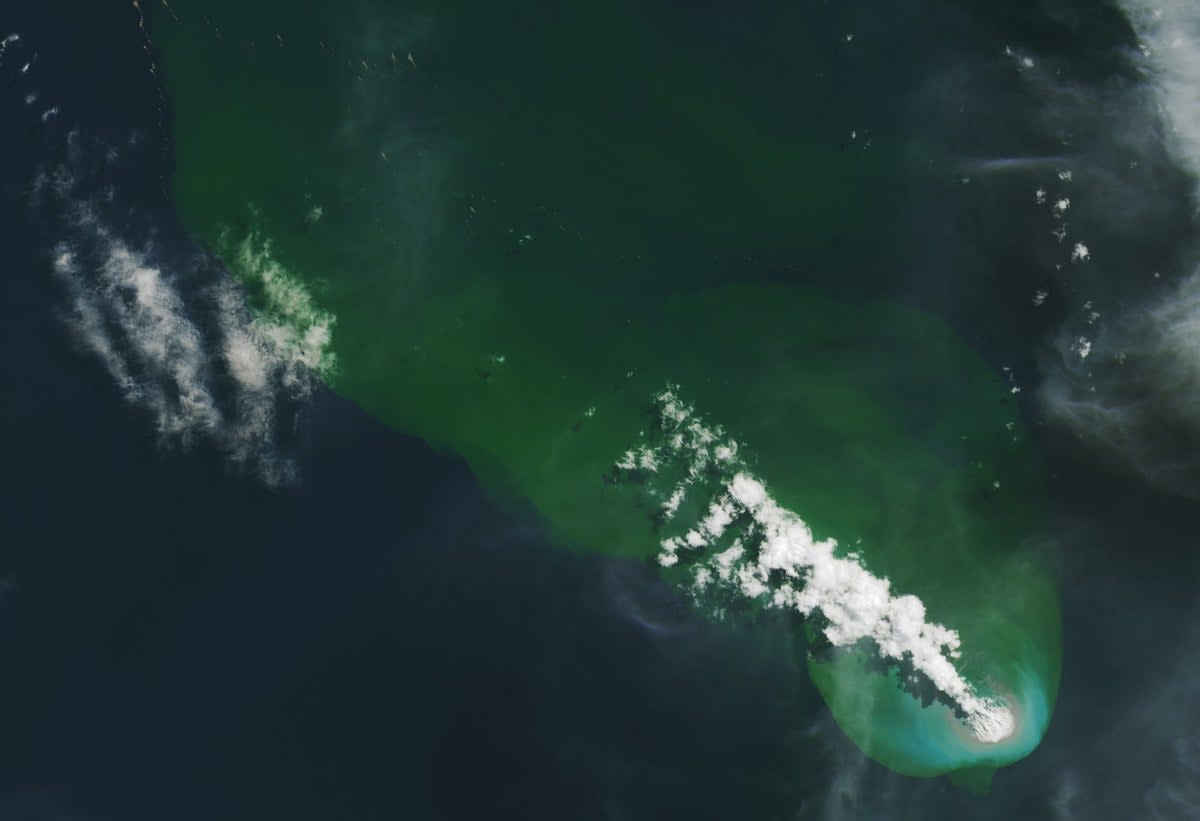
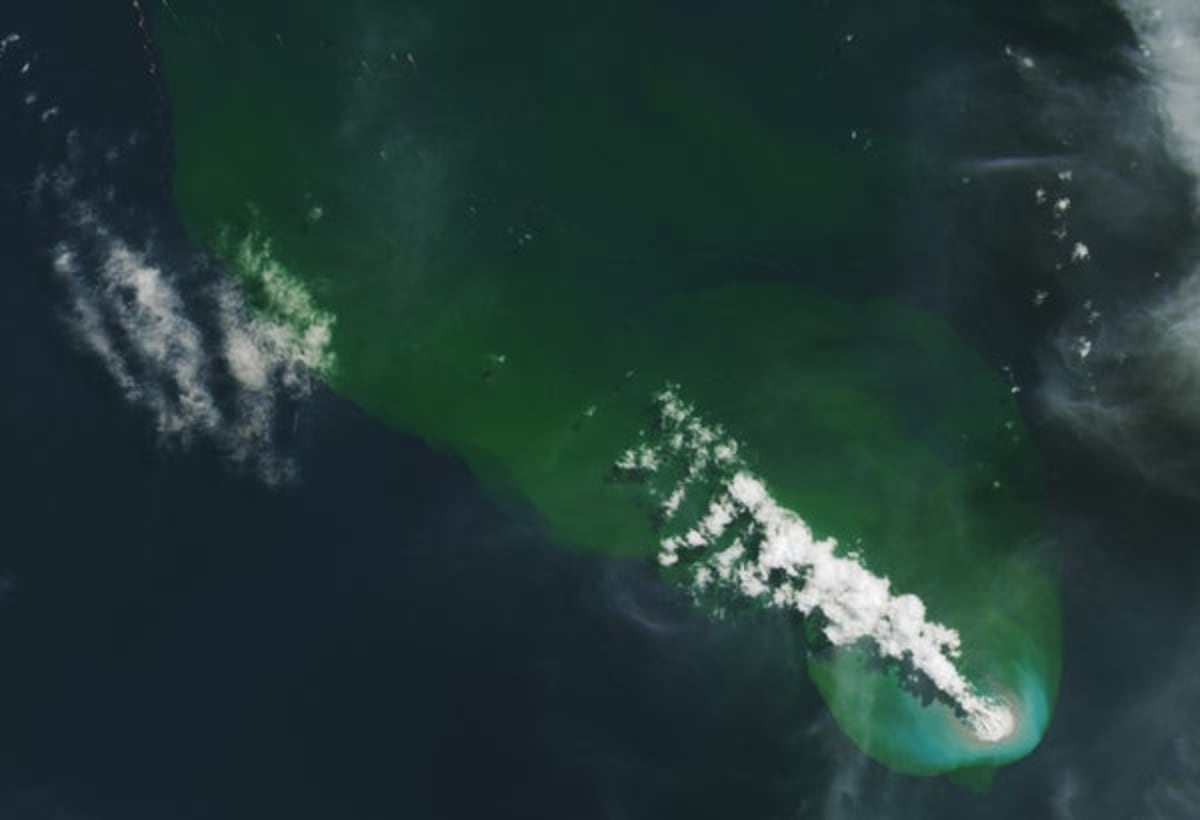
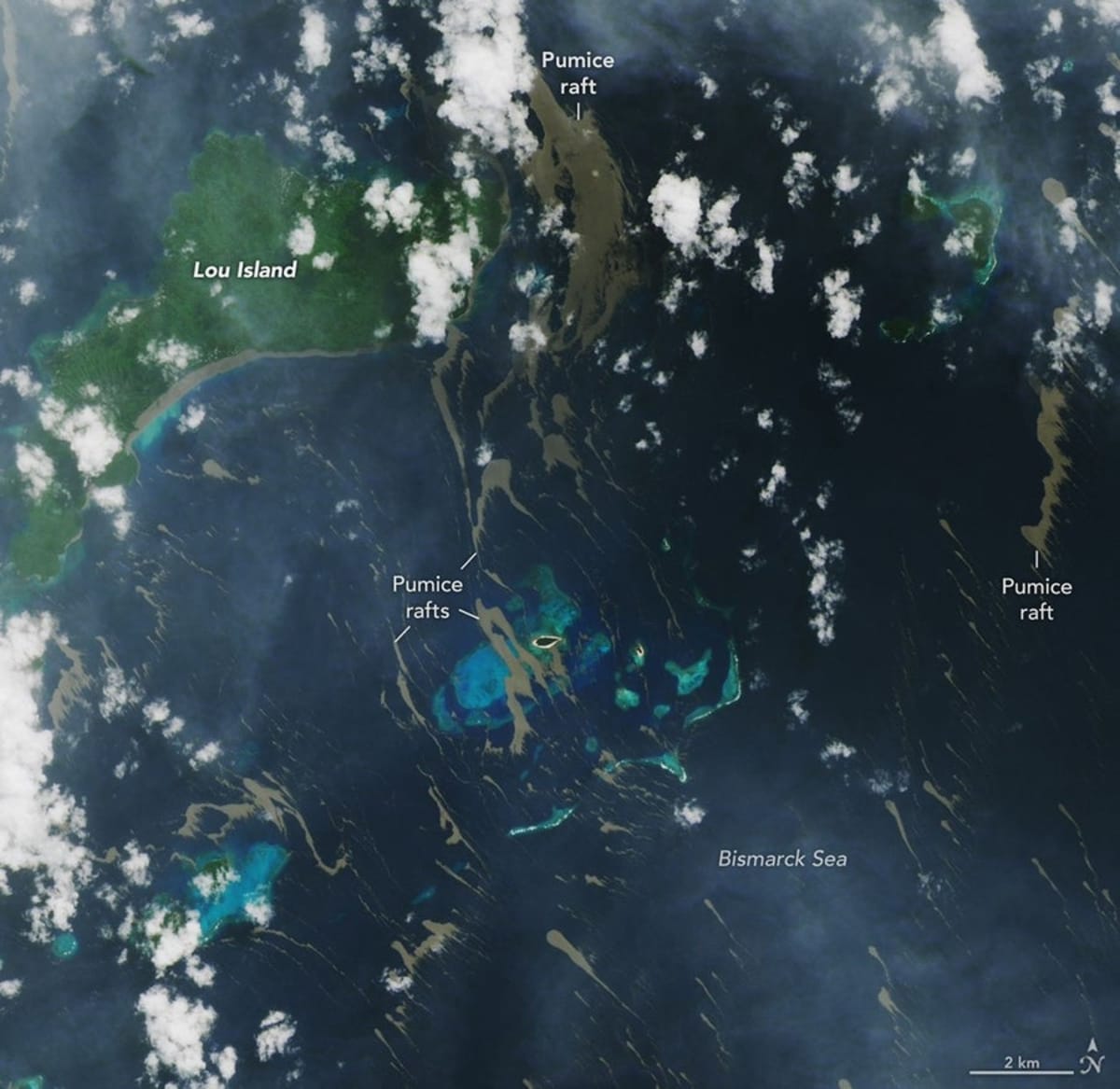
Scientists just got a lucky glimpse of this hidden world when an underwater volcano erupted near Papua New Guinea's Admiralty Islands in early May. The secret eruption announced itself through a small earthquake swarm on May 8, followed by steamy plumes and discolored water spotted by NASA satellites.
By early June, brownish-gray streaks of pumice had begun surrounding the islands. This "frothy rock" forms when gas-rich molten rock suddenly cools underwater and floats to the surface.
The discovery matters because underwater eruptions happen constantly along Earth's 40,000-mile network of mid-ocean ridges, where the planet's crust spreads apart and creates new rock. We just rarely see them. "We never know when it's happening, even though it's probably happening all the time," says Bill Chadwick, a volcanologist at Oregon State University.
This eruption likely happened along the Titan Ridge, a volcanic area that last erupted in 1972. The location sits in what scientists call "a really complicated tectonic setting" where plate boundaries jumble together confusingly.
Researchers recently mapped the seafloor in this exact area, giving them a perfect before picture. When they return after the eruption ends, they expect to find dramatic changes like new volcanic cones or craters.
Why This Inspires
Every rare glimpse of submarine volcanism teaches scientists something new about how our planet works. These eruptions shape the ocean floor, create new land, and drive chemical cycles that affect life throughout the seas.
Adam Soule, a submarine volcanologist at the University of Rhode Island, puts it simply: "We have so few observations of these submarine eruptions that every time we get a chance to study one, we know we're going to make incredible progress in our understanding."
The floating pumice will help researchers estimate the eruption's size. Future surveys will reveal pillow lava formations with their characteristic rounded, bulbous shapes that only form when seawater quickly cools molten rock.
Scientists are treating this eruption as a gift, a window into processes that usually remain completely hidden beneath miles of ocean. The discoveries they make could reshape our understanding of how Earth constantly renews itself through volcanic activity we never see.
There's an entire world of geological drama happening beneath the waves, and we're just beginning to understand it.
#
More Images

Based on reporting by Scientific American
This story was written by BrightWire based on verified news reports.
Spread the positivity!
Share this good news with someone who needs it