Self-Driving Steamroller Works 30 Days With Zero Accidents
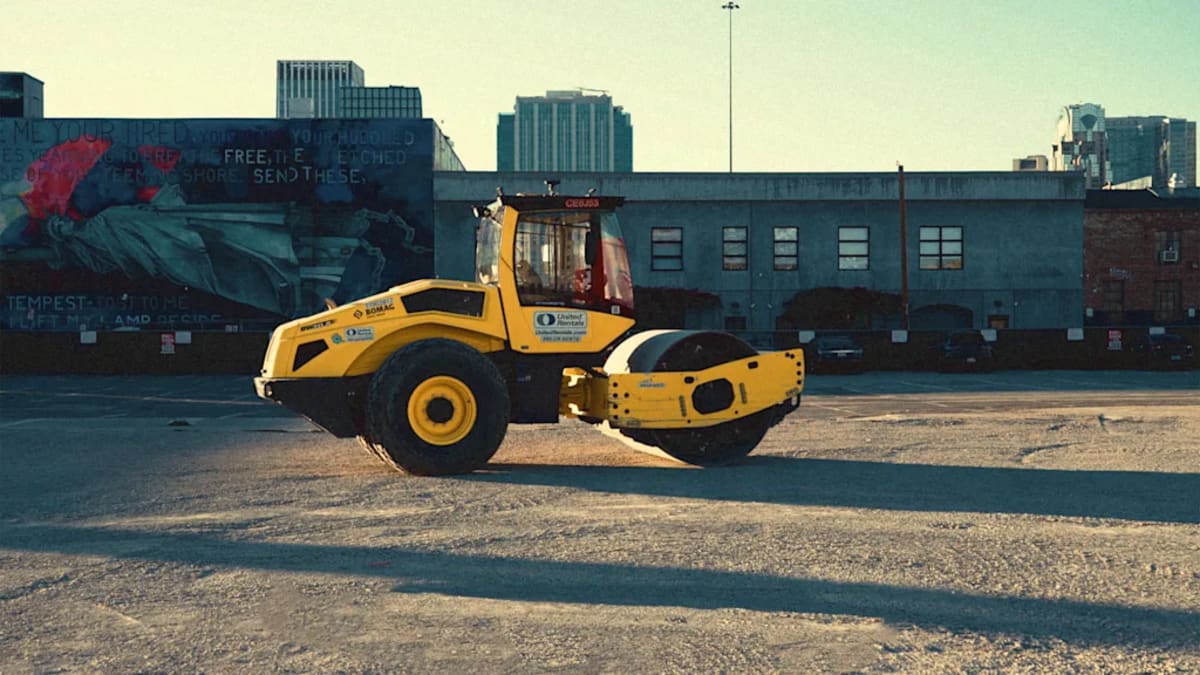
A robotic steamroller just completed a 30-day airport construction project in Austin without a single human operator, nearly doubling productive hours and recording zero accidents. The plug-and-play technology could solve construction's growing labor crisis as the industry faces a wave of retirements.
A steamroller just spent an entire month smoothing dirt at an Austin airport without anyone in the driver's seat, and it might have just changed construction forever.
For 30 days straight, the autonomous drum roller compacted soil on a 30-acre airport extension in Texas, cutting daily downtime from six hours to under one hour. The machine nearly doubled its productive hours while maintaining a perfect safety record.
The technology comes from Crewline, a four-person startup that built an aftermarket robotic brain you can install on existing steamrollers in about an hour. No wire cutting required, no expensive equipment replacement needed.
CEO Frederik Filz-Reiterdank sees this as the solution to construction's biggest problem. While overall U.S. economic productivity has doubled over the last 50 years, construction productivity has actually fallen by more than 30% since 1970.
The labor crisis is real and getting worse. The median age of a construction worker is 42, and roughly 45% of the workforce is over 45 years old. As these veteran workers approach retirement, younger generations aren't filling the gaps fast enough.
"There is a dramatic shortage of operators," Filz-Reiterdank says. Even when companies find qualified workers, "they don't show up."
The Ripple Effect
This isn't just about one autonomous steamroller in Austin. It's about reimagining how we build everything from homes to highways.
The contractor, Dynamic Site Solutions, proved that existing construction equipment can become intelligent robots without massive investment. That means construction companies nationwide could adopt this technology quickly, potentially creating a 24/7 robotic workforce that prepares sites in record time.
Unlike prefabrication, which moves some construction work into warehouses, earthmoving has to happen on site. By making analog excavators and steamrollers smarter, Crewline is tackling the most stubborn manual bottleneck in the entire real estate pipeline.
The National Home Builders Association calls attracting young skilled labor "a primary long-term goal for the construction industry." As that challenge intensifies, automation isn't replacing workers so much as filling gaps no human workforce can currently close.
Filz-Reiterdank's vision is simple: when there aren't enough humans to sit in the cab, the machines must learn to drive themselves, and they just proved it works.
Based on reporting by Fast Company
This story was written by BrightWire based on verified news reports.
Spread the positivity!
Share this good news with someone who needs it