Shrimp Shell Material Gets Stronger When Wet, Beats Plastic
Scientists created a waterproof material from discarded shrimp shells that actually becomes 50% stronger when immersed in water. This breakthrough could finally give us a sustainable plastic replacement that thrives in the environment instead of polluting it.
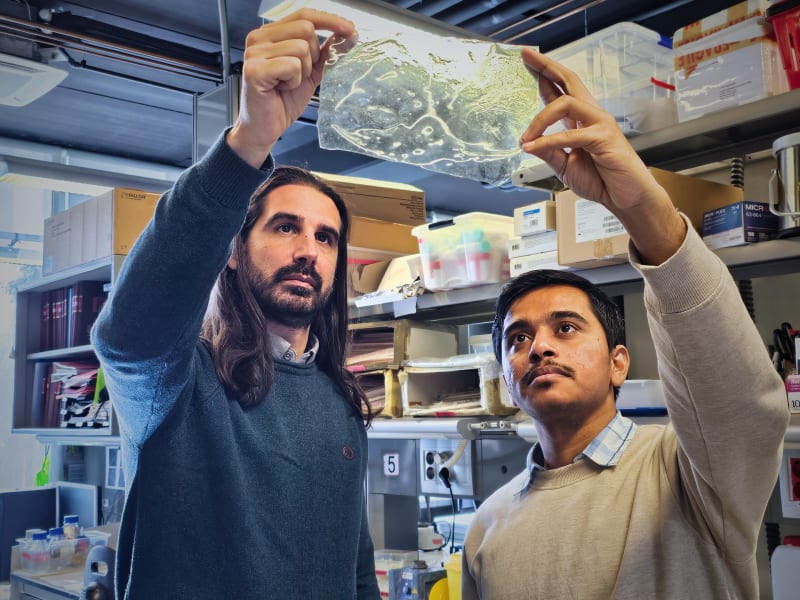
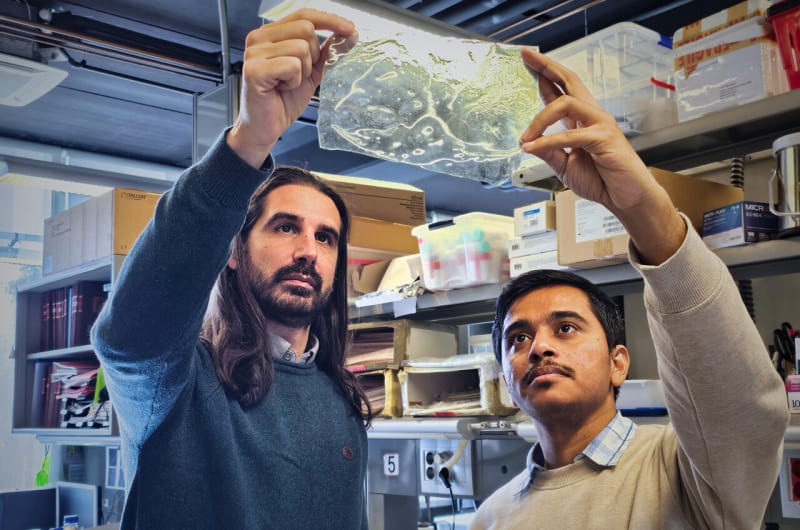
What if the solution to our plastic crisis was hiding in the trash bins of seafood restaurants? Scientists at the Institute for Bioengineering of Catalonia just turned discarded shrimp shells into a revolutionary material that does something plastics never could: it gets stronger when wet.
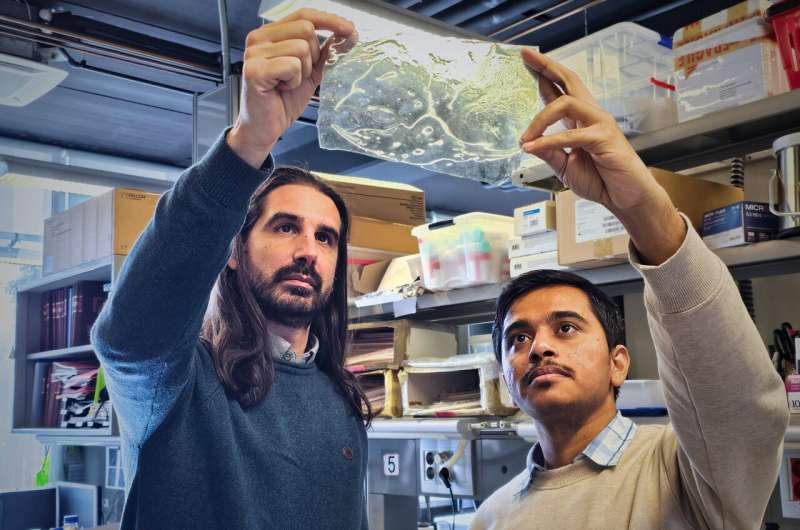
The team extracted chitosan from shrimp shells and combined it with nickel to create a material that increases in strength by up to 50% after water immersion. This completely flips the script on traditional materials science, where water exposure typically weakens biological materials.
The breakthrough came from an unexpected observation. Researchers noticed that sandworm fangs soften when their natural zinc is removed, suggesting metals help natural materials control their relationship with water. Following this clue led them to nickel, which creates dynamic bonds with chitosan that make the material tougher in wet conditions.
Unlike plastic, which isolates itself from the environment to maintain strength, this new material actively works with water molecules. Weak bonds constantly break and reform at the microscopic level, allowing the structure to absorb stress and reorganize itself like living tissue does. Being "soft" at the molecular level actually makes it stronger overall.
Professor Javier Fernández, who led the study, explains that this challenges a century of materials engineering. "For over a century, we have assumed that in order to succeed in nature, materials must become inert," he says. His team proved materials can thrive by connecting with their surroundings instead.
The manufacturing process produces zero waste. When the material first contacts water, excess nickel that doesn't strengthen the structure gets released into the liquid. Rather than throwing this mixture away, it becomes the starting solution for the next production batch, creating a continuous loop.
The material remains biologically pure throughout processing, meaning nature recognizes it as essentially the same molecule found in insect shells and mushrooms. When it eventually breaks down, it reintegrates seamlessly into natural ecological cycles instead of accumulating in food chains like plastic does.
Chitosan comes from chitin, the second most abundant organic molecule on Earth after cellulose. The raw material is already treated as waste by the seafood industry, making this solution both abundant and sustainable at global scale.
The Ripple Effect: This isn't just about replacing plastic water bottles. The research, published in Nature Communications, demonstrates that this material can be manufactured into both everyday consumables and large structural objects. Imagine construction materials, packaging, and consumer goods that don't just avoid harming the environment but actually work in harmony with it. The shift from isolation-based engineering to integration-based design could transform how we make everything around us.
The team has shown that sustainable materials don't need chemical modifications or protective coatings to compete with plastics. By working with nature's principles instead of against them, we might finally have a path to meeting global demand without the environmental devastation.
More Images
Based on reporting by Phys.org
This story was written by BrightWire based on verified news reports.
Spread the positivity!
Share this good news with someone who needs it