Silicon Valley Engineers Rebuilt 150+ Indian Schools From Afar
Homesick tech workers started with one $3,000 fundraiser after a Karnataka school collapsed in 2003. Today, their volunteer-run nonprofit has rebuilt over 150 government schools across India without charging a single family.
In 2003, a group of homesick Indian engineers in Silicon Valley formed a band to raise money and stay connected to home. Their first fundraiser brought in $3,000 after a headmaster called to say his Karnataka school had collapsed in monsoon rains, leaving 500 children sitting outside on benches just to attend class.
That single phone call became One School At A Time (OSAAT), a volunteer-run nonprofit that has since rebuilt more than 150 government schools across 11 Indian states. No family has ever been charged, and no volunteer has ever been paid.
"We also had this question: what are we doing for our country?" recalls founder Vadiraja Bhatt. Many in the group had been educated for free in India's government schools and felt a deep debt to the system that shaped them.
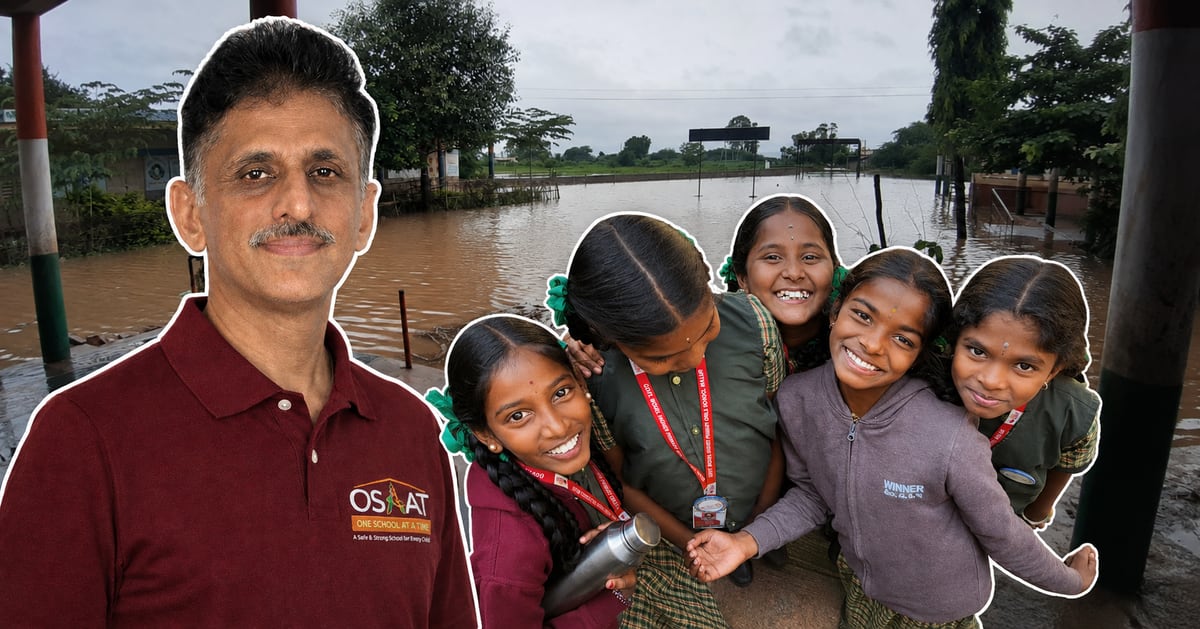
OSAAT's chairman, B V Jagadeesh, studied in a village government school through seventh grade. "I know firsthand how important a school can be in shaping a child's confidence, aspirations and future," he says.
Nowhere is their impact clearer than at Melavanki School, where headmaster Iranna Kadakol watched his campus grow from two rooms and 19 students in 2010 to six rooms and 500 students by 2019. Then floods destroyed everything.
"The floods came, and the whole school became scrap," Kadakol recalls. He found OSAAT online and they responded immediately, rebuilding eight classrooms and adding toilets, desks, library books and sports equipment.
Today, Melavanki has 16 rooms and 1,045 students. It's now recognized as a district model school with the highest enrollment among rural schools in the region, with families traveling up to 4 kilometers just to get their kids there.
A Class 9 student describes the difference: "Earlier the roof would leak and we would sometimes hold our books over our heads, but now we can peacefully focus on our lessons."
The Ripple Effect
OSAAT's approach focuses on dignity before technology. They prioritize safe toilets, sturdy roofs and proper desks over smart boards and computers, understanding that children can't learn when they're uncomfortable or unsafe.
Melavanki students have gone on to win national competitions in athletics, long jump and taekwondo. The school now holds annual speech competitions and serves as a model for what's possible when basic infrastructure meets committed teachers.
What started as weekend performances by homesick engineers has quietly transformed education for tens of thousands of rural Indian children, one rebuilt classroom at a time.
More Images
%2Fenglish-betterindia%2Fmedia%2Fmedia_files%2F2026%2F08%2F31%2F10-2026-08-31-19-13-50.png)

%2Ffilters%3Aformat(webp)%2Fenglish-betterindia%2Fmedia%2Fmedia_files%2F2026%2F08%2F31%2F1-2026-08-31-18-43-21.jpeg)
Based on reporting by The Better India
This story was written by BrightWire based on verified news reports.
Spread the positivity!
Share this good news with someone who needs it