Simple Blood Test Could Catch Alzheimer's 15 Years Early
A 1,000-person trial across three countries is testing whether a finger-prick blood test can detect Alzheimer's disease years before symptoms appear. The at-home test could replace expensive brain scans and invasive procedures that fewer than 2% of patients currently receive.
Imagine catching Alzheimer's disease 15 years before memory loss begins, using a simple finger-prick test you can do at home.
That's the promise behind a groundbreaking international trial now underway in the UK, US, and Canada. Researchers are testing whether drops of blood can detect three proteins linked to Alzheimer's, potentially revolutionizing how we diagnose the most common form of dementia.
Dr. Michael Sandberg, a London GP, knows the stakes personally. He watched his mother slowly decline from Alzheimer's and jumped at the chance to participate in the trial.
When his results came back negative, both from the finger-prick test and a brain scan, he felt overwhelming relief. "It's a huge relief, knowing what my mother went through," he told the BBC.
The Bio-Hermes-002 study involves 1,000 volunteers over age 60. Scientists are looking for biomarkers called amyloid and tau, rogue proteins that can accumulate in the brain more than a decade before any symptoms appear.
Currently, only two in 100 Alzheimer's patients receive proper diagnostic testing. The gold-standard methods require specialized PET brain scans with radioactive tracers or lumbar punctures to extract spinal fluid. Both are expensive, time-consuming, and invasive.
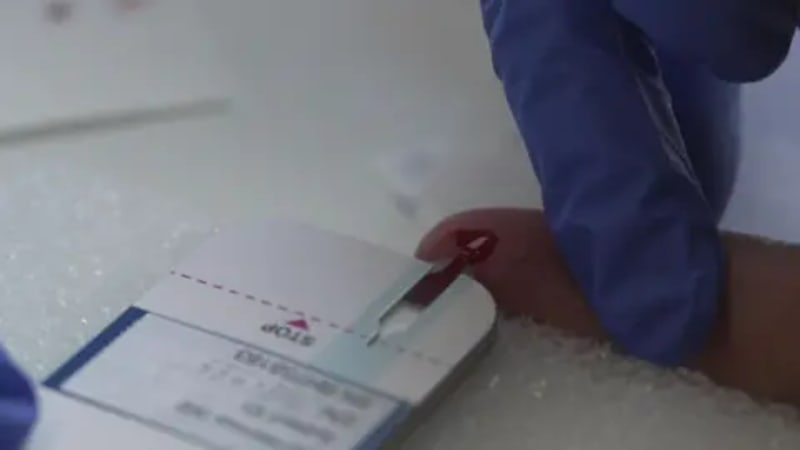
The finger-prick test changes everything. Participants can do it at home, mail the sample to a lab without refrigeration, and get results that could match the accuracy of those complex procedures.
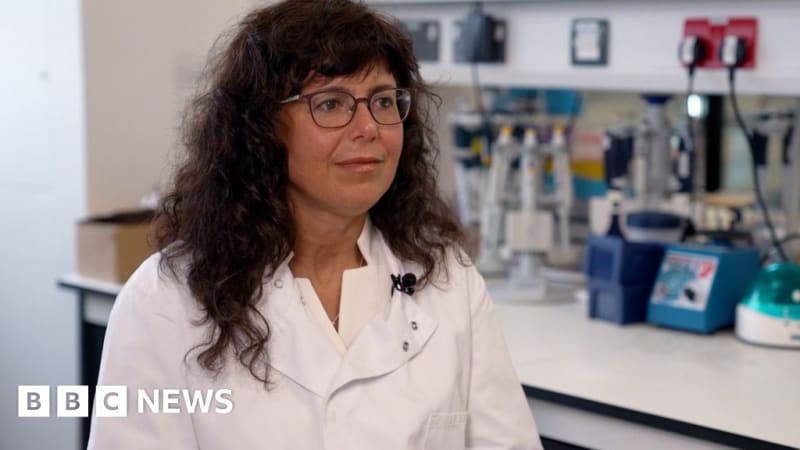
Dr. Giovanna Lalli from LifeArc, the medical research charity leading the study, explains the science simply. "By analyzing the concentration and levels of these proteins, it may tell us whether a person is at risk of developing Alzheimer's disease."
The timing couldn't be better. New Alzheimer's treatments are on the horizon, but they work best when started early. Professor Fiona Carragher from the Alzheimer's Society points out that getting an accurate diagnosis currently takes far too long in the UK.
The Ripple Effect
If successful, this test could become a routine screening tool for older adults, similar to cholesterol checks or cancer screenings. Dr. Emer MacSweeney, a neuro-radiologist recruiting UK volunteers, calls it potentially "ubiquitous" and accurate without complicated investigations.
The trial has already enrolled 883 of its 1,000 participants, with more than 360 completing all tests. Researchers intentionally included cognitively normal people, those with mild impairment, and early-stage Alzheimer's patients to see how well the test performs across different groups.
At least 25% of volunteers come from underrepresented communities, ensuring the test works for diverse populations. Results won't be finalized until 2028, but early signs look promising.
Dr. Sandberg, who benefited from his mother's positive experience with clinical trials, sees the bigger picture. "I believe knowledge is power and am really excited that you may be able to screen people at risk of dementia without expensive scans or needles."
For millions of families watching loved ones fade, this simple test represents something profound: the chance to act before memories disappear.
More Images


Based on reporting by Google: volunteers help
This story was written by BrightWire based on verified news reports.
Spread the positivity!
Share this good news with someone who needs it