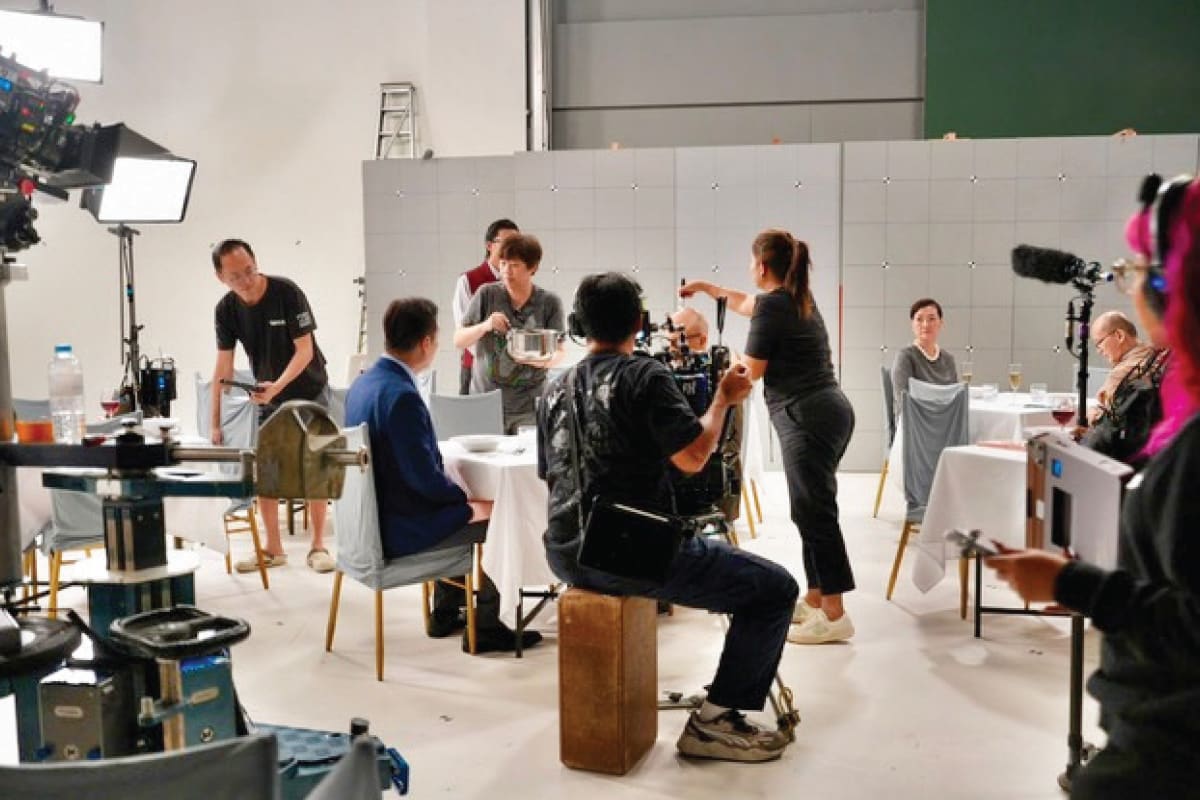
Singapore Drama Saves 30% Using AI Without Losing Human Touch
When a Singapore drama lost 40% of its funding, filmmakers turned to AI not to replace their crew, but to slash costs while keeping creative control firmly in human hands. The hybrid approach is proving that technology can empower artists rather than eliminate them.
When producer Boi Kwong lost a major investor for his Singapore drama series Crooks, he faced a choice: abandon the project or find a radically new way to work. He chose innovation over defeat.
The production lost 40% of its budget around Chinese New Year, leaving Kwong and his team scrambling with fixed grant deadlines and few options. Over three months, they developed something remarkable: an AI-assisted workflow that cut costs by 30% without handing creative decisions to machines.
"It was scary. When we started, we really didn't know what we were doing," Kwong admits. His team included visual effects supervisor Jay Hong and AI researcher Lim Kim Hui, whose tech background created what Kwong calls "an uncomfortable space" that ultimately sparked breakthrough solutions.
Their approach treats AI like a sophisticated assistant rather than a replacement director. Instead of letting algorithms generate entire scenes, the team breaks shots into separate layers for backgrounds, lighting, and performances. They built what they call a "control net," a framework that tells AI exactly what it can alter and what must stay untouched.
The results speak for themselves. What once required 30 to 40 attempts now takes about six, with simple close-ups often nailed in one or two tries. "These are tools that turbocharge your man-hours. What usually took 10 hours now takes one," says Lim.
The savings unlocked creative possibilities that budget constraints previously crushed. A luxury restaurant that would cost $10,000 per day in Singapore? The team photographs real spaces and lets AI generate convincing environments. A prison scene needing dozens of shaved-head extras? They film a handful of actors and AI fills in the rest.
But Kwong remains firm about boundaries. "If we go full AI, the industry will collapse. There is no creativity, no control," he warns.
The Ripple Effect
The hybrid model is breathing life into Singapore's struggling visual effects industry. Hong, who went from unemployment to this groundbreaking project, now tells directors "go for it" instead of listing what's impossible. That shift in creative freedom could reshape how independent films get made across Southeast Asia.
The technology also democratizes filmmaking for productions with tighter budgets. "With hybrid AI, we are no longer restricted to a $2 million budget. It allows filmmakers to dream bigger," Kwong explains.
The team acknowledges concerns about AI training on human performances and ongoing legal battles facing AI companies. Yet their careful, layered approach shows a middle path: one where technology amplifies human creativity rather than replacing it.
When budget cuts threatened to kill Crooks, AI didn't save it by eliminating jobs, it saved it by making every human hour count more.
Based on reporting by Google News - Singapore Technology
This story was written by BrightWire based on verified news reports.
Spread the positivity!
Share this good news with someone who needs it