-1785989990533.jpg)
Singapore Hospital Saves Nurses 16 Minutes Per Patient Visit
Nurses at Singapore's National University Hospital are getting precious time back thanks to AI that turns their spoken notes into documentation. The technology is helping healthcare workers spend less time on paperwork and more time caring for patients.
Nurses at one of Singapore's largest hospitals are reclaiming hours of their day, thanks to a simple but powerful innovation that listens while they work.
National University Hospital has rolled out speech-to-text technology across selected nursing units, allowing staff to speak their patient notes instead of typing them after every encounter. The AI-powered tools, called MediVoice and Scribe, transcribe conversations in multiple languages and automatically format them into proper documentation.
The time savings are adding up fast. Early results show nurses are saving up to 16 minutes per patient encounter in some cases. Those minutes accumulate across shifts, giving nurses more capacity for what matters most: direct patient care, mentoring newer colleagues, and actually leaving work on time.
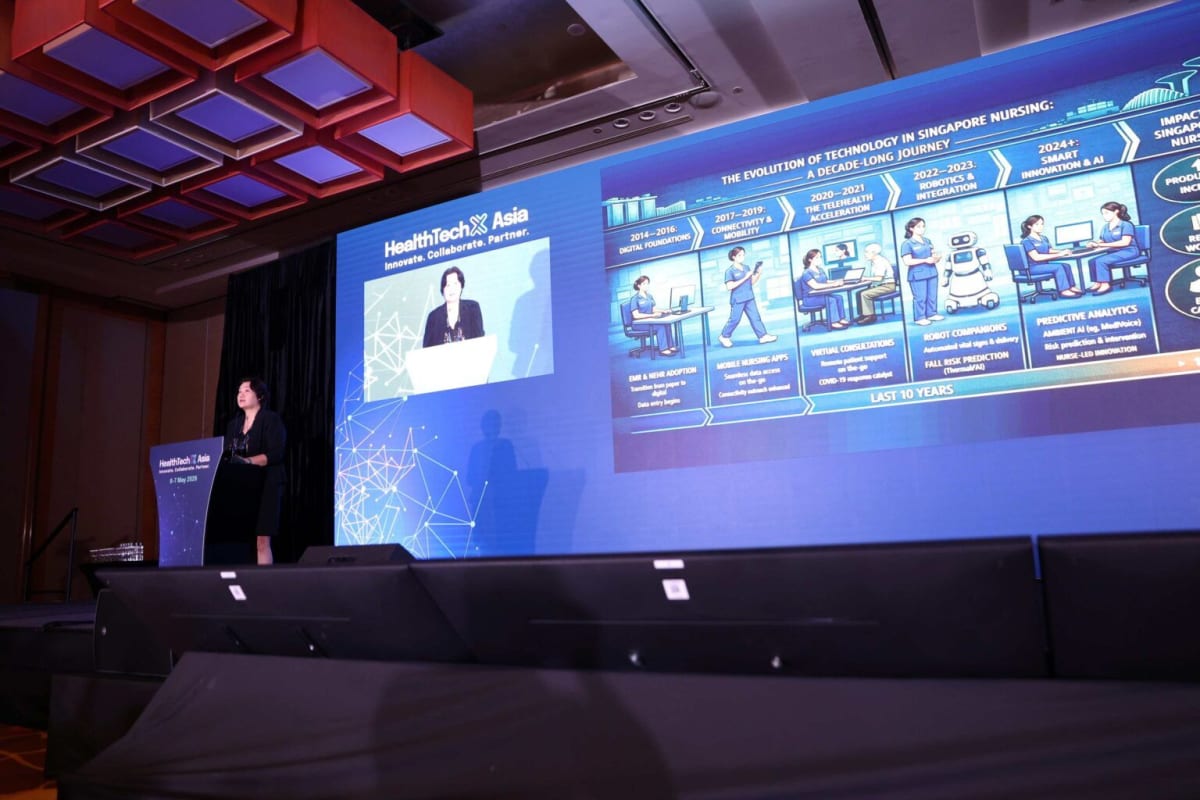
Chief Nurse Karen Koh shared the hospital's journey at HealthTechX Asia 2026. She explained that nursing documentation has ballooned over the years, often forcing staff to stay long past their shifts to finish paperwork. That extra cognitive load adds to burnout in an already demanding profession.
The hospital took a thoughtful approach to adoption. Rather than forcing nurses to adapt to imperfect technology, NUH worked closely with frontline staff to refine the tools until they actually fit into real clinical workflows. Nurse champions in each department became cultural ambassadors, helping colleagues learn the technology and troubleshooting challenges through peer support.
The Ripple Effect
The transcription tools are just one piece of NUH's broader transformation. The hospital has introduced mobile apps for patient identification, automated vital signs capture, smart medication systems, and real-time equipment tracking. Together, these technologies are removing repetitive manual tasks and returning valuable time to the bedside.
The hospital is also testing AI-assisted scheduling that could dramatically reduce the hours nurse managers spend creating monthly rosters. That would free them to focus on leadership and staff development instead.
One nurse captured the deeper impact perfectly: burnout isn't just about working long hours, but about whether the work feels meaningful. When technology handles the routine documentation, nurses can focus on the human connection that drew them to healthcare in the first place.
Koh emphasized that governance and safety remain central. The hospital evaluates risks before deployment, uses approved devices that build patient confidence, and keeps human review at the heart of all clinical decisions. The goal isn't to replace nursing judgment but to support it by automating paperwork that no one went into nursing to do.
NUH's next phase will explore ambient AI that captures clinical conversations automatically and smarter patient monitoring systems, always with careful evaluation and nurse involvement in testing. Technology is freeing nurses to be nurses again.
More Images


Based on reporting by Google News - Singapore Technology
This story was written by BrightWire based on verified news reports.
Spread the positivity!
Share this good news with someone who needs it