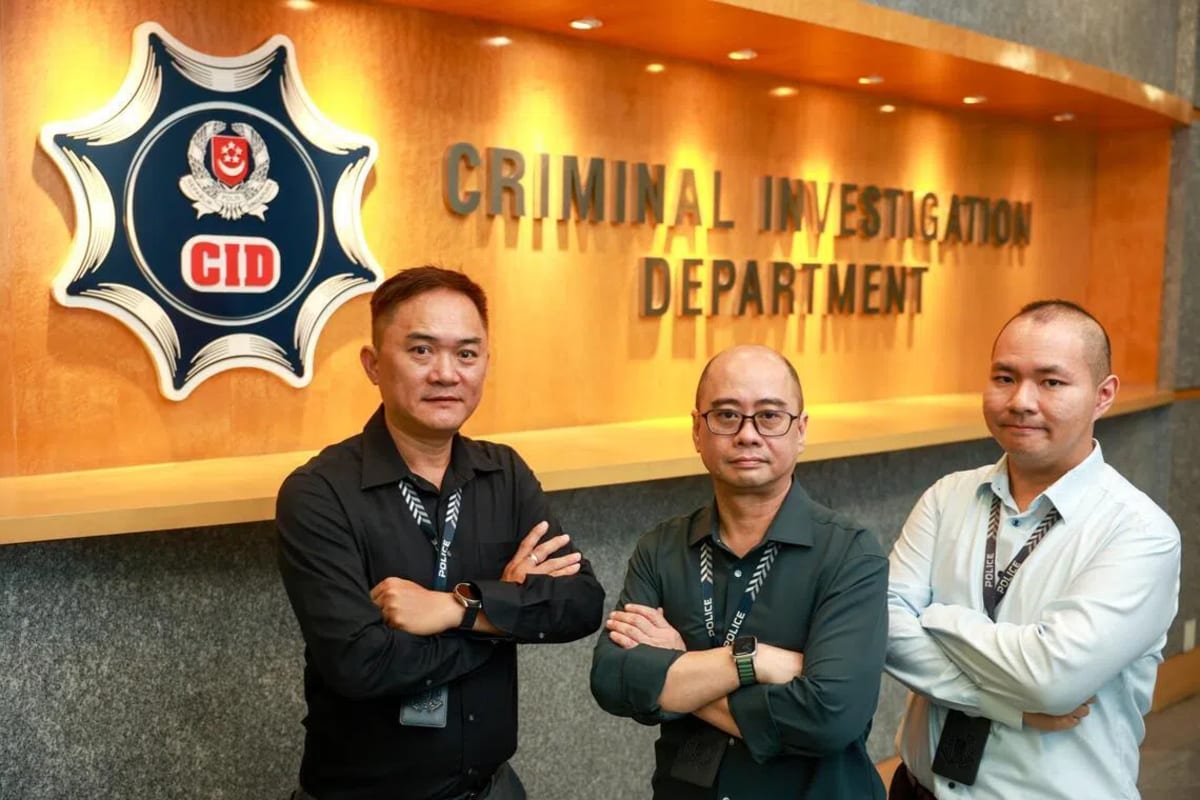
Singapore Police Cut Crime Scene Time by 75% with 3D Tech
Singapore's Criminal Investigation Department now processes complex crime scenes in a quarter of the time using 3D scanners, drones, and AI. What once took seven hours and multiple return visits now happens in under two hours, solving cases faster while keeping human judgment at the heart of investigations.
A crime scene that once took Singapore police seven hours to process now takes less than two. Thanks to 3D scanners, drones, and artificial intelligence, investigators are solving complex cases faster than ever while preserving crucial evidence.
The transformation is dramatic. In 2016, when police investigated a murder at Tanah Merah Ferry Terminal, they spent over seven hours at the scene and returned multiple days to gather information. Today, that same investigation would take just a quarter of the time.
Deputy Superintendent Tan Boon Kok leads the Criminal Investigation Department's Special Investigation Section. He explained how 3D scanners create digital twins of crime scenes, allowing investigators to revisit virtually and take measurements anytime without disrupting the area.
The technology helps beyond major crimes too. Police use the scanners at traffic accidents so roads can reopen quickly while preserving every detail for investigation. Drones capture aerial views of large scenes, giving investigators perspectives that were impossible before.
The 2016 case shows why speed matters. A 54-year-old cleaning supervisor was found stabbed to death, her body hidden in a drain. By the time investigators pieced together what happened, the killer had fled to Malaysia and wasn't arrested for nearly a month.
AI now processes mountains of documents and evidence in hours instead of months. Officers demonstrate their Mixed Reality Training System, where trainees wear goggles that blend virtual evidence with real crime scenes to practice analyzing bloodstain patterns and other forensics.
The Bright Side
The technology revolution hasn't replaced human investigators. It's freed them to do what they do best.
Senior crime scene specialist Wong Jun Yan trains new officers in manual methods first before introducing technology. The fundamentals remain unchanged: meticulous scene processing, proper evidence collection, careful preservation, and thorough interviews.
"AI is a powerful enabler that can streamline administrative tasks and accelerate insights," Tan said. "However, the core investigative craft – judgment, empathy, on-site perception and strategic decision-making – remains firmly in the hands of human investigators."
The Home Team Science and Technology Agency partnered with police to develop these tools specifically for Singapore's needs. Officers learn to use technology as an assistant, not a replacement for their expertise and intuition.
What matters most isn't just solving cases faster but solving them better, with more complete evidence and fewer disruptions to communities affected by crime.
Technology and humanity working together are making Singapore safer, one digital twin at a time.
More Images




Based on reporting by Google News - Singapore Technology
This story was written by BrightWire based on verified news reports.
Spread the positivity!
Share this good news with someone who needs it