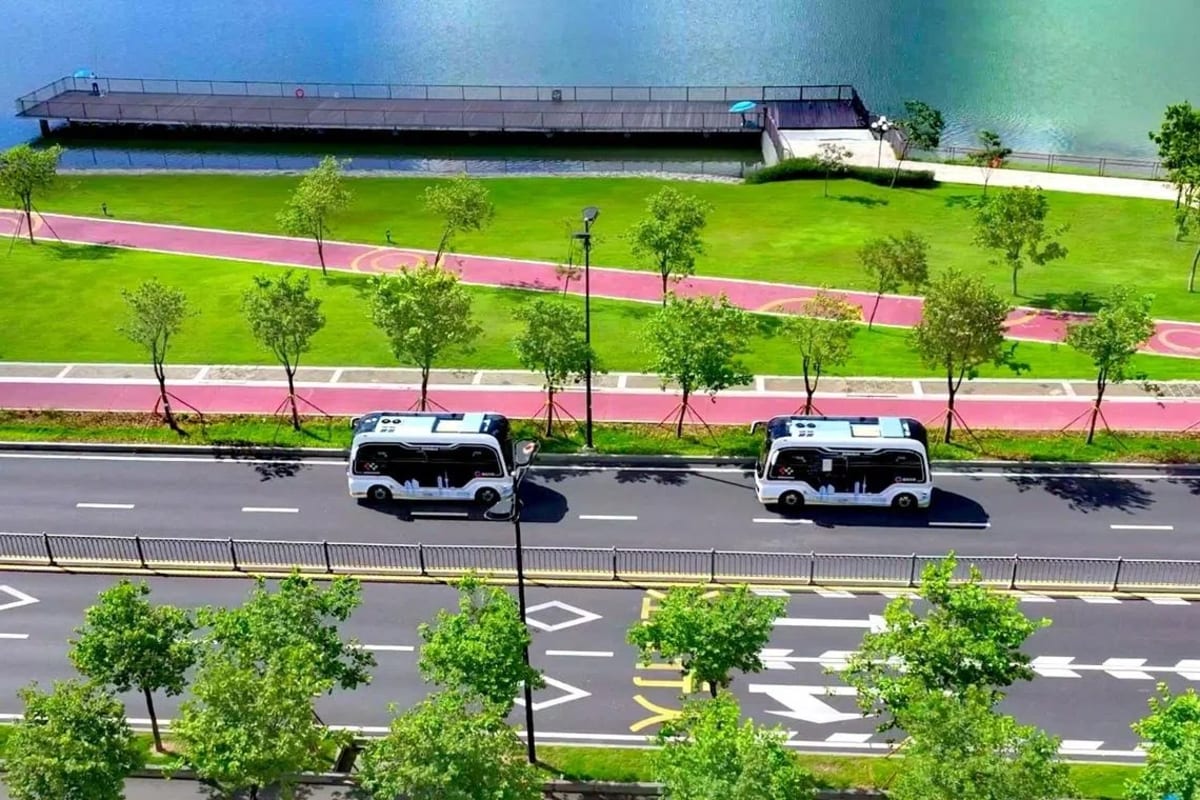
Singapore Tests First Chinese Self-Driving Buses in 2026
Chinese tech firm MOGOX is bringing driverless buses to Singapore's streets this year, marking the first time autonomous vehicles from China have joined a developed nation's public transport network. The company sees this as a stepping stone to becoming the world's top autonomous bus brand.
Singapore is about to get its first taste of Chinese self-driving technology on public roads, and it could change how cities worldwide think about autonomous transport.
MOGOX, a Beijing-based tech company, won a contract in 2025 to deploy driverless buses on two Singapore routes starting later this year. The vehicles will serve Marina Bay and the one-north innovation district, carrying passengers without human drivers at the wheel.
This isn't just another tech trial. Singapore's rigorous safety standards mean passing its tests opens doors worldwide. "It is globally recognized as a benchmark for smart cities," says MOGOX vice-president Lu Bin, who leads the Singapore project.
The company has already proven itself at home. Since 2017, MOGOX buses have rolled through more than 20 Chinese cities, carrying over 200,000 passengers and logging five million kilometers. Now they're taking that experience global.
What sets MOGOX apart is how seamlessly the technology blends into the vehicles. Instead of adding sensors afterward, they're built into buses at the factory. The result looks cleaner and works better, using a mix of cameras and solid-state laser systems that measure distances with impressive accuracy.
The Ripple Effect
MOGOX isn't alone in this global expansion. Chinese autonomous vehicle companies are spreading across continents at remarkable speed. WeRide launched shuttle rides in Singapore's Punggol neighborhood in April and plans to operate 200,000 vehicles worldwide within five years. Baidu partnered with Lyft and Uber to bring robotaxis to London. Pony.ai started testing in Dubai with plans to charge passengers later this year.
Professor Lee Der-Horng from Zhejiang University calls this wave inevitable. China has spent years testing autonomous vehicles in countless real-world situations, building expertise that's now ready for export.
For Singapore commuters, the Marina Bay route will first run demonstrations before carrying passengers. The one-north route will follow a similar rollout. MOGOX partnered with Chinese electric vehicle giant BYD and Singapore's MKX Technologies to make it happen.
Lu travels from Beijing to Singapore monthly to oversee the project. His goal is simple but ambitious: make MOGOX the world's number one brand for autonomous buses. Singapore is the proving ground that makes that dream possible.
The buses that arrived in Singapore in March 2026 represent years of development and millions of test kilometers. They're designed to deliver rides as smooth as human-driven buses, just without the human behind the wheel.
China aims to lead the world in driverless vehicles by 2035, and companies like MOGOX are turning that national ambition into concrete reality on streets from Singapore to London to Dubai. What starts in Marina Bay could reshape urban transport everywhere.
More Images


Based on reporting by Google News - Singapore Technology
This story was written by BrightWire based on verified news reports.
Spread the positivity!
Share this good news with someone who needs it


