Single Gene Edit Treats Inherited Kidney Disease in Mice
Mayo Clinic scientists corrected a genetic mutation causing the most common inherited kidney disease with one injection. The treatment extended survival and stopped organ damage in mice, offering hope for 12 million people worldwide.
Scientists just achieved something remarkable: fixing the genetic root cause of a devastating kidney disease with a single treatment.
Mayo Clinic researchers used advanced gene editing to correct the mutation responsible for autosomal dominant polycystic kidney disease, or ADPKD. This inherited condition causes painful fluid-filled cysts to grow in the kidneys, eventually leading to kidney failure in most patients.
The disease affects about 12 million people worldwide. Many also develop heart problems and liver disease as the condition progresses.
Dr. Xiaogang Li and his team used a precision tool called base editing, a type of CRISPR technology that can fix single-letter DNA errors. They engineered two versions: one that works across multiple organs and another designed specifically for kidney cells.
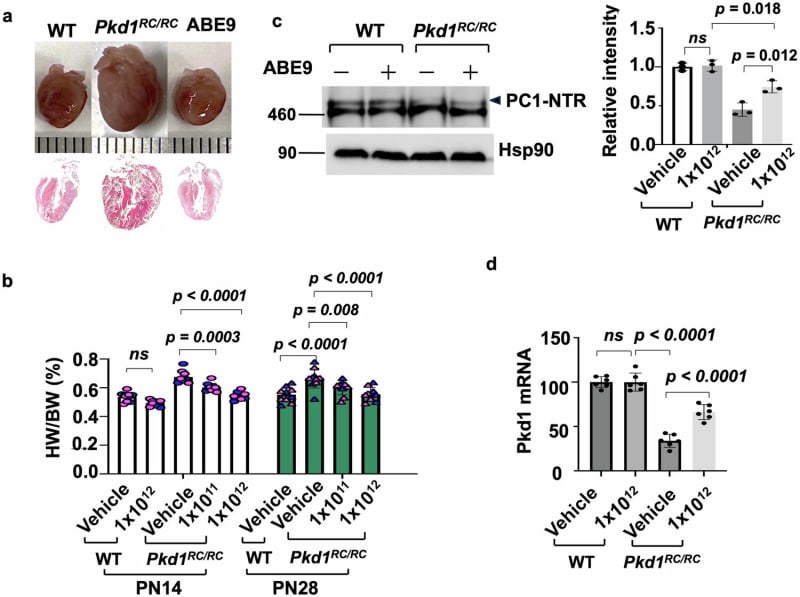
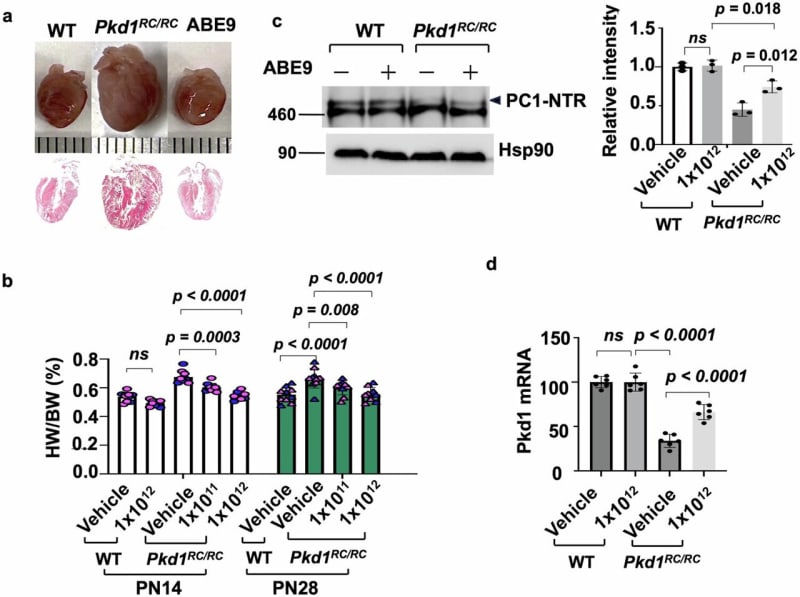
When mice with ADPKD received a single injection early in life, the results were striking. Their kidney cysts grew significantly slower. Their heart size normalized. Their liver health improved. And they lived much longer than untreated mice.
The therapy worked by correcting the PKD1 gene mutation in a large portion of kidney tissue cells. Depending on which editor the researchers used, it also fixed the mutation in heart and liver cells.
Importantly, the treatment appeared safe. Scientists found no harmful off-target genetic changes and no serious immune reactions.
This marks the first time anyone has successfully used base editing to correct a disease-causing mutation in kidney tissue within a living complex organism. Kidneys have historically been difficult targets for gene therapy.
The Ripple Effect
This breakthrough opens doors beyond ADPKD. The techniques developed here could work for other inherited kidney diseases that currently have no cure.
The ability to control exactly where gene editing happens also matters tremendously for safety. By creating kidney-specific editors, researchers can maximize benefits while limiting changes to unintended organs.
Current ADPKD treatments only slow the disease. Patients still need lifelong medication and often eventually require dialysis or kidney transplants. A one-time gene therapy that addresses the root cause would fundamentally change lives.
The research team is already working on next steps. They're refining the tools to address different PKD mutations, testing whether treatment works after cysts have already formed, and developing nonviral delivery methods like nanoparticles that might be safer for humans.
If this approach successfully translates to people, it could reduce or eliminate the need for chronic medication, delay or prevent kidney failure, and dramatically improve quality of life for millions living with ADPKD.
More Images


Based on reporting by Medical Xpress
This story was written by BrightWire based on verified news reports.
Spread the positivity!
Share this good news with someone who needs it