Smart Building System Cuts Energy Costs 37% in China Test
Scientists in China created a simple control system that slashed energy costs by more than a third in buildings that use solar panels, heat pumps, and electric vehicles together. The breakthrough makes clean energy buildings cheaper to run without expensive computers.
Buildings that combine solar panels, heat pumps, and electric vehicle charging just got way more affordable to operate.
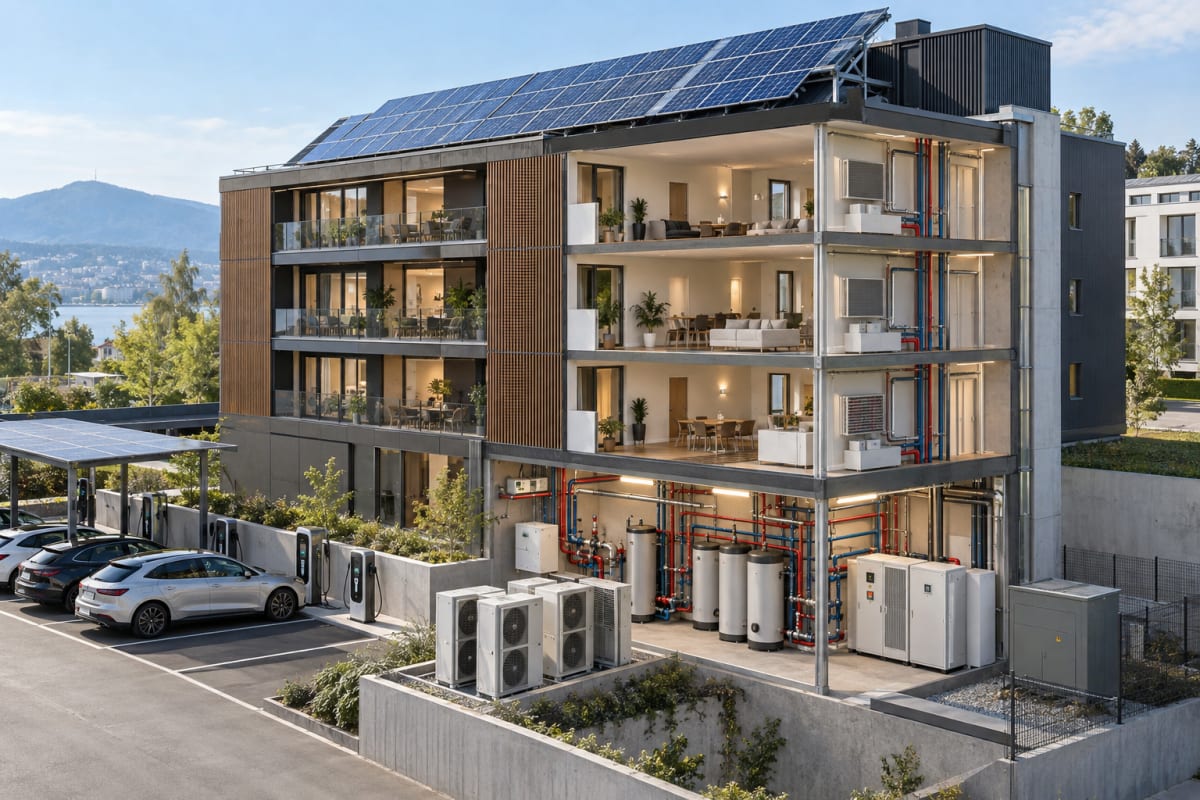
Researchers at China's Hunan University developed a smart control system that cut energy costs by 37% in test buildings. The system coordinates solar power, heating and cooling, battery storage, and EV charging to use electricity when it's cheapest and cleanest.
The breakthrough solves a tricky problem. Modern green buildings have lots of moving parts that need to work together. Solar panels generate power at midday. Heat pumps need electricity for cooling and heating. Electric vehicles plug in at different times. Thermal storage tanks can save energy for later. Getting all these pieces to work together efficiently has been complicated and expensive.
The new system, called predictive rule-based control, uses weather forecasts and electricity price schedules to make smart decisions once per day. It figures out when to charge batteries and storage tanks, when to use solar power directly, and when to buy or sell electricity to the grid.
The team tested their system on a simulated three-story office building with 910 solar panels, a large heat pump, a massive thermal storage tank, and five electric vehicles. Over seven days, the building's energy costs dropped from $514 to just $324 compared to basic controls.
The magic happened during peak electricity hours. Under old controls, the building bought 70% of its peak-time power from the grid at high prices. The new system dropped that to just 20% by storing energy smartly and timing everything right.
What makes this special is simplicity. Existing advanced systems require powerful computers running complex calculations every 15 minutes, taking four minutes each time. The new approach needs less than one second and runs once daily. It performs almost as well as the fancy systems but without the cost and complexity.
The system proved especially good at coordinating electric vehicle charging with building energy needs. When solar panels produced excess power, EVs charged up. When electricity prices spiked, the system drew from storage instead of the grid.
The Ripple Effect
This research arrives as buildings worldwide rush to electrify heating and add solar panels to fight climate change. The challenge has been making all these systems work together affordably.
The simplified control system means building owners won't need expensive computers or specialized staff to run efficient green buildings. A building in a hot or cold climate can coordinate its energy systems with software simple enough to run on basic equipment.
The findings matter beyond offices. Apartment buildings, schools, hospitals, and factories all face the same challenge of juggling solar power, climate control, and vehicle charging. A control system that's both effective and simple enough for widespread use could accelerate clean energy adoption in buildings everywhere.
The research team published their findings in Energy and Buildings journal after partnering with Denmark's Technical University. Their next steps include testing the system in real buildings across different climates and seasons.
Smart, simple technology is making the clean energy transition more practical one building at a time.
More Images


Based on reporting by PV Magazine
This story was written by BrightWire based on verified news reports.
Spread the positivity!
Share this good news with someone who needs it